
Regulatory Status for Dietary Supplements
- 5 Mins to read
- DarkLight
Regulatory Status for Dietary Supplements
- 5 Mins to read
- DarkLight
Article summary
Did you find this summary helpful?
Thank you for your feedback
Ashwagandha
Germany

This section provides a regulatory assessment for the use of Ashwagandha in Food Supplements in Germany.
1. Regulatory Background on Dietary Supplements in Germany
In Germany, dietary supplements are regulated in the Dietary Supplement Regulation (NemV, NahrungsergänzungsmittelVO) [1] as shown below.
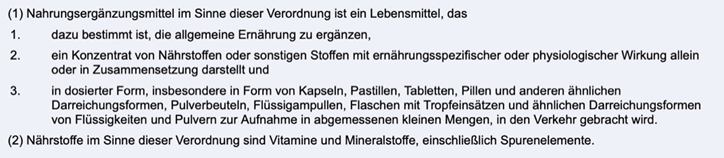
Figure 1. Excerpt from Article 1 of the Dietary Supplement Regulation
English translation:
"(1) Dietary supplements as stipulated in this regulation are those
- destined to supplement the normal nutrition
- referring to the concentration of nutrients or other substances with specific nutritional or physiological effects alone or in combination
- to be brought onto the market in a dosed form, especially as capsules, pastilles, tablets, pills, or other similar dosage forms of liquids and powders for intake in measured, small quantities.
(2) Nutrients as stipulated in this regulation are vitamins and minerals including trace minerals."
Article 3 of the regulation describes the approved substances that can be added to a dietary supplement, with reference to the Directive 2002/46/EC [2] on the list of permitted forms of vitamins and minerals.

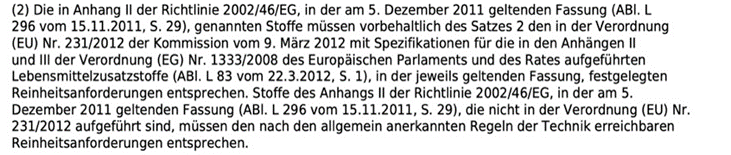
Figure 2. Excerpt from Article 3 of the Dietary Supplement Regulation
English translation:
"§3 Approved Substances
(1) In the production of a food supplement, only those nutrients listed in Annex I to Directive 2002/46/EC of the European Parliament and of the Council of 10 June 2002 on the approximation of the laws of the Member States relating to food supplements (OJ. L 183 of 12.7.2002, p. 51) within the meaning of § 1 paragraph 2 are used in the forms listed in Annex II to Directive 2002/46/EC. Annexes I and II to Directive 2002/46/EC are in each case in the 5th December 2011 version (OJ. L 296 of 15.11.2011, p. 29).
(2) The provisions of Annex II to Directive 2002/46/EC, which on the 5th December 2011 version (OJ. L 296 of 15.11.2011, p. 29), subject to sentence 2, the substances specified in Commission Regulation (EU) No 231/2012 of 9 March 2012 with specifications for the food additives listed in Annexes II and III to Regulation (EC) No 1333/2008 of the European Parliament and of the Council (OJ L 83 of 22.3.2012, p. 1), as amended, comply with the purity requirements. Substances of Annex II to Directive 2002/46/EC, which on the 5th December 2011 version (OJ. L 296 of 15.11.2011, p. 29), which are not listed in Regulation (EU) No. 231/2012, must comply with the purity requirements achievable in accordance with the generally accepted rules of technology."
By the definition shown in Figure 1, other substances with specific nutritional or physiological effects can be added to a dietary supplement.
For botanicals, in Germany, these are under the responsibility of the BVL (Bundesamt für Verbraucherschutz und Lebensmittelsicherheit, or Federal Office of Consumer Protection and Food Safety) in the “Stofflisten” (lists of substances) [3]. As described in Chapter 1.2 of the BVL list, for the use of substances other than vitamins and minerals for food supplements, the manufacturer may refer to Annex III of Regulation (EC) No. 1925/2006 on substances that are prohibited, restricted, or under scrutiny by the EU [4].
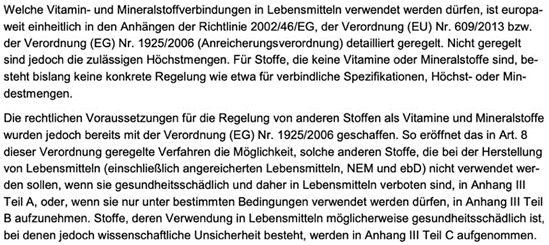
Figure 3. Excerpt from Chapter 1.2 of the BVL List of Botanical substances
English translation:
"Which vitamin and mineral compounds may be used in food is standardized throughout Europe in the annexes to Directive 2002/46/EC, Regulation (EU) No. 609/2013, and Regulation (EC) No. 1925/2006 (Enrichment Ordinance) regulated in detail. However, the permissible maximum quantities are not regulated. For substances that are not vitamins or minerals, there are currently no specific regulations such as binding specifications, and maximum or minimum quantities.
However, the legal prerequisites for the regulation of substances other than vitamins and minerals were already created with Regulation (EC) No. 1925/2006. The procedure regulated in Art. 8 of this ordinance opens up the possibility of such other substances that should not be used in the production of food (including fortified food, dietary supplement, and supplementary balanced diet) if they are harmful to health and therefore prohibited in food in Annex III Part A, or if they may only be used under certain conditions, in Annex III Part B. Substances that may be harmful to health when used in food, but for which there is scientific uncertainty, are included in Part C of Annex III."
2. Permitted Use of Ashwagandha as an Active Ingredient in Dietary Supplements
In the list of botanicals (Pflanzenliste) which is part of the list of substances (Stofflisten), Ashwagandha is found in List B which means "substances" for which a restriction of use in foodstuffs is recommended.
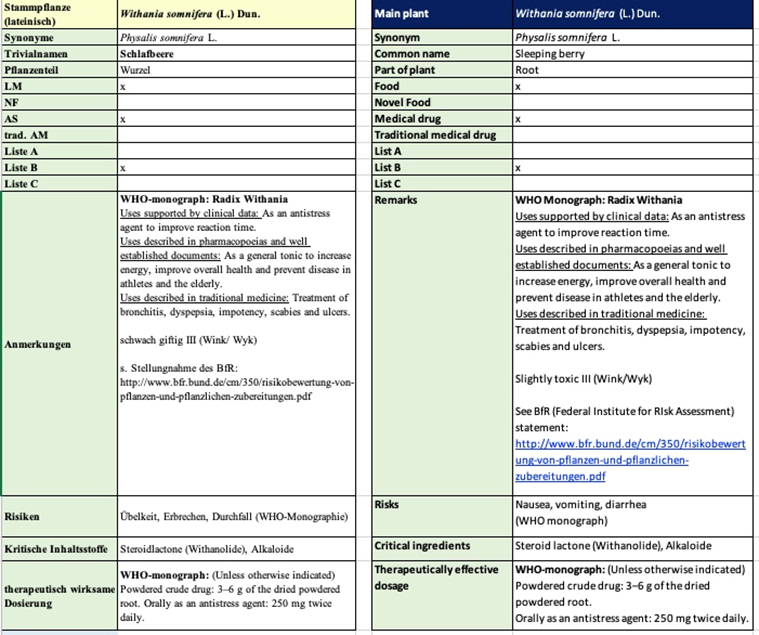
Figure 4. Excerpt from the BVL List of Botanical Substances on Ashwagandha
Note: The 3 lists (A, B, and C) refer to those in Annex III of Regulation (EC) No. 1925/2006
The BfR (Federal Institute for risk assessment) evaluates any plant or plant preparation if deemed necessary. This includes Ashwagandha with details on its risk assessment in Chapter 4 of the Risk Assessment for Plants and Plant Preparation by the BfR [5].

Figure 5. Excerpt from Chapter 4.2.6 of the Risk assessment for plants
and plant preparation by the BfR
English translation:
"4.2.6 Use and amount as food
Information on food use is not available for Germany. According to the Novel Food Catalogue, the use of the root for the production of herbal infusions and food supplements is known in Europe."
Ashwagandha (only the roots) is permitted for use in dietary supplements in Germany with no maximum limit set. WHO monograph can be used as a reference regarding the therapeutically effective dosage that can be used in a food supplement:
- Powdered crude drug: 3 – 6 g of the dried powdered root
- Orally as an anti-stress agent: 250 mg twice daily
2.1 Applicable Specifications for Ashwagandha (Local and/or International Standards)
In Germany, there are currently no defined applicable specifications for Ashwagandha.

Figure 6. Excerpt from Chapter 4.2.4 of the Risk Assessment for Plants
and plant preparation by the BfR
English translation:
"4.2.4 Specification
There are no known specifications in Europe."
The manufacturer may refer to the applicable specifications (contaminants, residual solvent, etc.) for botanical substances at the EU level.
Furthermore, the BVL list indicates that Ashwagandha (scientific name: Withania somnifera) contains “steroid lactones (withanolides), alkaloids” as critical substances (see Figure 4). The manufacturer is expected to monitor these substances to ensure the food supplement containing Ashwagandha is safe.
Conclusion
- In Germany, Ashwagandha is regulated as an active ingredient in dietary supplements, only the roots can be used. No maximum limit is set for Ashwagandha. However, the WHO monograph can be used as a reference for the therapeutically effective dosage.
- Currently, there are no specifications for Ashwagandha (Withania somnifera) in German regulations. Manufacturers should at minimum refer to relevant provisions laid down in EU legislation for botanical substances regarding solvent residues, contaminants, and pesticides.
3. References
1. Dietary Supplements Regulation (NemV - NahrungsergänzungsmittelVO)
https://www.gesetze-im-internet.de/nemv/__1.html
2. Directive 2002/46/EC – Approximation of the laws of the Member States relating to food supplements
https://eur-lex.europa.eu/legal-content/EN/TXT/?uri=CELEX%3A02002L0046-20220930
3. List of botanical substances from the federal and state governments with participation of experts from Germany, Austria and Switerland (Pflanzenliste L – Z, Stofflisten des Bundes und der Bundesländer)
[Foreword]
[List]
4. Regulation (EC) No 1925/2006 on the addition of vitamins and minerals and of certain other substances to foods
https://eur-lex.europa.eu/legal-content/EN/TXT/?uri=CELEX%3A02006R1925-20221221
5. Risk assessment for plants and plant preparation by the BfR
(Risikobewertung von Pflanzen und pflanzlichen Zubereitungen des BfR)
https://bfr.bund.de/cm/350/risikobewertung-von-pflanzen-und-pflanzlichen-zubereitungen.pdf
Was this article helpful?