
Regulatory Assessment for Use of Lysophospholipase in Food
- 3 Mins to read
- DarkLight
Regulatory Assessment for Use of Lysophospholipase in Food
- 3 Mins to read
- DarkLight
Article summary
Did you find this summary helpful?
Thank you for your feedback
Lysophospholipase in Food
South Korea - August 2023

This section provides a regulatory assessment for the use of Lysophospholipase in Food in South Korea.
1. Regulatory Status of Lysophospholipase for Use in Foods
By definition in the Food Additive Code (see Figure 1), enzymes that can be used as food additives are specified by the standards and specifications of individual food additives in the Food Additive Code [1].

Figure 1. Excerpt from Chapter I.2(32) of the Food Additive Code on the definition of terms
English translation:
“Enzyme preparations” is a food additive, which catalyzes certain biochemical reactions."
Regarding enzyme preparations, Chapter II of the Food Additive Code provides the standards for manufacturing and the general use level as follows:
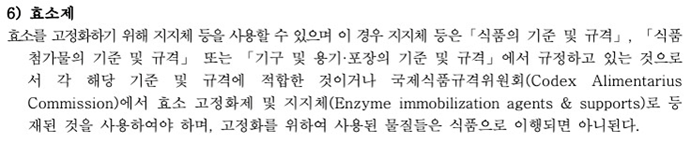
Figure 2a. Excerpt from Chapter II.1(6) of the Food Additive Code on the Standards for Manufacturing and Preparation
English Translation:
"6) Enzyme preparations
A support or the like can be used to immobilize the enzyme. In this case, the support, etc. is regulated in 「Standards and Specifications for Food」,「Standards and Specifications for Food Additives」, or 「 Standards and Specifications for Utensils, Containers and Packaging」, and is suitable for each applicable standard, or international food enzyme immobilization agents and supports listed by the Codex Alimentarius Commission must be used, and materials used for immobilization must not be transferred to food."

Figure 2b. Excerpt from Chapter II.2(10) of the Food Additive Code on the General Use Level
English translation:
10) Unless otherwise specified, enzymes shall be used for purposes that meet the definition of enzymes, such as decomposition or addition during the food manufacturing and processing process, and shall not be used for intake purposes such as increasing the amount of enzymes or promoting digestion in final foods.
Specific to phospholipase, it is a group of enzymes permitted for use in foods in accordance with the standards and specifications prescribed in the Food Additives Code.
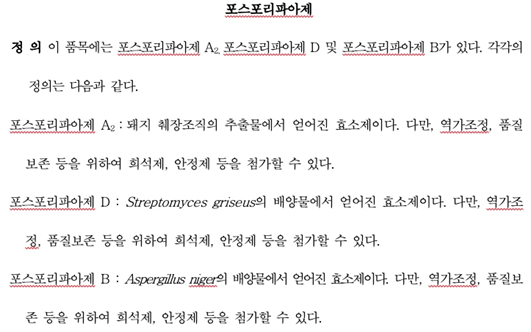
Figure 3. Excerpt from Chapter 4.A. of the Food Additive Code on Phospholipase
English translation:
"Definition Phospholipase includes Phospholipase A2, Phospholipase D, and Phospholipase B.
Phospholipase A2 is an enzyme obtained from an extract of pig pancreas tissues. However, diluent or stabiliser can be added for the purpose of activity adjustment and quality preservation. Phospholipase D is obtained from the culture of Streptomyces griseus. However diluent or stabiliser can be added for the purpose of activity adjustment and quality preservation. Phospholipase B is an enzyme obtained from the culture of Aspergillus niger. However, diluent or stabiliser can be added for the purpose of activity adjustment and quality preservation."
The Lysophospholipase referred to in this report, which is produced from the fermentation culture of Aspergillus niger, corresponds to phospholipase B listed above in Figure 3. It can be used as a food additive if it meets the standards and specifications of phospholipase B as prescribed in the Food Additive Code [2]. This assessment has also been verified following our inquiry with the MFDS.
2. Permitted use of Lysophospholipase in the manufacturing process of dextrose monohydrate for use in foods
Lysophospholipase, or “phospholipase B” according to the Food Additive Code, can be used as a food additive (“enzyme”) and there is no restriction on the food types provided it is used at the minimum amount necessary to achieve the physical, nutritional or technological effect of the food.
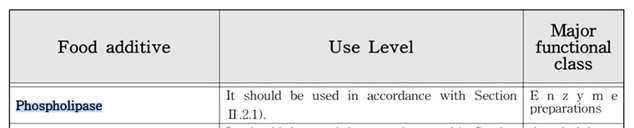
Figure 4a. Excerpt from Chapter II.5 of the Food Additive Code on the Use Level of each Food Additive

Figure 4b. Excerpt from Chapter II.2(1) of the Food Additive Code on the General Use Level
It shall be noted that enzymes must be used for purposes that meet the definition of enzymes and should not be used in final food for the purpose of increasing the content of enzymes or promoting digestion (see Figure 2b).
Specific to the use of Lysophospholipase as a processing aid in the manufacturing process of dextrose monohydrate, there is no restriction for its use as according to the Food Additive Code, enzyme preparations can be used as a processing aid.
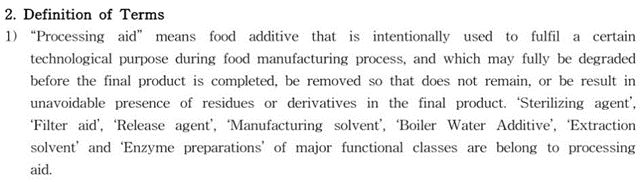
Figure 5. Excerpt from Chapter I.2(32) of the Food Additive Code
Note that following our verbal discussion with the MFDS officer, enzymes used during such manufacturing process shall not remain in the final food products, or if they remain, they must be in an inactive state through heat treatment, etc.
Conclusion
- In South Korea, Lysophospholipase corresponds to “phospholipase B” listed in the Food Additive Code. It can be used as a food additive if it meets the standards and specifications of phospholipase as prescribed in the Food Additive Code.
- Lysophospholipase can be used as a processing aid in the manufacturing process of dextrose monohydrate provided that it is fully degraded or removed, or if it remains, it shall be in an inactive state that would no longer perform any technological function in the final food product.
3. References
1. Korean Food Additives Code
https://various.foodsafetykorea.go.kr/fsd/#/ext/Document/FA
2. Food Additive Standard and Specification: Phospholipase
PDF attached below
Was this article helpful?