
Overview of Packaging Legislation in Pakistan
- 12 Mins to read
- DarkLight
Overview of Packaging Legislation in Pakistan
- 12 Mins to read
- DarkLight
Article summary
Did you find this summary helpful?
Thank you for your feedback
Packaging Legislation
Pakistan

The below version control table serves to document all updates made to the report. The purpose is to ensure the information is always accurate and up-to-date.
| Version Number | Content Creation Date | Publishing Date | Section(s) Updated & Reason(s) for Update |
|---|---|---|---|
| V0 | 5 January 2024 | 31 January 2024 | N/A (new report) |
Disclaimer
At RegASK, we are committed to providing our clients with the most up-to-date and accurate information on regulatory requirements and compliance. To ensure the highest level of accuracy and relevance, we regularly review and update our e-guidebooks at least twice per year to reflect the latest regulatory developments in the market. (Please contact us if you wish to activate this feature.) In the meantime, our RegAlerts service is designed to keep our clients notified of any regulatory updates that may impact their business.
1. Overview of the Current Packaging Legislation
Currently, there is no legislation on packaging harmonized at the State level in Pakistan. Though there are guidelines per Pakistan Standards PS 5474:2021 [2] and its Annex 1 (A) [3], these are not yet implemented. As Punjab is the largest Province of Pakistan with respect to population and has detailed legislation on packaging, its Packaging Regulation will be described in this report.
Reference: Punjab Food Authority (Food Packaging/Contact Material) Regulation, 2018 [1].
1.1 General Guidelines Regarding Food Packaging Materials
- Low-density Polythene (LDPE) bags with and without blended biodegradable oxypolymers must not be used for food handling, packaging, and transport. This law is applicable to all foods either processed or not processed, cold or hot foods.
- Recycled plastic, waste plastic bottles/jars, scrap plastic, and hospital waste are not allowed for making food-grade plastics.
- Only oil-free air compressors are allowed for blowing plastics. Oil-based compressors are banned for food-grade plastics.
- Disposable plastic plates, cups, and elsewhere products are for one-time use only, they shall not be re-used for handling foods and drinks.
- The recycling status/plastic identification symbol/food use symbol must be mentioned on products. This includes the category of plastic, the temperature of usage, the microwave symbol, halal status, and supplier information.
- Food contact materials (FCM) makers/suppliers must provide FCM detailed specifications to the Punjab Food Authority.
- The use of newspapers, printed papers, magazines, and elsewhere printed material as packaging or transport medium must be banned, with immediate effects on cooked/uncooked foods.
- The halal status of all FCMs must be labeled properly. The halal certification body must be a member of the Pakistan National Accreditation Council (PNAC). The aseptic packaging and multi-layered laminated carton packaging material must use appropriate logos to ensure halal aspects and safety.
- The tinplate containers used for packaging large quantities of oil and ghee must not be reused (applicable for tin and canning industries).
- Scratched PET bottles must be immediately discarded and shall not be used further. Moreover, compliance with standard usage must be supplied with PET bottles. The PET bottles are for one-time use only. Appropriate labeling is recommended for awareness.
- The PC (polycarbonate) 19 liters (L) bottles contain BPA (Bisphenol-A), the migrating limit must be below 500 mg/g. The limit also includes phenol and p‐tert‐butyl phenol). Maximum usage of PC bottle is 70 times or below (it shall be reviewed within due course of time). Appropriate labeling is recommended for awareness.
- Foamed polystyrene (including Expanded Polystyrene (EPS), Expressed Polystyrene (XPS), and Oriented Polystyrene (OPS)) is banned for any usage as food packaging. It can be replaced by Polypropylene or paper.
- Five-layered polythene composite sheets/bags must be used for packing 0.25, 0.5, and 1 L of oil and ghee, instead of monolayered or three-layered medium.
- PVC-based cling films are fully banned for use as FCMs.
1.2 Duties of the business operators
The following are the responsibilities of the business operator concerned with the manufacturing, import, distribution, and sale of food packaging material:
- The business operator will have the responsibility for the material and articles in contact with the food and as a consequence for the food safety itself. In the case of food operators (FOs) who are using materials and articles intended to come in contact with food, such as packaging and containers, kitchen equipment, cutlery, and dishes, are responsible for ensuring that Food Contact Materials (FCMs), particularly food packaging, are:
- Clearly labeled and supplied as FCM
- Traceable back to their supplier
- Used in accordance with manufacturer’s instructions
- Used in compliance with the legislation and conform to the legal requirements of food contact materials
- Used safely to ensure the food is not contaminated
- The business operator has to supply packaging that is properly labeled and suitable for food contact. This means that they have to make sure that substances they use in the food contact material will not get transferred into or interact with food in concentrations that pose a danger to human health.
- The business operator has the responsibility to provide the complete relevant record in respect of food packaging material to the food safety officer at the time of inspection.
1.3 General requirements
I. Food Packaging/contact materials are all materials and articles intended to come into contact with food, such as packaging and containers, kitchen equipment, cutlery, and dishes. These can be made from a variety of materials including plastics, rubber, paper, and metal. Food contact materials also include those used in processing equipment, such as coffee makers or production machinery as well as containers used in transport action. The safety of materials in contact with food must be evaluated as molecules can migrate from the materials into the food. The materials and articles, including active and intelligent materials and articles, shall be manufactured in compliance with good manufacturing practices so that, under normal or foreseeable conditions of usage, they do not transfer their constituents to food in quantities that could:
- endanger human health; or
- bring about an unacceptable change in the composition of the food; or
- bring about a deterioration in the organoleptic characteristics thereof.
Food contact materials and articles comprise a broad and complex range of goods. Among the most widely used materials are the plastic packaging materials and articles used for bottles, utensils, films, and containers which are intended to be placed in contact with food. Plastic packaging materials include many types such as flexible films, soft, semi-rigid, and rigid materials. Many modern forms of plastic packaging make use of many of these in a single packaging product and they will also contain adhesives to bond layers together and coatings that allow the packaging to protect the food under what are often physically difficult conditions during controlled processing and transportation. Increasingly, many plastic packaging materials can be wholly or partly made from recycled material. The following general requirements for plastic packages used in packaging food materials shall be met:
- All plastic raw materials used in manufacturing food packages shall be of known origin and composition to avoid the use of scrap or used raw materials. In-house recycling is exempted.
- They shall be clean and homogeneous, free from any foreign material, swelling, or air pockets.
- They shall not cause any hazard to consumer health.
- They shall not lead to the degradation of sensory properties of the packaged food material or the occurrence of undesirable changes in the nature and quality of food material.
- Pigments, coloring materials, and other components used in their formulation and manufacture shall be nonpoisonous and with no tendency for migration which may cause migrated components to react or mix with the food material.
- They shall be resistant to impact effects caused by shocks and mechanical vibrations.
- They shall not be affected by heat during filling, closing, storing, transportation, or handling, in a way that deforms them or changes their composition, chemical or physical properties; or increases probabilities of reactions and migrations of monomers or additive materials within the permissible level.
- Their resistance to acids and bases shall be suitable to the packaged food material, for intended life.
- The pH of a water solution within the range of 6-8 shall not be changed when placed in the package for one hour.
- They shall be non-reacting with organic solvents and oils in packaged food materials if stored for over 10 days.
- Their permeability to water vapor shall be suitable for the packaged food material for its intended life.
- Their permeability to gases shall be suitable for the packaged food material for the intended life of the product.
- They shall not be affected by light when exposed to it, till the intended life of the product.
- They shall have the ability to attain tight closure (or sealing) when hermetic sealing is used for food materials if intended by the product.
- The concentration (content) of vinyl chloride monomer shall not exceed 1 mg per kg of the plastic material in the final product.
- Bisphenol-A is not permitted to be used for the manufacture of polycarbonate infant feeding bottles.
- In the case of manufacturing multilayered packages from more than one material, it shall be necessary to get rid of the remaining solvents, gluing materials, or major materials, such that the remains of all those solvents together shall not exceed 5 mg per square meter of the package surface.
- The solvents used in printing must be organic compounds consisting of alcohols, hydrocarbons, glycol ethers, and esters. The usage of toluene, ethyl acetate, and hexane is banned.
1.4 Labeling requirement of food packaging/contact materials
The business operator will be responsible for ensuring the following labeling requirements during the manufacturing or processing of food packaging/contact materials:
I. Materials and articles, which are not yet in contact with food when placed on the market shall be accompanied by the words “for food contact” or the fork and glass symbol.

Figure 1: Fork and glass symbol
II. If necessary, special instructions to be observed for safe and appropriate use;
III. The name or trade name and the contact details of the manufacturer, processor, or seller responsible for placing on the market;
IV. Adequate labeling or identification to ensure traceability;
V. In the case of active material and articles, information on the permitted use(s) and name and quantity of the substances released by the active component.
The information required above shall be clearly legible and indelible. The retail trade of materials and articles shall be prohibited if the information provided to the purchasers is not given in a language easily understood by them:
- At the marketing stages other than the retail stage, the information required above shall be displayed on:
- The accompanying documents “declaration of compliance” or
- The labels or the packaging, or
- The materials and articles themselves;
- At the retail stage, the information required above shall be displayed on:
- The materials or articles or on their packaging, or
- Labels affixed to them or
- A notice in the immediate vicinity of the materials or articles
Additional rules on labeling shall be considered for the active and intelligent materials and articles including the released active substances to allow identification by the consumer of non-edible parts, active and intelligent materials and articles or parts thereof should be labeled with the appropriate words “DO NOT EAT” or accompanied, where technically possible, by a symbol, (Figure. 2) whenever materials and articles or parts of them are perceived as edible.

Figure 2: “Do not eat” symbol
NOTE: Manufacturers must print the type of plastic material on the packaging preferably on the bottom of the package (either name or abbreviation).
VI. The traceability of any food contact material and article including plastic, active, and intelligent materials and articles shall be ensured at all stages in order to facilitate control, the recall of defective products, consumer information, and the attribution of responsibility.
With due regard to technological feasibility, business operators shall have in place systems and procedures to allow identification of the businesses from whom and to whom materials or articles and where appropriate, substances or products are supplied. The food packaging/contact materials and articles that are placed on the market shall be identifiable by an appropriate system that allows their traceability by means of labeling or relevant documentation or information.
1.5 Compositional requirements of food packaging/contact material
I. Plastics are made by condensation polymerization (poly-condensation) or addition polymerization (poly-addition) of monomer units. In poly-condensation, the polymer chain grows by condensation reactions between molecules and is accompanied by the formation of low molecular weight byproducts such as water and methanol.
II. Plastics as well as ion exchange resins, rubbers, and silicones are macromolecular substances obtained by polymerization processes. As those materials are composed of different substances than plastics and have different physico-chemical properties specific rules for compositional requirements need to apply and it shall be made clear that they are not within this section of this code.
III. There are several types of plastic that are used in food packaging and can be identified by its Plastic Identification code (PIC) - usually a number or a letter abbreviation presented at the bottom of plastic packaging.
IV. Multiple types of plastics are being used as materials for packaging food, including polyolefin, polyester, polyvinyl chloride, polyvinylidene chloride, polystyrene, polyamide, and ethylene vinyl alcohol. Although more than 30 types of plastics have been used as packaging materials, polyolefins, and polyesters are the most common.
V. The recycling symbols will be affixed on the front side of the disposable plastic packaging and single-use containers. Non-disposable food-use goods like dinnerware, pitchers, flatware, and baby bottles shall not have a recycling label.
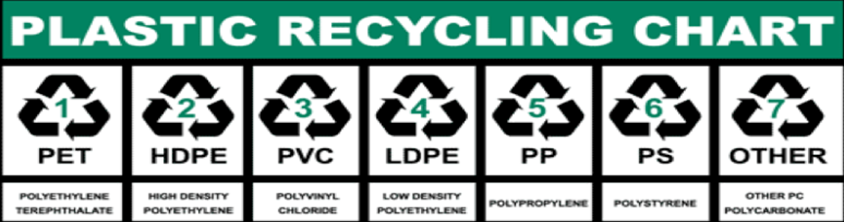
In addition, The Punjab Food Authority recognizes the lists of substances authorized for use in the manufacturing of plastics based on International Bodies and other countries (e.g. EU, USA, FSANZ, Japan) lists. The EU list of authorized substances is being used and stated in Annex 1 of the Punjab Regulation [1].
1.6 Migration limits of food contact material
Specific and overall migration limits are laid down in the Punjab Regulation (Sections 10, 11, and Annex 1) [1]. Food Packaging/Contact Material shall not transfer their constituents to foods in quantities exceeding the specific migration limits (SML) mentioned in Annex 1. These SML are expressed in mg of substance per kg of food (mg/kg). For substances for which no specific migration limit or other restrictions are provided in Annex 1, a generic specific migration limit of 60mg/kg shall apply.
Food Packaging/Contact Material intended to be brought into contact with food excluding those for infants and young children shall not transfer their constituents to food simulants in quantities exceeding 10 milligrams of total constituents released per dm2 of food contact surface (mg/dm2).
1.7 Declaration of Compliance
At the marketing stage other than the point of sale to the final consumer, Food packaging/Food contact material shall be accompanied by a written declaration stating that they comply with the rules applicable to them. Appropriate documentation shall be available to demonstrate such compliance. Such a declaration of compliance is required and is done during a food product registration.
2. Expected regulatory changes, if any
Two major international beverage manufacturers have approached authorities seeking permission to use recycled PET bottles for their carbonated beverages. Although there is no legislation yet allowing recycled PET usage for food packaging, authorities have allowed these beverage industries based on the analysis/testing reports evidencing non-leaching of the plastics in the beverages. It is expected that the use of recycled plastics for food packaging material will be addressed from a more formal regulatory standpoint in the near future.
Conclusion
- Currently, there is no legislation on packaging harmonized at the State level in Pakistan. As Punjab is the largest Province of Pakistan with respect to population and has a detailed legislation on packaging it its Packaging Regulation that is described in this report.
- The Punjab Food Packaging/Contact Material Regulation of 2018 provides general guidelines regarding food packaging materials and lays down requirements for the duties of the business operators, labeling requirements of food packaging/contact materials as well as compositional requirements for and migration limits of food contact material.
- The use of recycled plastics for food packaging material will be addressed and thus legislated for use from a regulatory standpoint in the near future.
3. References
1. Punjab Food Authority (Food Packaging/Contact Material) Regulation, 2018
https://food.punjab.gov.pk/system/files/13.%20PFA%20%28Food%20Packaging-Contact%20Material%29%20Regulations%2C%202018.pdf and its Annex 1 (attached below)
2. Pakistan Standards PS 5474:2021 Materials and Articles Intended to Come in contact with Food (Attached below)
3. Annex 1(A) of PS 5474:2021 Materials and Articles Intended to Come in Contact with Food (Attached below)
Was this article helpful?