
Addition of Human Milk Oligosaccharides in Formula Milk Products
- 10 Mins to read
- DarkLight
Addition of Human Milk Oligosaccharides in Formula Milk Products
- 10 Mins to read
- DarkLight
Article summary
Did you find this summary helpful?
Thank you for your feedback
Human Milk Oligosaccharides in Formula Milk
Hong Kong

The below version control table serves to document all updates made to the report. The purpose is to ensure the information is always accurate and up-to-date.
| Version Number | Content Creation Date | Publishing Date | Section(s) Updated & Reason(s) for Update |
|---|---|---|---|
| V0 | 12 May 2023 | 16 Sep 2024 | N/A (new report) |
Disclaimers
A) At RegASK, we are committed to providing our clients with the most up-to-date and accurate information on regulatory requirements and compliance. To ensure the highest level of accuracy and relevance, we regularly review and update our e-guidebooks at least twice per year to reflect the latest regulatory developments in the market. (Please contact us if you wish to activate this feature.) In the meantime, our RegAlerts service is designed to keep our clients notified of any regulatory updates that may impact their business.
B) The contents on this platform are exclusively intended for the use of RegASK and its authorized representatives. All materials herein are confidential and the sole property of RegASK. Any reproduction, distribution, or display of this content to others is strictly prohibited without the express written consent of RegASK.
1. Regulatory references that are recognized by Hong Kong Authority
The basic food law in Hong Kong is laid down in Part V of the Public Health and Municipal Services Ordinance (Cap. 132) [3]. The main provisions cover general protection for food purchasers, offenses in connection with the sale of unfit food and adulterated food, composition, and labeling of food, food hygiene, and seizure and destruction of unfit food. Controls in specific areas are provided in subsidiary legislation under the Ordinance, specifically, the Food and Drugs (Composition and Labeling) Regulations (Cap. 132W) [4] which regulates the composition and labeling requirements of infant formula, follow-up formula, and prepackaged food for infants and young children under the age of 36 months, and drugs, etc.
Another food law in Hong Kong, the Food Safety Ordinance (Cap. 612) [5], provides food safety control measures, including a registration scheme for food importers and food distributors and a requirement for food traders to maintain proper records of the movements of food to enhance food traceability.
While Hong Kong's food regulations are primarily based on its own laws and regulations, the authority Centre for Food Safety (CFS) also refers to Codex Alimentarius standards (herein ‘Codex standards’) as the primary international reference for certain food safety issues, for developing its own guidelines, codes of practice, and legislative amendments. For example, the Food and Drugs (Composition and Labeling) (Amendment) (No. 2) Regulation 2014 [6] on infant formula, follow-up formula, and prepackaged food for infants and young children under the age of 36 months refers directly to Codex (see Figure 1a).
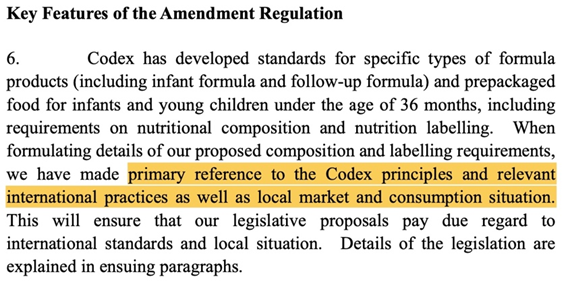
Figure 1a. Excerpt from paragraph 6 of the Legislative Council Brief for Food and Drugs (Composition and Labeling) (Amendment) (No. 2) Regulation 2014 [6]
Hong Kong does not specifically adopt the regulations of other developed countries or regions such as the European Union/European Food Safety Authority (EFSA), Japan, Australia-New Zealand, Singapore, etc. Still, the government may draw upon the regulations and standards of other countries or regions when developing its own regulations and will conduct risk assessments to determine applicable legislative requirements for the local context (see Figure 1b).
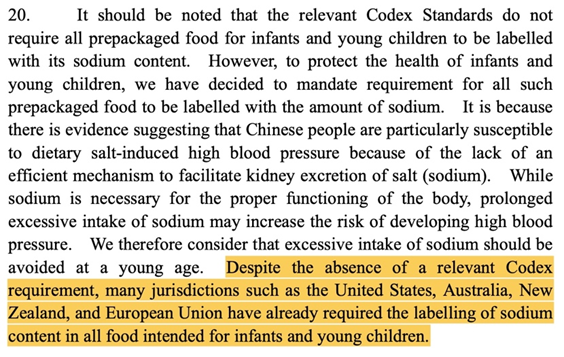
Figure 1b. Excerpt from paragraph 20 of the Legislative Council Brief for Food and Drugs (Composition and Labeling) (Amendment) (No. 2) Regulation 2014
Food products originating from overseas, regardless of their regulatory or registration status in the origin country, must comply with local Hong Kong food regulations or in the absence of local provisions, must comply with Codex standards before they can be imported into Hong Kong, with the appropriate registration of local importer and importation requirements.
For analytical test methods, Hong Kong CFS recognizes appropriate methods published in international standards such as Official Methods of Analysis of AOAC International, ISO International Standards, or European Standards. [7]
2. Permitted additions of the 3 HMOs in the target product categories
3 HMOs* below have been approved by the EU [1], while only LNnT has been approved for use by FSANZ (Food Standards Australia New Zealand) [2].
- 3’-SL (3’-sialyllactose)
- 6’-SL (6’-sialyllactose)
- LNnT (Lacto-N-neotetraose)
2.1 Infant Formula 0-12 months
Part IV of Schedule 1 of the Food and Drugs (Composition and Labeling) Regulations (Cap. 132W) lists the mandatory nutritional requirement for infant formula and also refers to Codex Standards for Infant Formulas and Formulas for Special Medical Purposes intended for Infants (CXS 72-1981) [8].
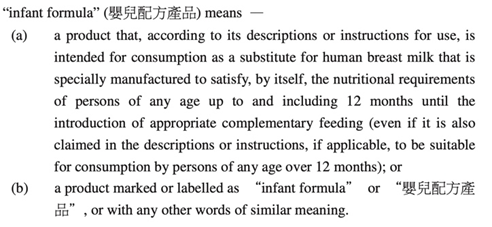
Figure 2a. Excerpt on definition of Infant Formula from the Technical Guidance Notes on Nutritional Composition and Nutrition Labeling of Infant Formula, Follow-up Formula and Prepackaged Food for Infants and Young Children [9]
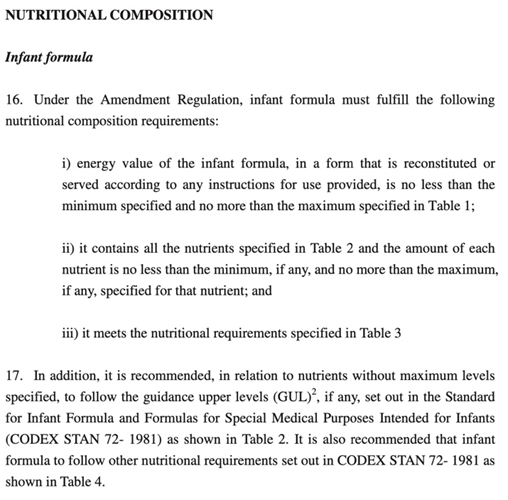
Figure 2b. Excerpt on nutritional composition for Infant Formula from the Technical Guidance Notes on Nutritional Composition and Nutrition Labeling of Infant Formula, Follow-up Formula, and Prepackaged Food for Infants and Young Children
HMOs are not listed in the above mandatory nutritional requirements described in Table 2 of HK legislation and in CXS 72-1981. Notwithstanding, there is a provision in the latter for optional ingredients that may be added in order to provide substances ordinarily found in human milk, provided the suitability and safety of such ingredients are scientifically demonstrated.
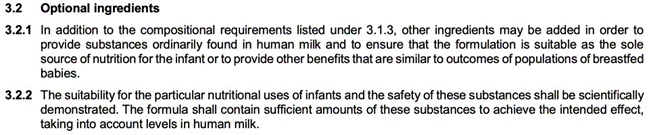
Figure 3. Excerpt from Clause 3.2 of CXS 72-1981
Therefore, provided the conditions described in Clause 3.2 of CXS 72-1981 are met, HMOs would be allowed to be added to infant formula in HK as an optional ingredient.
This is corroborated by market practice: there are infant formula products containing HMOs (in varying combinations) available for sale to Hong Kong consumers via online e-commerce retailer platform or direct manufacturing websites (see Annex A below).
2.2 Follow-up Formula 6-36 months
The definition of Follow-up formula is shown below:
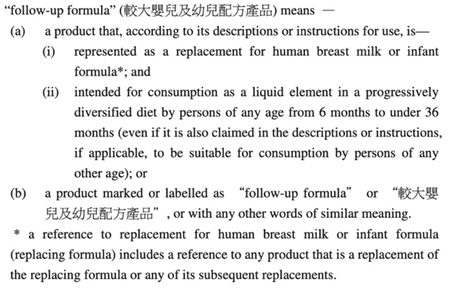
Figure 4. Excerpt on definition of Follow-up formula from Technical Guidance Notes on Nutritional Composition and Nutrition Labelling of Infant Formula, Follow-up Formula and Prepackaged Food for Infants and Young Children
Given the absence of national compositional requirements, and as shown in section 1 of this report, Hong Kong accepts reference to the composition requirements set out by the jurisdiction of the country of origin or the Codex Standard for Follow-up Formula (CXS 156-1987) [10]. 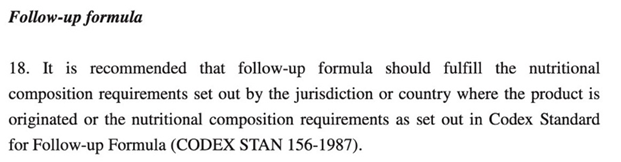
Figure 5. Excerpt from Technical Guidance Notes on Nutritional Composition and Nutrition Labeling of Infant Formula, Follow-up Formula and Prepackaged Food for Infants and Young Children
While CXS 156-1987 does not expressly list HMOs in the essential composition requirements, there is a similar provision allowing optional ingredients to be added where the usefulness of these nutrients is scientifically shown.
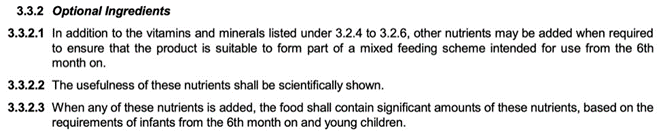
Figure 6. Excerpt from Clause 3.3.2 of CXS 156-1987
Therefore, provided the conditions described in Clause 3.3.2 of CXS 156-1987 are met, HMOs would be allowed to be added to Follow-up formula in HK as an optional ingredient.
Similar to infant formula, there are follow-on formula and toddler milk powder products containing these HMOs (in varying combinations) available for sale to Hong Kong consumers (see Annex A).
It shall be noted that the presence of such formula products in HK market does not represent the permissibility of HMOs per se in these product categories. There is currently no regulatory framework or official application process to seek approval for the use of new/novel food ingredients in HK. The Authority may seek justifications from companies following post-market surveillance inquiries or product recalls. Scientific substantiations for benefits and safety of use, including regulatory approvals in international jurisdictions, can be included as references.
2.3 Formula milk for above 36 months
Junior milk drinks from 3 years and 4 years onwards are regulated by Part II of Schedule 1 of the Food and Drugs (Composition and Labeling) Regulations (Cap. 132W) for Milk and Milk Products. There is no specific nutritional requirement mandated for milk beverage except for the following specification on milk fat:
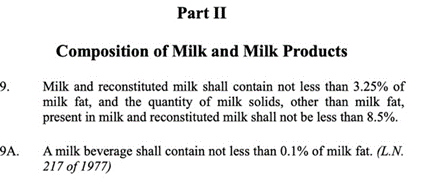
Figure 7. Excerpt from Part II of Schedule I of Food and Drugs (Composition and Labeling) Regulations
General food products including milk beverage products are allowed to add food ingredients (HMOs in this case) that are safe for human consumption and the onus is on the company to ensure compliance with Section 54 of the Public Health and Municipal Services Ordinance (Cap. 132).
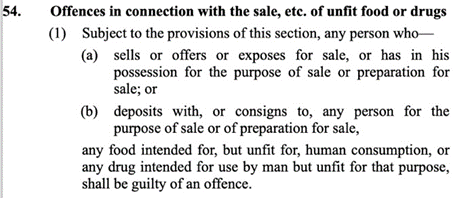
Figure 8. Excerpt from Section 54 of the Public Health and Municipal Services Ordinance
There is no minimum or maximum limit for general food ingredients. Furthermore, HMO as a general food ingredient does not have any established specification in the Food and Drugs (Composition and Labeling) Regulations. The manufacturer shall base the safety of use including its minimum or maximum limits, specifications, etc. on key international scientific references such as Codex, World Health Organization (WHO), EFSA, and developed countries like the USA, Australia New Zealand, etc. recognized by Hong Kong CFS [11].
In summary, the permitted addition of HMOs in the products in the scope of this report is tabulated below:
Target products & population groups | Product categories based on HK regulations | Regulatory criteria (min/max limits) | ||
3’-SL (3’-sialyllactose) | 6’-SL (6’-sialyllactose) | LNnT (Lacto-N-neotetraose) | ||
Infant Formula (0-6 months) | Infant formula (0-12 months) | See notes (i), (ii)
For reference on EU: max 0.2 g/L(iii)
| See notes (i), (ii)
For reference on EU: max 0.4 g/L (iii)
| See notes (i), (ii)
For reference on EU: max 0.6 g/L (iv) |
Follow-up Formula (6-12 months) | Follow-up formula (6-36 months) | See notes (i), (ii)
For reference on EU: max 0.15 g/L (iii) | See notes (i), (ii)
For reference on EU: max 0.3 g/L (iii)
| See notes (i), (ii)
For reference on EU: max 0.6 g/L (iv) |
Toddler Milk Drink (12-36 months) | Follow-up formula (6-36 months) | Same as above for FUF | Same as above for FUF | Same as above for FUF |
Junior Milk Drink (from 3 years) | Milk and milk products | Food ingredient permitted for use in principle with no established min/max limit. The onus is on the manufacturer to establish safety limits based on key international scientific references. | ||
Junior Milk Drink (from 4 years) | Milk and milk products | Food ingredient permitted for use in principle with no established min/max limit. The onus is on the manufacturer to establish safety limits based on key international scientific references. | ||
*Notes:
- Currently, the 3 HMOs are not expressly listed in the nutritional composition for infant formula and follow-up formula in Hong Kong local regulations nor CODEX standards. They can be added as long as compliant with Clause 3.2 of CXS 72-1981 (for Infant formula) or Clause 3.3.2 of CXS 156-1987 (for Follow-up formula).
- It should be noted that the regulatory criteria stated in the above table are based on EU regulations for reference only [1].
- EU maximum limit based on the final product ready for use, marketed as such, or reconstituted as instructed by the manufacturer.
- EU maximum limit in combination with up to 1.2 g/L of 2’-Fucosyllactose at a ratio of 1:2 in the final product ready for use, marketed as such or reconstituted as instructed by the manufacturer.
Conclusion
- In Hong Kong, the authority Centre for Food Safety (CFS) refers to CODEX Standards as the primary international reference when developing its own laws and regulations. CFS may also take reference from regulations adopted by international jurisdictions such as the EU, USA, Australia and New Zealand, especially considering that over 95% of food in Hong Kong is imported.
- The 3 HMOs (3’-SL, 6’-SL, LNnT) are currently not expressly listed in the Hong Kong local regulations nor CODEX Standards.
- For infant formula (0-12 months) and follow-up formula (6-36 months): Considering the provision in Codex Standards to allow optional ingredients that are scientifically proven to be beneficial and safe for consumption (see Figures 3 and 6), as well as the current market practice in Hong Kong (see Annex A), the 3 HMOs could be added for these categories. Scientific substantiations must be ready in case of queries from the Authority during post-market surveillance.
- For other formula milk for children above 3 years old: The addition of the 3 HMOs is allowed provided they are safe and fit for consumption in compliance with the general principles set in Section 54 of the Public Health and Municipal Services Ordinance (see Figure 8).
3. References
1. Commission Implementing Regulation (EU) 2017/2470 of 20 December 2017 establishing the Union list of novel foods in accordance with Regulation (EU) 2015/2283
https://eur-lex.europa.eu/legal-content/EN/TXT/PDF/?uri=CELEX:02017R2470-20230206&qid=1683274106179
2. Schedule 29 of Australia New Zealand Food Standards Code
https://www.legislation.gov.au/Details/F2022C00627
3. Public Health and Municipal Services Ordinance (Cap. 132)
https://www.elegislation.gov.hk/hk/cap132?xpid=ID_1438402661076_002
4. Cap. 132W Food and Drugs (Composition and Labelling) Regulations
https://www.elegislation.gov.hk/hk/cap132W?xpid=ID_1438402695879_001
5. Cap. 612 Food Safety Ordinance
https://www.elegislation.gov.hk/hk/cap612?xpid=ID_1438403526437_002
6. Legislative Council Brief for Food and Drugs (Composition and Labelling) (Amendment) (No. 2) Regulation 2014
https://www.legco.gov.hk/yr13-14/english/subleg/brief/90_brf.pdf
7. Method Guidance Notes on Nutritional Composition and Nutrition Labelling of Infant Formula, Follow-up Formula and Prepackaged Food for Infants and Young Children
8. CXS 72-1981 Codex Standard for Infant Formula and Formulas for Special Medical Purposes Intended for Infants
9. Technical Guidance Notes on Nutritional Composition and Nutrition Labelling of Infant Formula, Follow-up Formula and Prepackaged Food for Infants and Young Children
10. CXS 156-1987 Codex Standard for Follow-up Formula
11. Hong Kong CFS, Food Safety in the New Era, website publication
https://www.cfs.gov.hk/english/whatsnew/whatsnew_act/whatsnew_act_11_intlsympo_abstract.html
12. Listing of formula milk in Mannings, one of the major health & beauty retailer chains in HK
https://www.mannings.com.hk/illuma-luxa-stage-1-infant-formula-850g/p/459891
4. Annex A
Examples of infant formula products containing HMOs that are present in the local Hong Kong market [12]
*Notes: Similar formulations are available for the other stages formula milk products.
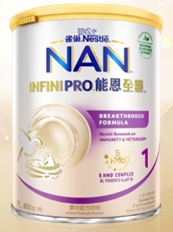 5 HMOs referring to 2'-FL, LNT, 6'-SL, 3'-SL, DFL
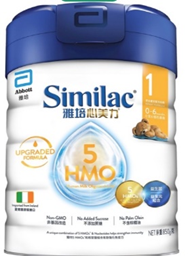
5 HMOs referring to 2'FL, 3’-FL, 3’-SL, 6’-SL, LNT
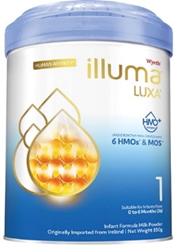
6 HMOs referring to 2'-FL, LNnT, DFL, LNT, 6'-SL, 3'-SL
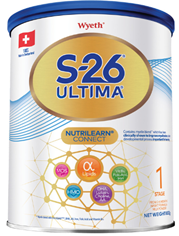
1 HMO referring to 2’FL
Was this article helpful?