
Trehalose in Food and as Processing Aid (EU)
- 5 Mins to read
- DarkLight
Trehalose in Food and as Processing Aid (EU)
- 5 Mins to read
- DarkLight
Article summary
Did you find this summary helpful?
Thank you for your feedback
Trehalose in Food and as Processing Aid
EU

This section provides a regulatory assessment for the use of Trehalose in Food and as a Processing Aid in the EU.
| Version Number | Content Creation Date | Publishing Date | Section(s) Updated & Reason(s) for Update |
|---|---|---|---|
| V0 | 20 Dec 2023 | 6 Nov 2024 | N/A (new report) |
Disclaimers
A) At RegASK, we are committed to providing our clients with the most up-to-date and accurate information on regulatory requirements and compliance. To ensure the highest level of accuracy and relevance, we regularly review and update our e-guidebooks at least twice per year to reflect the latest regulatory developments in the market. (Please contact us if you wish to activate this feature.) In the meantime, our RegAlerts service is designed to keep our clients notified of any regulatory updates that may impact their business.
B) The contents on this platform are exclusively intended for the use of RegASK and its authorized representatives. All materials herein are confidential and the sole property of RegASK. Any reproduction, distribution, or display of this content to others is strictly prohibited without the express written consent of RegASK.
1. Use of Trehalose in Food
As per Articles 1 and 2 of the Commission Decision of 25 September 2001 Authorizing the placing on the market of trehalose as a novel food or novel food ingredient under Regulation(EC)No258/97 [1], trehalose is authorized in food without any maximum limit, its presence in a product must be indicated on the label or in the list of ingredient as “trehalose” together with the indication that the ‘Trehalose is a source of glucose’.
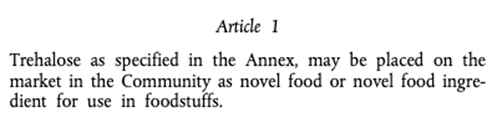
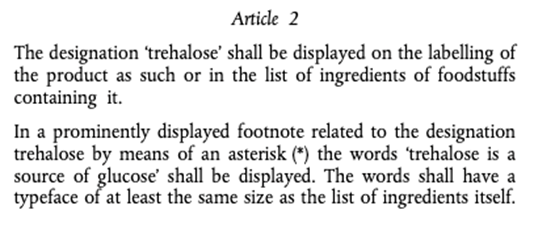
Figure 1. Article 1 & 2 of Commission Decision of 25 September 2001 Authorizing the placing on the market of trehalose as a novel food or novel food ingredient [1]
Detailed specifications are laid down in this same legislation and reproduced below for convenience:
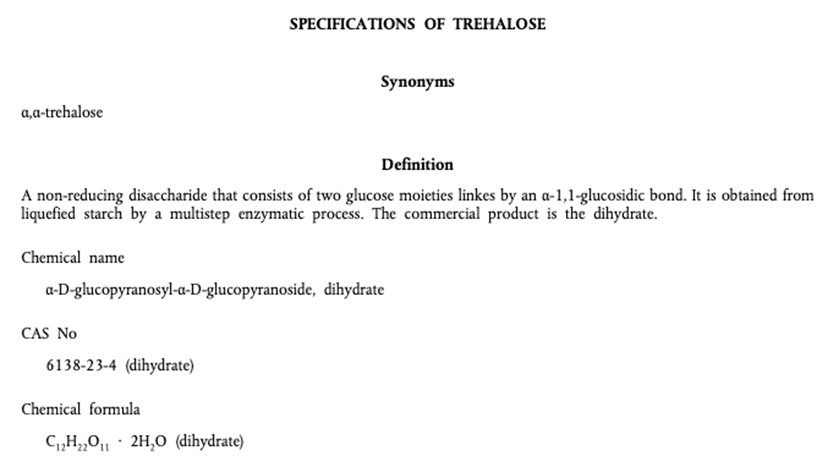
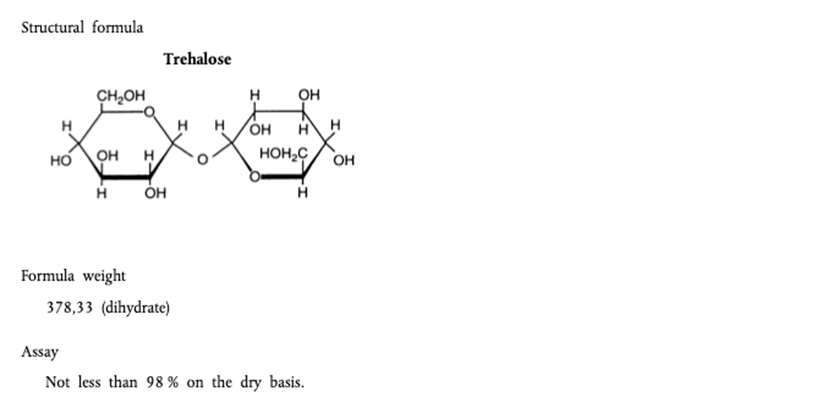
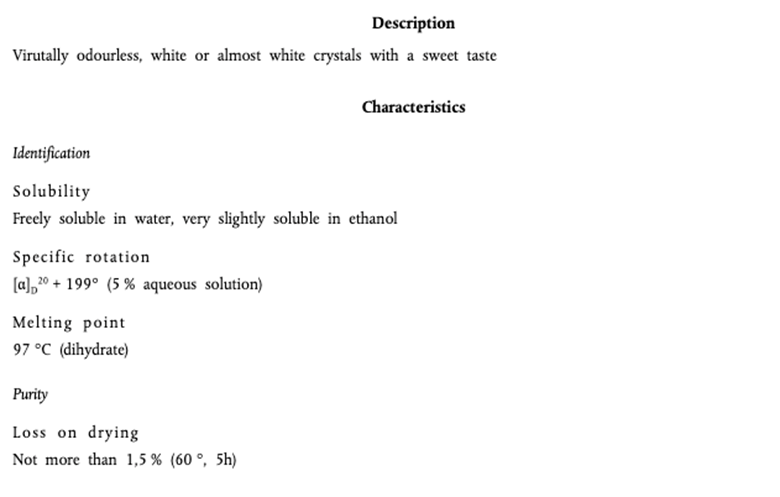
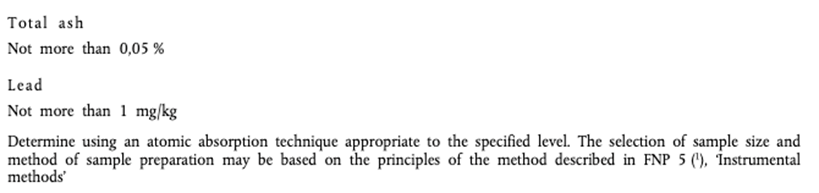
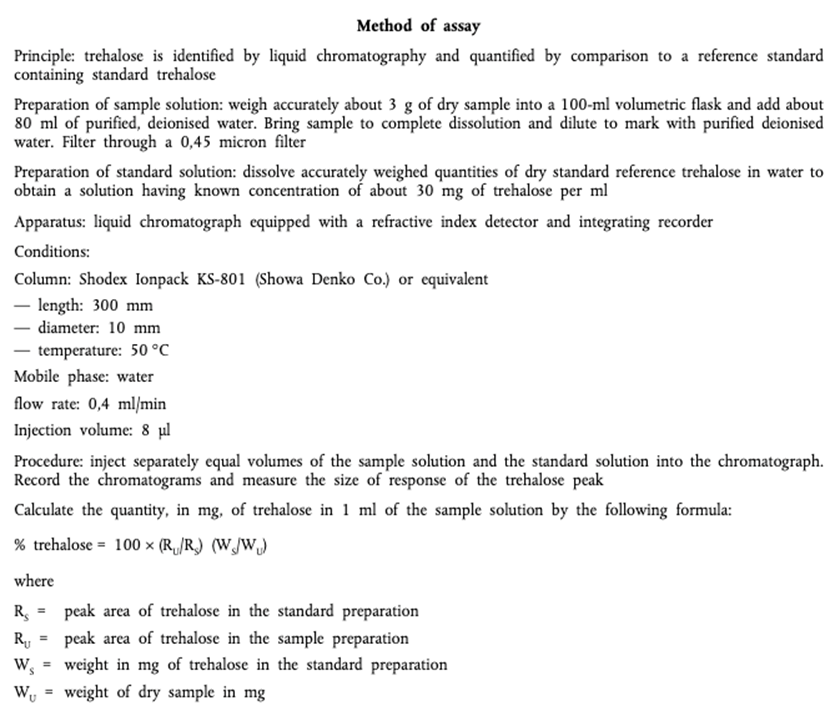
Figure 2. Annex of Commission Decision of 25 September 2001 Authorizing the placing on the market of trehalose as a novel food or novel food ingredient [1]
2. Use of trehalose as a drying aid for yeast intended to be used for beer and wine-making
2.1 Use of trehalose as a processing aid for yeast
There is no specific EU legislation for yeast intended for the fermentation of food, beer, or wine.
When trehalose is used as a drying aid, it may fall under the definition of a processing aid in the EU, as defined in Article 3.2 (b) of the main Regulation (EC) No 1333/2008 on food additives [2]:

Figure 3. Article 3.2 (b) of Regulation (EC) No 1333/2008 on food additives [2]
However, while processing aids are defined in Regulation No 1333/2008, they are excluded from its scope and there is no general harmonized legislation on processing aids at the EU level.
Some EU member states do have their own legislation on processing aids allowed to be used in food. For instance, France has a positive list of processing aids laid down in the amended Order of 19 October 2006 [3].
= > Nevertheless, it is understood that unless specified otherwise, trehalose being a substance whose safety has been established without a maximum limit set, it is safe to use as a processing aid in general and, therefore, in yeast.
2.2 Use of trehalose as a processing aid for yeast intended for use in beer and wine
In countries where there is no legislation on processing aid, it is understood that the carry over principle described in Article 18 of Regulation No 1333/2008 on food additives [4] also applies to processing aid.
According to this principle, if an additive is permitted in one food, where that food is subsequently used as an ingredient in another compound food, the presence of the additive in the compound food may be permitted (even though it might not be specifically permitted in the compound food).
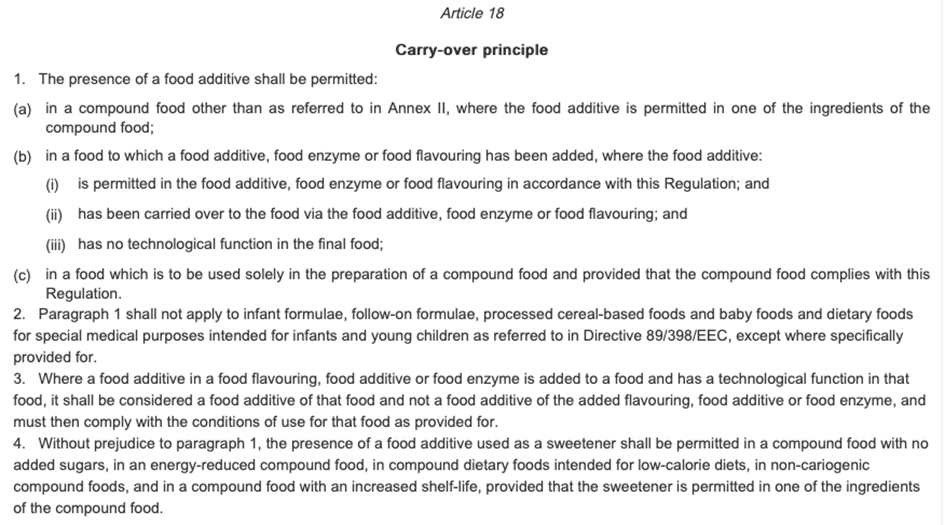
Figure 4. Article 18 of Regulation (EC) No 1333/2008 on food additives [2]
Since trehalose is authorized as a processing aid in yeast, in line with the carry-over principle, traces can be carried over in the product where the yeast is used unless specified otherwise in product-specific legislation.
There is no EU legislation on the composition of beer, and the existing legislation on wine [5] while listing authorized ingredients, additives, and processing aids allowed in wine, it does not forbid the carry-over principle.
= > As a consequence, traces of trehalose would be authorized to be carried over in beer or wine through its use as a drying aid for yeast.
In countries where there is a processing aid legislation, yeast suppliers shall ensure trehalose is authorized as a processing aid in yeast or that this legislation authorizes the use of any safe ingredient (here trehalose) as a processing aid.
Conclusion
- In Europe, trehalose is authorized in food without any maximum limit, its presence in a product must be indicated on the label or in the list of ingredients as “trehalose” together with the indication that the ‘Trehalose is a source of glucose’.
- Detailed specifications are laid down for trehalose in EU legislation.
- Regarding the use of trehalose as a drying aid, i.e. as a processing aid, in the absence of EU legislation on processing aid, it is understood trehalose being a substance whose safety has been established without the maximum limit set, it is safe to use as a processing aid in general food (unless specifically forbidden) and, therefore, in yeast.
- In line with the carry-over principle, and in the absence of specific legislation on additives and processing aides carried over in beer and wine from their ingredient, traces of trehalose would be authorized to be carried over in beer or wine through its use as a drying aid for yeast.
- Some EU member states do have their own legislation on processing aids (e.g., France). Therefore, in countries where there is a processing aid legislation, yeast suppliers shall ensure trehalose is authorized as processing aid in yeast or that this legislation authorizes the use of any safe ingredient (here trehalose) as processing aid.
3. References
1. COMMISSION DECISION of 25 September 2001 Authorizing the placing on the market of trehalose as a novel food or novel food ingredient under Regulation(EC)No258/97
https://eur-lex.europa.eu/legal-content/EN/TXT/PDF/?uri=CELEX:32001D0721
2. Regulation (EC) No 1333/2008 of the European Parliament and of the Council of 16 December 2008 on food additives
http://data.europa.eu/eli/reg/2008/1333/oj
3. Arrêté du 19 octobre 2006 relatif à l'emploi d'auxiliaires technologiques dans la fabrication de certaines denrées alimentaires
https://www.legifrance.gouv.fr/loda/id/JORFTEXT000000271061/2022-10-05/
4. Regulation (EC) No 1333/2008 of the European Parliament and of the Council of 16 December 2008 on food additives
https://eur-lex.europa.eu/legal-content/EN/TXT/?uri=CELEX%3A02008R1333-20231029
5. Commission Delegated Regulation (EU) 2019/934 of 12 March 2019 supplementing Regulation (EU) No 1308/2013 of the European Parliament and of the Council as regards wine-growing areas where the alcoholic strength may be increased, authorised oenological practices and restrictions applicable to the production and conservation of grapevine products, the minimum percentage of alcohol for by-products and their disposal, and publication of OIV files
https://eur-lex.europa.eu/legal-content/EN/TXT/?uri=CELEX%3A02019R0934-20220208
Was this article helpful?