
Analytical Method for Resistant Dextrin
- 4 Mins to read
- DarkLight
Analytical Method for Resistant Dextrin
- 4 Mins to read
- DarkLight
Article summary
Did you find this summary helpful?
Thank you for your feedback
Regulatory Assessment on Analytical Method for Resistant Dextrin
Indonesia

The below version control table serves to document all updates made to the report. The purpose is to ensure the information is always accurate and up-to-date.
| Version Number | Content Creation Date | Publishing Date | Section(s) Updated & Reason(s) for Update |
|---|---|---|---|
| V0 | 08 March 2024 | 11 March 2024 | N/A (new report) |
Disclaimers
A) At RegASK, we are committed to providing our clients with the most up-to-date and accurate information on regulatory requirements and compliance. To ensure the highest level of accuracy and relevance, we regularly review and update our e-guidebooks at least twice per year to reflect the latest regulatory developments in the market. (Please contact us if you wish to activate this feature.) In the meantime, our RegAlerts service is designed to keep our clients notified of any regulatory updates that may impact their business.
B) The contents on this platform are exclusively intended for the use of RegASK and its authorized representatives. All materials herein are confidential and the sole property of RegASK. Any reproduction, distribution, or display of this content to others is strictly prohibited without the express written consent of RegASK.
1. Regulatory Overview of Analytical Methods Prescribed in the Country’s Regulation for the Determination of Dietary Fiber Content
Dietary fibers are regulated by the Indonesian Food and Drugs Authority (Badan Pengawas Obat dan Makanan, known as BPOM). The specific legislation that states the definition of dietary fiber is BPOM Decree No 1 Year 2022 on Supervision of Claim on Food Labelling and Advertising [1].

Figure 1. Excerpt from Annex I of BPOM Decree No 1 Year 2022
English translation:
2Dietary fiber is a carbohydrate polymer with three or more monomeric units, which are not hydrolyzed by digestive enzymes in the small intestine of humans and consists of:
- edible carbohydrate polymers naturally occurring in food; or
- carbohydrate polymers which have been obtained from food raw material by physical, enzymatic, or chemical means and which have been scientifically proven to have physiological benefits as dietary fiber; or
- synthetic carbohydrate polymers which have been scientifically proven to have physiological benefits as dietary fiber
According to Annex I of BPOM Decree No 30 Year 2021 on the Requirements for Added Nutritional and Non-nutritional Compounds in Processed Food [2], the types of dietary fiber that are allowed in Indonesia are shown in Figure 2:
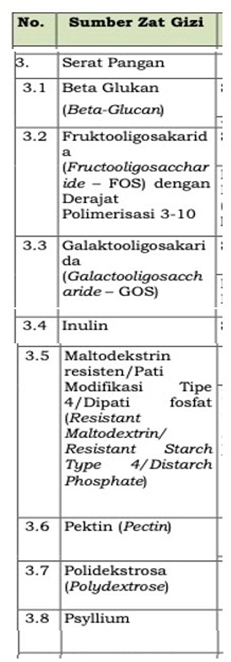
Figure 2. Excerpt from Annex I of BPOM Decree No 30 Year 2021
Although the above regulations stipulate the definition and types of dietary fiber, there is currently no regulation stipulating the mandatory method for analyzing dietary fiber content in food.
2. Applicable Analytical Method for Resistant Dextrin
Resistant dextrin is a type of dietary fiber according to BPOM Decree No 30 Year 2021 as shown in the above Figure 2.
In the absence of local regulations, the applicable analytical method for dietary fiber content can be referred to Indonesian National Standard (Standar Nasional Indonesia or SNI). A voluntary SNI that has dietary fiber parameters for the quality requirement is SNI 4270-2021 Cereal beverage powder (in local language: Serbuk minuman serealia) [3].
According to SNI 4270-2021, the dietary fiber analytical method is adopted from AOAC Official Method 985.29. Total Dietary Fiber in Foods, Enzymatic – Gravimetric Method. Final Action (Codex Adopted – AOAC Method) [4].
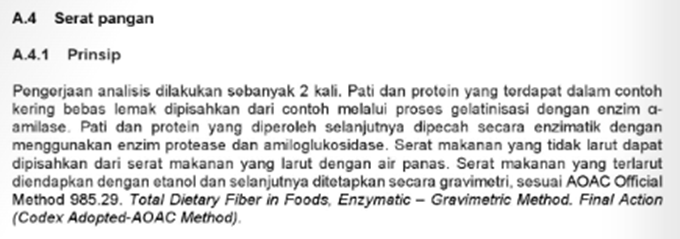
Figure 3. Excerpt from Section A.4 of SNI 4270-2021
English translation:
A.4 Dietary fiber
A.4.1 Principle
The analysis is carried out twice. Starch and protein in the dry fat-free sample are separated from the sample through gelatinization with alpha-amylase enzyme. The starch and protein obtained are then enzymatically broken down using protease and amyloglucosidase enzymes. Insoluble dietary fiber can be separated from soluble dietary fiber with hot water. The soluble dietary fiber is precipitated with ethanol and further determined by gravimetric method, according to AOAC Official Method 985.29. Total Dietary Fiber in Foods, Enzymatic – Gravimetric Method. Final Action (Codex Adopted – AOAC Method).
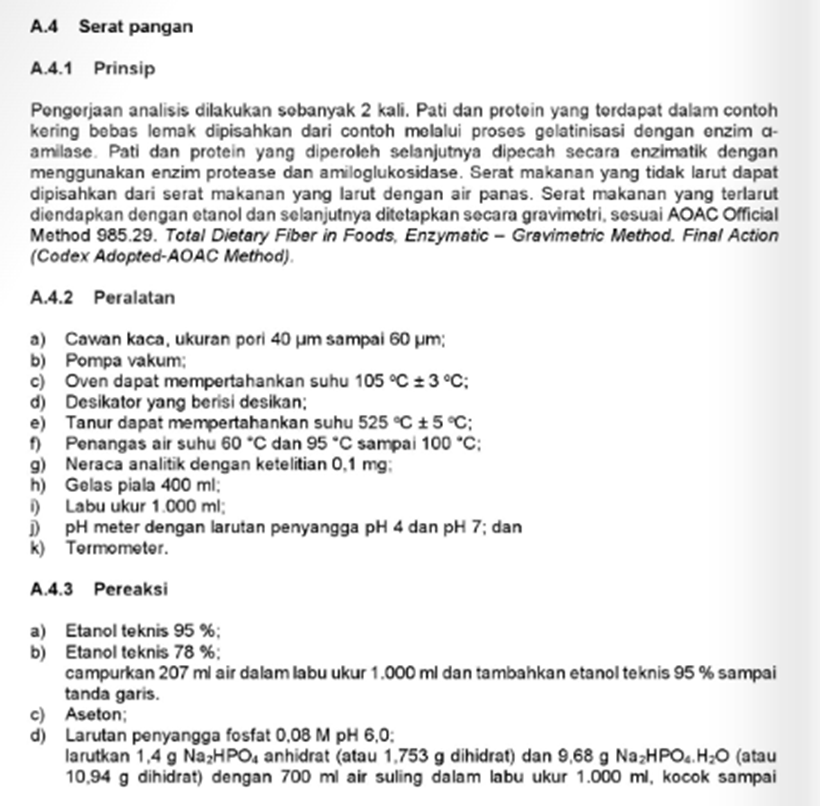
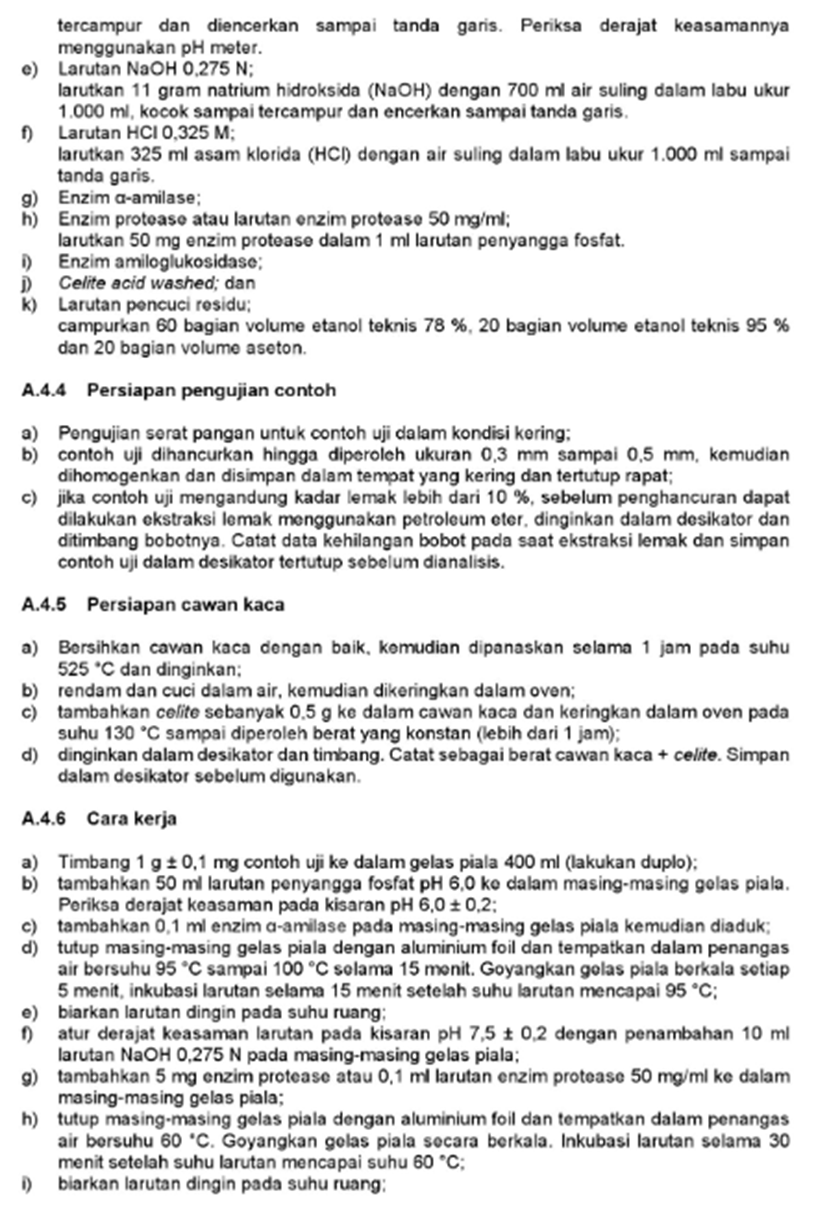
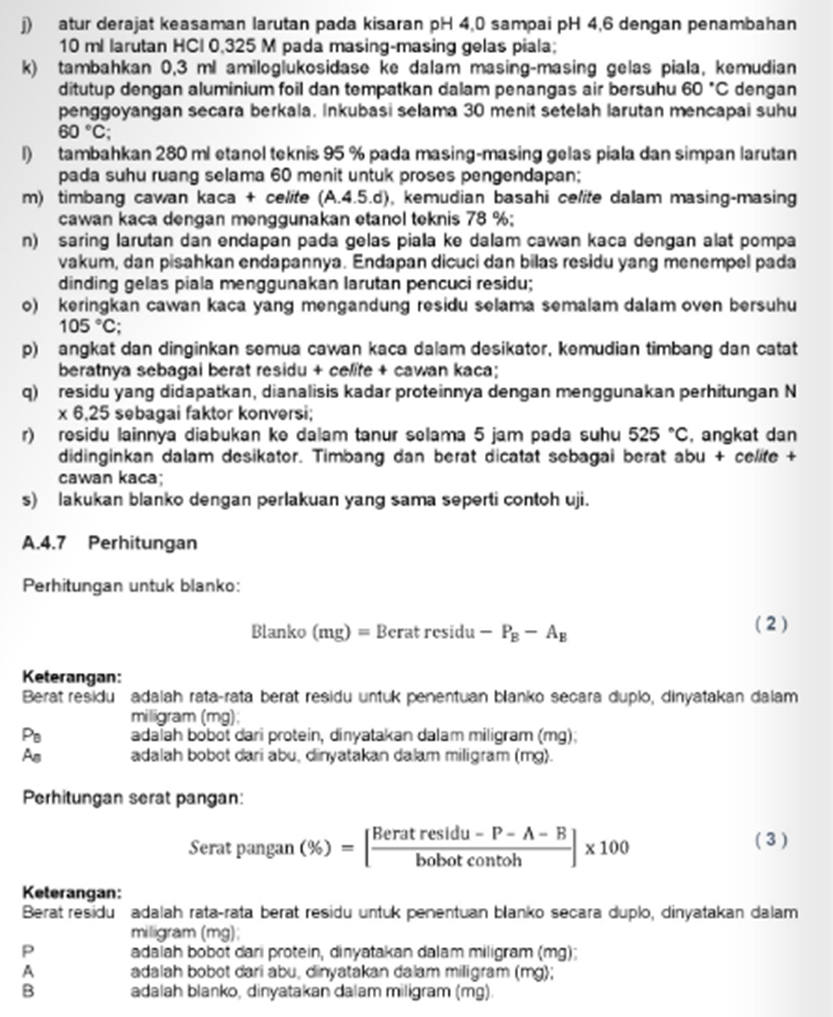
Since no regulation specifically prescribes mandatory analytical methods for dietary fiber content, the manufacturer may refer to the analytical method in SNI 4270-2021 (see Annex A below) or directly refer to AOAC Official Method 985.29.
For information, the analytical method in SNI 4270-2021 is also used by accredited laboratories in Indonesia to determine dietary fiber content in processed food products.
Conclusion
- In Indonesia, dietary fiber is regulated in BPOM Decree No. 1 Year 2022 and BPOM Decree No. 30 Year 2021. These regulations stipulate the definition and types (including permitted claims) for dietary fiber but do not stipulate a mandatory method for analyzing dietary fiber content in food.
- Resistant dextrin is a type of dietary fiber according to BPOM Decree No 30 Year 2021.
- For dietary fiber content, the manufacturer may refer to the analytical method in SNI 4270-2021 or directly refer to AOAC Official Method 985.29.
3. References
1. BPOM Decree No 1 Year 2022 on Supervision of Claim on Food Labelling and Advertising
https://jdih.pom.go.id/download/product/1341/1/2022
2. BPOM Decree No 30 Year 2021 on Requirements for Added Nutritional and Non-nutritional Compounds in Processed Food
https://jdih.pom.go.id/download/product/1325/30/2021
3. SNI 4270-2021 Cereal beverage powder (Serbuk minuman serealia) (paid document)
https://pesta.bsn.go.id/produk/detail/13397-sni42702021
4. AOAC Official Method 985.29. Total Dietary Fiber in Foods, Enzymatic – Gravimetric Method. Final Action (Codex Adopted – AOAC Method) (paid document)
http://www.aoacofficialmethod.org/index.php?main_page=product_info&products_id=572
4. Annex A
Excerpt from SNI 4270-2021 Cereal beverage powder
Analytical method of dietary fiber content
Was this article helpful?