
Regulatory Status for Food Supplements
- 8 Mins to read
- DarkLight
Regulatory Status for Food Supplements
- 8 Mins to read
- DarkLight
Article summary
Did you find this summary helpful?
Thank you for your feedback
Ashwagandha
Switzerland

This section provides a regulatory assessment for the use of Ashwagandha in Food Supplements in Switzerland.
1. Regulatory Background on Food Supplements in Switzerland
In Switzerland, a food supplement does not require official authorization nor a notification before placing on the Swiss market. It is the responsibility of the food business operator (FBO) to comply with the following criteria:
A. The food supplement must be safe:
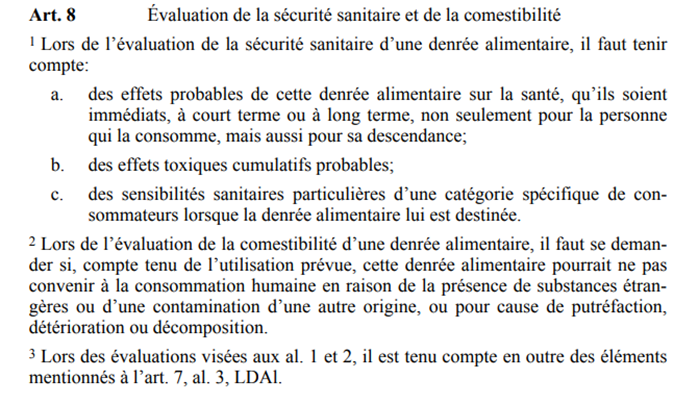
Figure 1. Article 8 of Swiss Food Ordinance 817.02 [1]
English translation:
- "When assessing the safety of a food, consideration should be given to:
- the probable effects of this food on health, whether immediate, short-term, or long-term, not only for the person who consumes it but also for his offspring;
- probable cumulative toxic effects;
- particular health sensitivities of a specific category of consumers when the foodstuff is intended for them.
- When assessing the edibility of a foodstuff, consideration should be given to whether, taking into account the intended use, this foodstuff might not be suitable for human consumption due to the presence of foreign substances or contamination from another source, or due to putrefaction, deterioration or decomposition.
- During the assessments referred to in paragraphs 1 and 2, elements mentioned in article. 7 para 3 LDA1 should also be taken into account."
B. "Food" i.e. including food supplements and their ingredients must not fall under the scope of therapeutic products legislation as described in Art. 2, al. 4 of Swiss Food Law 817.0 [2]. In particular, substances that likely present a toxicological risk or have a pharmacological effect can only be used in medicinal products.
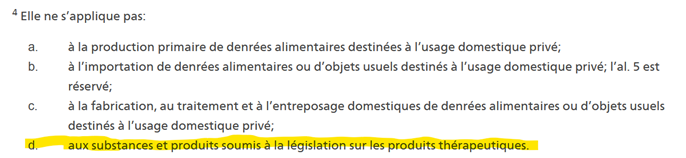
Figure 2. Excerpt from Article 2 al. 4 of Swiss Food Law 817.0 [2]
English translation:
Art, 2 Scope
"(…) It does not apply to:
- primary production of food for personal domestic use;
- the import of foodstuffs or everyday objects intended for personal domestic use;
- the domestic manufacturing, processing, and storage of foodstuffs or everyday objects intended for personal domestic use;
- substances and products subject to the legislation on therapeutic products."
C. The food supplement must fall under the definition of food as well as a food supplement:

Figure 3a. Excerpt from Article 4 of Swiss Food Law 817.0
English translation:
"Food means “all processed, partially processed or unprocessed substances or products which are intended to be ingested or which can reasonably be expected to be ingested by humans.”

Figure 3b. Excerpt from Article 1 of Swiss Ordinance
on Dietary Supplement 817.022.14 [3]
English translation:
"Dietary supplements are foodstuffs whose purpose is to supplement the normal diet. They constitute a concentrated source of vitamins, minerals or other substances having a nutritional or physiological effect alone or in combination, marketed in the form of doses."
To support the food business operator (FBO) with compliance with these requirements, the Swiss Federal Food Safety and Veterinary Office (FSVO) has issued a Question and Answer on food supplements for professionals [4] and a Letter of Information for the use of plants in food supplements [5].
The Q&A includes principles on the use of regulated substances and other substances not specifically regulated which may be added to food supplements:
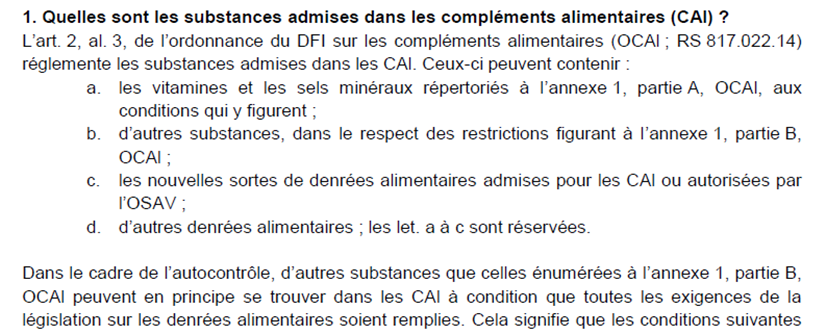
Figure 4. Excerpt from Swiss authority FSVO Q&A on Food supplement
English translation:
"1. Which substances can be used in food supplements?
Art. 2 para. 3, of the Ordinance of the DFI on food supplements (OCAl; RS 817.022.14) [3] regulates the substances admitted in the food supplement. These may contain:
- vitamins and minerals listed in Annex 1, Part A, OCAl, conditions indicated therein;
- other substances, subject to the restrictions set out in Annex 1, Part B, OCAl;
- novel food admitted for the food supplement or authorized by the FSVO;
- other foodstuffs; the let. a to c are reserved.
In the context of self-monitoring, other substances than those listed in Annex 1, Part B, OCAl can in principle be found in the food supplement provided that all the requirements of the food legislation are complied with. […]"
Specific to botanicals, FSVO recommends the FBO uses the German list of authorized plants added to food [6] as a guideline when evaluating the safety of plants (see Figure 5).
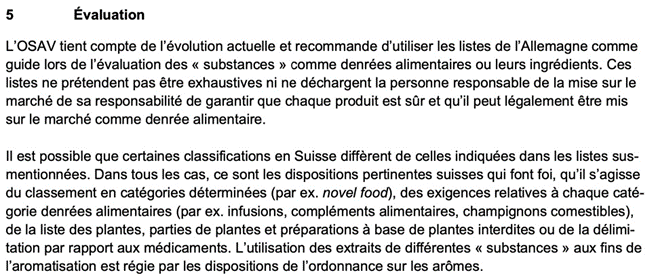
Figure 5. Excerpt from Chapter 5 of FSVO Letter of Information
for the use of plants in food supplementsEnglish translation:
"The FSVO takes current developments into account and recommends using the German lists as a guide when assessing "substances" as foodstuffs or their ingredients. These lists do not claim to be exhaustive nor do they relieve the person responsible for placing it on the market of its responsibility to ensure that each product is safe and can legally be placed on the market as food.
It is possible that some classifications in Switzerland differ from those indicated in the above lists. In all cases, the relevant Swiss provisions prevail, whether it concerns the classification into specific categories (e.g. novel food), the requirements relating to each category of foodstuffs (e.g. infusions, food supplements, edible mushrooms), the list of prohibited plants, parts of plants and plant-based preparations or the delimitation in relation to medicinal products. The use of extracts of different “substances” for the purposes of flavoring is governed by the provisions of the Ordinance on flavorings."
In addition, FSVO and Swissmedic (Swiss Agency for Therapeutic Products) have published a guide of criteria for the delimitation between therapeutic products, foodstuffs, and utility articles [7], The latter indicates that therapeutically effective dosage of botanical is not permitted in food (including in food supplement), otherwise, the products fall under the scope of therapeutic products legislation.
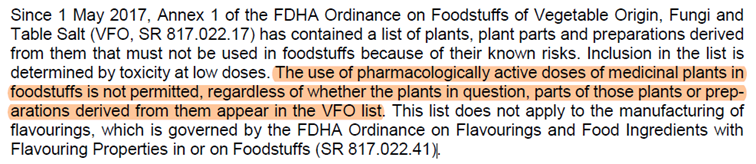 Figure 6. Excerpt from Chapter 1, 1b of Swissmedic Guidelines on Criteria for distinguishing therapeutic products from foodstuffs with reference to orally administered products [7]
2. Permitted Use of Ashwagandha as an Active Ingredient in Food Supplements
In Switzerland, Annex I of Swiss Ordinance 817.022.17 on foods of plant origin, mushrooms, and edible salt [8] includes a non-exhaustive list of plants and preparation thereof prohibited to be added in foodstuff, including in food supplements. Ashwagandha (scientific name: Withania somnifera) is not part of this list.
Annex 4 of Swiss Ordinance 817.022.32 on the addition of vitamins, minerals, and certain other substances to foodstuffs [9] includes the list of substances prohibited to be added to foodstuff, including in food supplements. Ashwagandha is not part of this list either.
Annex 1B of Swiss Ordinance 817.022.14 [3] includes the list of other substances with defined maximal levels in food supplements. Ashwagandha, nor its substances, are not part of this list either.
For ingredient which does not have a history of safe use in foodstuff/food supplements before 15th May 1997 in the EU and Switzerland, authorization for novel food is required before it can be used in food supplement.
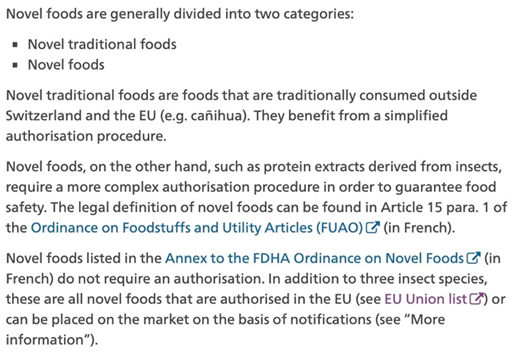
Figure 7. Excerpt from Swiss Authority (FSVO) on the authorization of novel foods [10]
Ashwagandha is not a Novel food as per EU Novel Food Catalogue [11], therefore no authorization is needed before using this plant in food supplements sold in Switzerland.
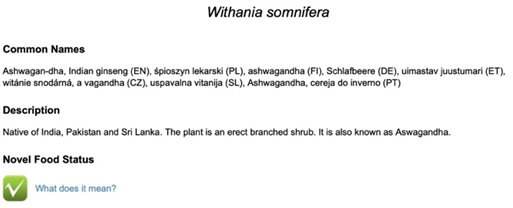
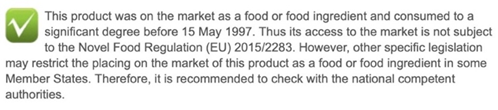
Figure 8. Excerpt on Ashwagandha from EU Novel Food Catalogue
Currently, there is no maximum level set for Ashwagandha in food supplements. However as recommended by the Swiss authority (see Figure 5), the German list of authorized plants added to food should be referred to [6]. In this list, Ashwagandha (scientific name: Withania somnifera) is found in List B which means "substances" for which a restriction of use in foodstuffs is recommended.
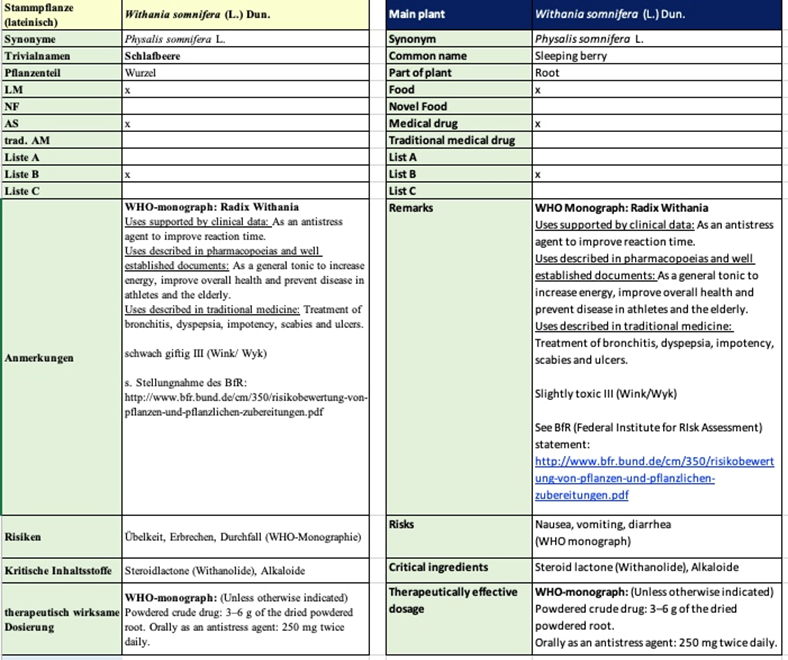
Figure 9. Excerpt from German List of Botanical substances on Ashwagandha
As shown above, only the roots of Ashwagandha can be used with its therapeutically effective dosage indicated as following WHO-monograph:
- Powdered crude drug: 3–6 g of the dried powdered root
- Orally as an antistress agent: 250 mg twice daily
As a result, in order for a food supplement containing Ashwagandha not to fall under the scope of the Swiss therapeutic products, the daily dose of Ashwagandha provided by that food supplement must be below the therapeutically effective dosage (WHO-monograph) indicated above.
Conclusion
In Switzerland, Ashwagandha (scientific name: Withania somnifera) is authorized as an active ingredient in food supplements, and food supplements do not need prior authorization or notification. The business operator is responsible for the safety of the food supplement and for its compliance with Swiss legislation. As recommended by Swiss Authorities, the daily dose of Ashwagandha in the food supplement must be below the therapeutically effective dosage indicated in the German list of authorized plants added to food.
2.1 Applicable Specifications for Ashwagandha (Local and/or International Standards)
In Switzerland, there are no defined applicable specifications for Ashwagandha.
In principle, ingredients used in food or food supplement must be compliant with Swiss legislation in terms of hygiene, contaminants, and pesticides (Swiss ordinance on food hygiene 817.024.1 [12], Swiss ordinance on contaminants 817.022.15 [13], Swiss ordinance on pesticides 817.021.23 [14]).
Furthermore, as recommended by FSVO, the German list of authorized plants added in food indicates that Ashwagandha (scientific name: Withania somnifera) contains “steroid lactones (withanolides), alkaloids” as critical substances (see Figure 9). As a result, the FBO is expected to monitor these substances to ensure the food supplement containing Ashwagandha is safe.
Conclusion
- In Switzerland, Ashwagandha (scientific name: Withania somnifera) is permitted to be used as an active ingredient in food supplements. There is no authorization nor notification required for food supplements, the FBO is responsible for the compliance of the food supplement with applicable Swiss legislation. In particular, the substance (i.e. its dosage) and the product should not fall under the scope of Swiss therapeutic products legislation.
- For botanical ingredient, Swiss authorities do recommend using the German list of plants authorized to be used in food [6]. This list indicates that Ashwagandha has restrictions for use with the daily dose of Ashwagandha in the food supplement to be below the therapeutically effective dosage. In addition, the critical substances i.e. steroid lactones (withanolides) and alkaloids are expected to be monitored to ensure the food supplement containing Ashwagandha is safe.
- Currently, there are no defined applicable specifications for Ashwagandha in Switzerland. Manufacturers should at minimum refer to the relevant provisions laid down in the Swiss Ordinance for contaminants, pesticides, and general food hygiene.
3. References
1. Swiss Ordinance on Food 817.02
https://www.fedlex.admin.ch/eli/cc/2017/63/fr
2. Swiss Food Law 817.0
https://www.fedlex.admin.ch/eli/cc/2017/62/fr
3. Swiss Ordinance on Dietary Supplements 817.022.14
https://www.fedlex.admin.ch/eli/cc/2017/155/fr
4. FSVO Question and Answer on Food supplement for professionals
5. FSVO Letter of Information 2021/4 on Use of substance from plants, fungi, lichens, algae and preparations made therefrom as foodstuffs or their ingredients
6. German list of plant authorized added in food “Stoffliste des Bundes und der Bundesländer, Kategorie « Pflanzen und Pflanzen-teile » “
7. FSVO and Swissmedic - Criteria for the delimitation between medicaments, food-stuffs and utility articles
8. Swiss Ordinance on foods of plant origin, mushrooms and edible salt 817.022.17
https://www.fedlex.admin.ch/eli/cc/2017/181/fr
9. Swiss Ordinance on the addition of vitamins, minerals and certain other substances to foodstuffs 817.022.32
https://www.fedlex.admin.ch/eli/cc/2017/161/fr
10. FSVO on authorization of novel foods
11. EU Novel Food Catalogue
https://webgate.ec.europa.eu/fip/novel_food_catalogue/
12. Swiss Ordinance on food hygiene 817.024.1
https://www.fedlex.admin.ch/eli/cc/2017/183/fr
13. Swiss Ordinance on contaminants 817.022.15
https://www.fedlex.admin.ch/eli/cc/2017/156/fr
14. Swiss Ordinance on pesticides 817.021.23
https://www.fedlex.admin.ch/eli/cc/2017/151/fr
Was this article helpful?