
Packaging Requirements for FCM
- 11 Mins to read
- DarkLight
Packaging Requirements for FCM
- 11 Mins to read
- DarkLight
Article summary
Did you find this summary helpful?
Thank you for your feedback
Packaging Requirements for Food Contact Materials (FCM)
Mongolia

The below version control table serves to document all updates made to the report. The purpose is to ensure the information is always accurate and up-to-date.
| Version Number | Content Creation Date | Publishing Date | Section(s) Updated & Reason(s) for Update |
|---|---|---|---|
| V0 | 27 Feb 2025 | 27 Mar 2025 | N/A (new report) |
Disclaimers
A) At RegASK, we are committed to providing our clients with the most up-to-date and accurate information on regulatory requirements and compliance. To ensure the highest level of accuracy and relevance, we regularly review and update our e-guidebooks at least twice per year to reflect the latest regulatory developments in the market. Please contact us if you would like to activate this feature. In the meantime, our RegAlerts service is designed to keep our clients notified of any regulatory updates that may impact their business.
B) The contents on this platform are exclusively intended for the use of RegASK and its authorized representatives. All materials herein are confidential and the sole property of RegASK. Any reproduction, distribution, or display of this content to others is strictly prohibited without the express written consent of RegASK.
1. Overview of Relevant Regulatory Standards for Food Contact Materials
In Mongolia, Food contact materials (FCMs) are primarily governed by the Law on Food Safety [1] and the Law on Hygiene [2]. These laws establish safety and hygiene requirements for materials that come into contact with food, including packaging, containers, and equipment.
Article 12 of the Law on Food Safety requires that food products and raw materials must be packaged using containers made from materials that do not adversely affect human health.
In line with the general requirements for food products and food raw materials, FCMs shall comply with Mongolian and international standards. FCMs must be checked for compliance with hygiene and safety standards. Operators must maintain records of raw materials, packaging, and contact materials used during the production process [1, 2].
In line with the general requirements for food products and food raw materials, FCM shall comply with Mongolian and international standards, normatives, technical documents, and requirements of hygiene safety indicators.
Article 8 of the Law on Hygiene states that foods, raw materials, and their packaging, equipment, and tools must comply with Mongolian and international standards, as well as hygiene safety indicators. Raw materials, goods, products, substances, and technologies for export or import, including imported foods, must have a certificate from a competent authority verifying their environmental friendliness and compliance with hygiene requirements. Domestic manufacturers are responsible for ensuring the quality, safety, and performance of their produced materials and goods.
Packaging materials used for food must meet stringent hygiene requirements. Local manufacturers of FCMs are required to obtain hygiene certifications and ensure that their products are free from pollutants that could negatively impact human health [2].
2. General Standards for Food Contact Materials
Legal Regulations and Applicable Standards for Food Contact Materials (FCMs)
Legal regulations for food contact materials (FCMs) are currently under development. Regulations applicable to food packaging in general can be consulted through the "Food Packaging Import Inspection Checklist" [3].
The "Food Packaging Import Inspection Checklist" outlines the requirements for food packaging imported into Mongolia, ensuring compliance with both Mongolian and international standards for safety, quality, and hygiene.
The checklist is structured around three key areas:
- Documentary Inspection – Verifies the presence of all necessary documents, certifications, and declarations, ensuring compliance with hygiene and environmental standards.
- Physical Examination – Assesses the condition, labeling, and transportation of packaging materials to ensure adherence to technical and hygiene requirements, including standards like MNS 5547:2005 and the Law on Hygiene.
- Laboratory Testing – Ensures packaging materials meet chemical safety standards, such as the maximum allowable levels of migrating chemicals (MNS 5684:2006) and radiation safety norms (ЦАН-2015) [6, 10].
Key requirements highlighted in the checklist include:
- Packaging must prevent contamination, protect product integrity, and maintain hygiene standards throughout its lifecycle.
- All imported packaging must be certified by a competent authority, confirming its environmental friendliness and compliance with hygiene and safety regulations.
- Proper labeling is required, including details such as the manufacturer's name, country of origin, storage conditions, and compliance symbols.
The following key standards are currently applicable [3, 4]:
- MNS 5547:2005 - Plastic Packaging for Food Product: Specifies the general technical requirements for plastic packaging used in food products [5].
- MNS 5684:2006 - Maximum Permissible Levels of Chemicals in Containers and Packaging Materials: Defines the maximum permissible levels of chemicals in containers and packaging materials that may migrate into food products [6].
- MNS CAC GL 6:2007 - Guideline Levels for Vinyl Chloride Monomer and Acrylonitrile in Food and Packaging Materials [7].
- MNS 5580:2005, Plastic bottle blanks. General Technical Requirements. MNS 5580:2005 sets general technical requirements for plastic bottle preforms used for packaging, storing, and transporting beverages and oils, including pure and mineral water, carbonated drinks, juices, beer, and vegetable oil. This standard applies to plastic bottle blanks that can be blown into bottle shapes to specified sizes [8].
- MNS ISO TS 22002-4:2020 - Prerequisite Programs on Food Safety, Part 4: Food Packaging Manufacturing which outlines prerequisite programs for food safety specific to food packaging manufacturing. This MNS is applicable to local manufacturers [9].
- Radiation Safety Norms-2015" approved by the Nuclear Energy Commission's Resolution No. 06 of 2015.7 [10].
In addition to the MNS mentioned above, a draft National Standard was developed to establish a "List of Substances Allowed for Use in the Production of Plastic Surfaces in Contact with Food and Permissible Migration Levels." This draft draws on the following European regulations:
- Regulation (EU) No 10/2011: Specifies safety requirements for plastic materials and articles intended to come into contact with food [11].
- Regulation (EC) No 1935/2004: Provides the general framework for materials and articles intended to come into contact with food [12].
Note: The draft underwent review and feedback from key stakeholders, including the United Association of Packaging Manufacturers of Mongolia, Green Crown LLC, and OB Plastic LLC. It was subsequently submitted to the Technical Committee of Food Standardization of the Ministry of Agriculture, but it has not yet been finalized or officially issued [4].
3. Specific Requirements per Type of Food Contact Materials
3.1 Glass Bottles
Table 1. Contaminant limits for glass materials in contact with food excerpted from MNS 5684:2006 [6]
No. | Material types and items | Name of chemical substance 1 | Control parameters | |||
Maximum allowable concentration (mg/L) | Hazard level2 | Threshold concentration for chronic exposure (mg/L) | Threshold concentration for acute exposure (mg/m³) | |||
| 24 | Glassware: Green glass | Aluminum | 0.5 | 2 | - | - |
| Chromium | Total 0.1 | 3 | - | - | ||
| Copper | 1.0 | 3 | - | - | ||
| Boron | 0.5 | 2 | - | - | ||
| Fluorine | 0.5 | 2 | - | - | ||
| Brown glass | Aluminum | 0.5 | 3 | - | - | |
| Boron | 0.5 | 2 | - | - | ||
| Manganese | 0.1 | 3 | - | - | ||
Orange glass | Cobalt | 1.0 | 2 | - | - | |
| Chromium | 0.1 | 3 | - | - | ||
| Fluorine | 0.5 | 2 | - | - | ||
| Clear and light-colored glass | Lead | 0.05 | 2 | - | - | |
| Aluminum | 0.5 | 2 | - | - | ||
| Boron | 0.5 | 2 | - | - | ||
| Cobalt | 1.0 | 2 | - | - | ||
| 25 | Crystal glass | Lead | 0.03 | 2 | - | - |
| Brown | 0.5 | 2 | - | - | ||
| Cadmium | 0.001 | 2 | - | - | ||
| Aluminum | 0.5 | 2 | - | - | ||
[1] The amount of chemicals marked in bold must be determined in the hygienic analysis of food packaging materials.
[2] Based on the negative effects on the human body, it is classified into 4 levels. These are:
- Level 1 - the highest toxicity
- Level 2 - high toxicity
- Level 3 - moderate toxicity
- Level 4 - low toxicity
3.2 Metal Can
Table 2. Contaminant limits for metallic materials in contact with food excerpted from MNS 5684:2006 [6]
| No. | Material types and items | Name of chemical substance1 | Control parameters | |||
Maximum allowable concentration (mg/L) | Hazard level 2 | Threshold concentration for chronic exposure (mg/L)" | Threshold concentration for acute exposure (mg/m³)" | |||
| 20 | Enameled steel pot with silicate coating | Boron | 0.5 | 2 | - | - |
| Aluminum | 0.5 | 2 | - | - | ||
| Cobalt | 0.1 | 2 | - | - | ||
| Nickel | 0.1 | 3 | - | - | ||
| Iron | 0.6 | - | - | |||
| Manganese | 0.1 | 3 | - | - | ||
| Chromium | Total 0.1 | 3 | - | - | ||
| Titanium steel container | Aluminum | 0.5 | 2 | - | - | |
| Boron | 0.5 | 2 | - | - | ||
| Iron | 0.3 | - | - | |||
| Cobalt | .1 | 2 | - | - | ||
| Nickel | 0.1 | 3 | - | - | ||
| Lead | 0.03 | 2 | - | - | ||
| Zinc | 1.0 | 3 | - | - | ||
| Arsenic | 0.05 | 2 | - | - | ||
| Titanium | 0.1 | 3 | - | - | ||
| 22 | Aluminum utensils | Aluminum | 0.5 | 2 | - | - |
| Copper | 1.0 | 3 | - | - | ||
| Iron | 0.3 | - | - | |||
| Lead | 0.03 | 2 | - | - | ||
| Cobalt | 0.1 | 2 | - | - | ||
| Brown | 0.5 | 2 | - | - | ||
| Nickel | 0.1 | 3 | - | - | ||
| Arsenic | 0.05 | 2 | - | - | ||
| Silicon | - | 2 | 10.0 | - | ||
| Zinc | 1.0 | 3 | - | - | ||
3.3 Caps/stoppers (Plastics, Metal)
3.3.1 Limits applicable to metallic materials
Limits applicable to metallic materials are similar to Table 2 above.
3.3.2 Limits applicable to plastic materials
Table 3. Contaminant limits for plastic materials in contact with food excerpted from MNS 5684:2006 [6] (You may scroll to the right from the bottom of the table)
| No. | Material types and items | Name of chemical substance1 | Limits | |||
| Maximum allowable concentration (mg/L) | Hazard level2 | Threshold concentration for chronic exposure (mg/L)" | Threshold concentration for acute exposure (mg/m³)" | |||
| 1 | Rigid polyvinyl chloride | Chlorvinyl | 0,01 1.0mg/kg (finished product) | 2 | - | 0.01 |
| Acetic aldehyde | 4 | 0.2 | 0.01 | |||
| Acetone | 0.1 | 3 | 0.35 | |||
| Zinc | 1.0 | 3 | - | |||
| Tin | - | 3 | 2.0 | - | ||
| Methyl alcohol | 0.2 | 2 | - | 0.5 | ||
| Butyl alcohol | 0.5 | 2 | - | 0.1 | ||
| Benzene | - | 2 | 0.01 | 0.1 | ||
| Toluen | - | 4 | 0.5 | 0.6 | ||
| 2 | Others than the above for softened polyvinyl chloride | Emollient: Dioctophthalate | 2.0 | 3 | - | - |
| Didodecyl phthalate | 2.0 | 3 | - | - | ||
| Diisododecyl phthalate | 2.0 | 3 | - | - | ||
| Dibutyl phthalate | Not allowed | |||||
| 3 | Polyvinyl acetate | Vinyl acetate | - | 2 | 0.2 | 0.15 |
| Formic aldehyde | 0.1 | 2 | - | 0.003 | ||
| Acetic aldehyde | - | 4 | 0.2 | 0.01 | ||
| Hexane | 0.1 | 4 | - | - | ||
| Heptan | 0.1 | 4 | - | - | ||
| 4 | Polystyrene | Styrene | 0.01 | 2 | - | 0.002 |
| Methyl alcohol | 0.2 | 2 | - | 0.5 | ||
| Butyl alcohol | 0.5 | 2 | - | 0.1 | ||
| Formic aldehyde | 0.1 | 2 | - | 0.003 | ||
| Benzence | - | 2 | 0.01 | 0.1 | ||
| Toluence | - | 4 | 0.5 | 0.6 | ||
| Ethylbenzene | - | 4 | 0.01 | 0.02 | ||
| 5 | CKC brand plastic | Styrene | 0.01 | 2 | - | 0.002 |
| Methyl methacrylate | 0.25 | 2 | - | 0.01 | ||
| Methyl alcohol | 0.2 | 2 | - | 0.5 | ||
| Formic aldehyde | 0.01 | 2 | - | 0.003 | ||
| 6 | Styrene acrylonitrile co-synthesized plastic | Styrene | 0.01 | 2 | - | 0.002 |
| Acrylonitrile | 0.02 | 2 | - | 0.03 | ||
| Benzaldehyde | - | 4 | 0.003 | 0.04 | ||
| Formic aldehyde | 0.1 | 2 | - | 0.003 | ||
| 7 | Plastic made from PVC/acrylonitrile divinyl copolymer/ synthetic plastic | Styrene | 0.01 | 2 | - | 0.002 |
| Acrylonitrile | 0.02 | 2 | - | 0.03 | ||
| a-methylstyrene | - | 3 | 0.1 | 0.04 | ||
| Benzene | - | 2 | 0.01 | 0.1 | ||
| Toluene | - | 4 | 0.5 | 0.6 | ||
| Ethylbenzene | - | 4 | 0.01 | 0.02 | ||
| Benzaldehyde | - | 4 | 0.003 | 0.04 | ||
| Xylol | - | 3 | 0.05 | 0.2 | ||
| 8 | Organic glass | Methyl methacrylate | 0.25 | 2 | - | 0.01 |
| 9 | Plastic Styrene Methyl-Methacrylate Co-Synthesized | Methyl methacrylate | 0.25 | 2 | - | 0.01 |
| 10 | Hexamethylen ediamine based polyamide | Hechamethylene diamine | 0.01 | 2 | - | 0.001 |
| Methy alcohol | 0.2 | 2 | - | 0.5 | ||
| Benzene | - | 2 | 0.01 | 0.1 | ||
| 11 | Polyamide | E-caprolactam | 0.5 | 4 | - | 0.06 |
| Benzene | - | 2 | 0.01 | 0.1 | ||
| Phenol | 0.05 | 4 | - | 0.003 | ||
| 12 | Polyurethane | Ethylene glycol | - | 3 | 1.0 | - |
| Acetic aldehyde | - | 4 | 0.2 | 0.01 | ||
| Formic aldehyde | 0.1 | 2 | - | 0.003 | ||
| Acetone | 0.1 | 3 | - | 0.35 | ||
| Methyl alcohol | 0.2 | 2 | - | 0.5 | ||
| Propyl alcohol | 0.1 | 4 | - | 0.3 | ||
| Isopropylene alcohol | 0.1 | 4 | - | 0.6 | ||
| Benzene | - | 2 | 0.01 | 0.1 | ||
| Toluene | - | 4 | 0.5 | 0.6 | ||
| Ethyl acetate | 0.1 | 2 | - | 0.1 | ||
| Butyl acetate | - | 4 | 0.1 | 0.1 | ||
| 13 | Plastic multi-layer anti-corrosion coating based on epoxy resin | Epichlorohydrin | 0.1 | 2 | - | 0.2 |
| Zinc | 1.0 mg/1 (not allowed in baby food packaging) | 3 | - | - | ||
| Epoxy resin reinforcement: polyethylene-polyamide (PEPA) | 0.01 | 2 | - | - | ||
| Metaphenylene diamide | 0.005 | 2 | - | - | ||
| Diphehyopropane | 0.01 | 4 | - | - | ||
| Lead | 0.03 (not allowed in baby food packaging) | 2 | - | - | ||
| Phenol | 0.05 | 4 | - | 0.003 | ||
| Formic aldehyde | 0.1 | 2 | - | 0.003 | ||
| 14 | Phenol plastic: di phenolformaldehyde and urea formaldehyde resin; organosilicon coating | Phenol | 0.05 | 4 | - | 0.003 |
| Formic aldehyde | 0.1 | 2 | - | 0.003 | ||
| Acetic aldehyde | - | 4 | 0.2 | 0.01 | ||
| Methyl alcohol | 0.2 | 2 | - | 0.5 | ||
| Butyl alcohol | 0.5 | 2 | - | 0.1 | ||
| Benzene | - | 2 | 0.01 | 0.1 | ||
| 15 | Urea of formaldehyde polystyrene foam /foam/ | Formic aldehyde | 0.05 | 2 | - | 0.03 |
| 16 | Polyolefins: polyethylene, polypropylene, polybutene, polymethylpentene, and all types of plastics derived from their synthesis | Formic aldehyde | 0.1 | 2 | - | 0.003 |
| Methyl alcohol | 0.2 | 2 | - | 0.5 | ||
| Propyl alcohol | 0.1 | 4 | - | 0.3 | ||
| Isopropyl alcohol | 0.1 | 4 | - | 0.6 | ||
| Butyl alcohol | 0.5 | 2 | - | 0.1 | ||
| Isobutyl alcohol | 0.5 | 2 | - | 0.1 | ||
| Solvents: Hexen | - | - | - | 0.085 | ||
| Hepten | - | - | - | 0.085 | ||
| Heptane | 0.1 | 4 | - | - | ||
| Hexane | 0.1 | 4 | - | - | ||
| Hexane | 0.1 | - | - | 0.35 | ||
| Acetone | 0.1 | 2 | - | 0.1 | ||
| Ethyl acetate | - | 4 | 0.2 | 0.01 | ||
| 17 | Fluoroplastics | Fluorine-ion and fluorinated organic compounds | Total 0.5 | 2 | - | - |
| Formic aldehyde | 0.1 | 2 | - | 0.03 | ||
| Hexane | 0.1 | 4 | - | - | ||
| Heptane | 0.1 | 4 | - | - | ||
| Lead | 0.01 | 2 | - | - | ||
Table 4. Hygiene and safety indicators for food contact materials made of plastic, excerpted from MNS 5547: 2005 [5]
Specifications | Maximum Allowance | |
| Volatile toxic compounds, mg/m³ | Formaldehyde | 0.003 |
| Acetone | 0.350 | |
| Toluene | 0.6 | |
| Xylol | 0.2 | |
| Benzene | 0.1 | |
| Heavy metal residues, mg/l | Lead | 0.03 |
| Mercury | 0.01 | |
| Nickel | 0.1 | |
| Copper | 1.0 | |
| Zinc | 1.0 | |
| Cobalt | 0.1 | |
| Cadmium | 0.01 | |
| Chromium | 0.1 | |
| Iron | 0.3 | |
| Microorganism | Total Plate Count | 100 |
| Fecal coliform | <3 | |
| Coliform | >300 | |
| E-coli, per 1ml | Not detected | |
| Listeria monocytogenes, per 25 ml | Not detected | |
| Salmonella, per 25 ml | Not detected | |
| Staphylococcus, per 1 ml | Not detected | |
Vinyl chloride monomer:
MNS CAC GL 6:2007 is equivalent to Codex CAC/GL 6-1991, which establishes guideline levels for vinyl chloride monomer and acrylonitrile in food and packaging materials. The Codex CAC/GL 6-1991 has been revoked, as the guideline levels for these compounds were integrated into the General Standard for Contaminants and Toxins in Food and Feed (CXS 193-1995). According to the Codex CAC/GL 6-1991, the maximum level of vinyl chloride monomer in food packaging material is 1.0 mg/kg. [7, 13]
4. Other Rules
4.1 "Food-safe" symbol:
In Mongolia, according to MNS 6848:2020 [14], food contact materials are required to bear the "Food Safe" symbol. This MNS outlines labeling requirements for materials that come into direct contact with food, including all types of packaging in contact with food (such as glass, cans, plastic, and rigid cardboard boxes), as well as food industry equipment and household items (e.g., cups, plates, spoons, pots, barrels). These surfaces, which are part of the food chain (from production, processing, and packaging to transportation, sale, and import), must bear the "Food Safe" symbol. The symbol indicates that these materials are free from toxic chemicals, do not compromise food safety, and maintain the quality, taste, and smell of the food products [14].
The "Food Safe" sign applies to all food-contact surfaces involved in the food chain, including food packaging materials and utensils, and provides essential information about the safety of the material used in direct contact with food, from primary production to final distribution.
- "Food-safe" symbol label:
- The "Food safe" symbol (featuring an image of a wine glass and fork) must be displayed clearly and indelibly on the product.
- This symbol indicates that the material used for packaging does not release toxic chemicals into the food or beverage and does not affect its safety, taste, or smell.
- Positioning and Display:
- The symbol should be placed in a visible area on the product packaging or surface that comes in direct contact with food or beverages or product label.
- The symbol must be clear, understandable, and permanent.
- If the symbol cannot be directly applied (e.g., due to space or material constraints), the symbol’s presence should be indicated in accompanying documentation.
- Design and Size:
- The sign must be embossed and displayed in black on a white background or vice versa.
- In cases where the base color is black, the symbol should be displayed in white or clear coloring
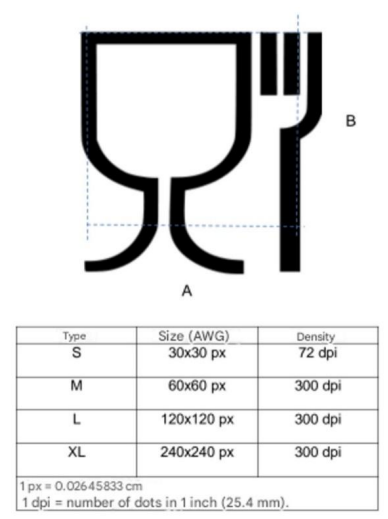
Figure 1. Design and dimensions of the “Food Safe” symbol [14]
Note
Businesses do not explicitly need to ask for prior permission from the authority to use the "safe-food symbol" sign on the packaging. However, they must ensure compliance with the material safety requirements specified in the referenced standards. Analytical results demonstrating that food contact packaging is safe and meets the criteria set out in the respective MNSs are a prerequisite.
Alternatively to the "safe-food symbol”, the text "хүнстэй хүрэлцэхэд аюулгүй" (translated as "safe for contact with food" in English) may be used to convey the same meaning as the "food safe” symbol.
4.2 Material Identification and Recycling Markings
If the material includes rubber or plastic components, the following requirements apply [14]:
- Material Identification: Identification of the type of rubber or plastic used in the food contact surface or packaging material.
- Recycling Symbol Labeling: The recycling symbol, as illustrated in Figure 2, represents the classification of plastics according to the Plastic Identification Code (PIC) system, established in 1988 by the Society of the Plastics Industry (SPI). This system assigns a unique number from 1 to 7 within a triangular symbol. Each number corresponds to a specific type of plastic resin used in production. The symbol not only indicates the type of plastic material but also provides guidance on recyclability and proper disposal methods.
- Recycling Symbol labeling does not automatically guarantee safety for direct food contact. The "Safe for Food Contact" symbol (wine glass and fork) must also be present to indicate the material is safe for use with food products.
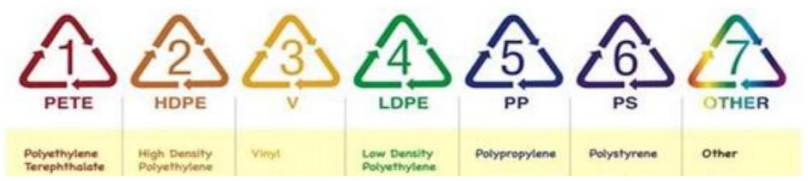
Figure 2. Plastic Identification Code (PIC) system [14]
5. Summary Table
Food contact materials | General legislation applicable | Specific legislation applicable |
Glass bottle | Law on ensuring the safety of food products [1] Law on hygiene [2]
MNS 6848:2020 [14] | MNS 5684: 2006 [6] |
Metal can | MNS 5684: 2006 [6] | |
Caps/stoppers (Plastics) | MNS 5547: 2005 [5] MNS 5684: 2006 [6] MNS CAC GL 6:2007 [7] | |
| Caps/stoppers (Metal) | MNS 5684: 2006 [6] |
6. References
1. Law on ensuring the safety of food products
https://legalinfo.mn/en/edtl/16959947951091
2. Law on hygiene
https://legalinfo.mn/en/edtl/16230949262521
3. Inspection checklist for imported food containers and packaging
4. MOFA Report on the monitoring, analysis and evaluation of the implementation of the National Program "Containers and Packages" in 2021
https://mofa.gov.mn/files/pdf-files/pdf/624aa2405b58af779a8603b8.pdf
5. MNS 5547: 2005 Plastic packaging for food products. General technical requirements
https://old.estandard.gov.mn/standard/v/5011
6. MNS 5684: 2006 Maximum permissible levels of chemicals contained in containers and packaging materials that may migrate into food products
https://old.estandard.gov.mn/standard/v/1580
7. MNS CAC GL 6:2007 Guideline levels for Vinyl Chloride Monomer and Acrylonitrile in Food and Packaging Material (Standard requires purchase to access content)
https://www.mongolialaws.org/p-215696-mns-cac-gl-62007.aspx
8. MNS 5580:2005, Plastic bottle blanks. General Technical Requirements
https://old.estandard.gov.mn/standard/v/5434
9. MNS ISO TS 22002-4:2020: This standard focuses on prerequisites for food safety in the production of food packaging materials
10. “Radiation Safety Norms-2015" approved by the Nuclear Energy Commission's Resolution No. 06 of 2015.7
https://legalinfo.mn/mn/detail?lawId=11322
11. Regulation (EU) No 10/2011: Specifies safety requirements for plastic materials and articles intended to come into contact with food
https://eur-lex.europa.eu/legal-content/EN/ALL/?uri=celex%3A32011R0010
12. Regulation (EC) No 1935/2004: Provides the general framework for materials and articles intended to come into contact with food
https://eur-lex.europa.eu/legal-content/EN/TXT/?uri=CELEX%3A32004R1935&qid=1734014413327
13. CXS 193-1995 General Standard for Contaminants and Toxins in Food and Feed - vinyl chloride monome (page 77)
14. MNS 6848: 2020 "Food-safe" symbol
https://old.estandard.gov.mn/standard/v/6628
Was this article helpful?