
Packaging Requirements for FCM
- 4 Mins to read
- DarkLight
Packaging Requirements for FCM
- 4 Mins to read
- DarkLight
Article summary
Did you find this summary helpful?
Thank you for your feedback
Food Contact Materials (FCM)
South Korea

The below version control table serves to document all updates made to the report. The purpose is to ensure the information is always accurate and up-to-date.
| Version Number | Content Creation Date | Publishing Date | Section(s) Updated & Reason(s) for Update |
|---|---|---|---|
| V0 | 11 July 2024 | 16 July 2024 | N/A (new report) |
| V1 | 09 June 2025 | 24 June 2025 | Overall review & update to references. |
Disclaimers
A) At RegASK, we are committed to providing our clients with the most up-to-date and accurate information on regulatory requirements and compliance. To ensure the highest level of accuracy and relevance, we regularly review and update our e-guidebooks at least twice per year to reflect the latest regulatory developments in the market. Please contact us if you would like to activate this feature. In the meantime, our RegAlerts service is designed to keep our clients notified of any regulatory updates that may impact their business.
B) The contents on this platform are exclusively intended for the use of RegASK and its authorized representatives. All materials herein are confidential and the sole property of RegASK. Any reproduction, distribution, or display of this content to others is strictly prohibited without the express written consent of RegASK.
Overview of Relevant Regulatory Standards
Chapter 3 of the Food Sanitation Act [1] outlines the legal requirements for materials used in contact with food. It consists of articles 8 and 9. Article 8 provides the general requirements while Article 9 specifies the standards and specifications that food contact materials must follow. These standards and specifications are known as the Standards and Specification for Utensils, Containers, and Packages (the Utensils, Containers, and Packaging Code) [2]. Unless a material meets these specific standards and specifications, it should not be used for food.
The general requirements provided in Article 8 of the Food Sanitation Act [1] are as per below:

English translation:
Implements, containers, and packaging containing or contaminated with toxic or harmful substances that pose a risk to human health, as well as implements, containers, and packaging that can adversely affect human health when in direct contact with food or food additives, shall not be sold, manufactured, imported, stored, transported, displayed for sale, or used in business.
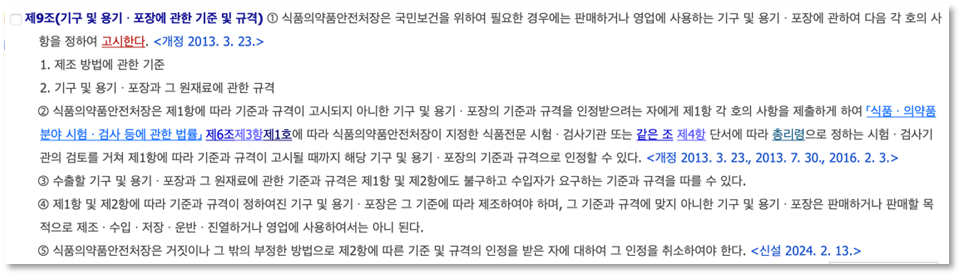
Article 9 of the Food Sanitation Act [1] provides the following:
English translation:
Article 9 (Standards and Specifications for Utensils, Containers, and Packaging)
- The Minister of Food and Drug Safety shall, when necessary for public health, establish and announce the following standards and specifications for utensils, containers, and packaging used in sales or business operations. <Amended on March 23, 2013>
- Standards for manufacturing methods
- Specifications for utensils, containers, packaging, and their raw materials
- The Minister of Food and Drug Safety may require those seeking recognition of standards and specifications for utensils, containers, and packaging not announced under Paragraph 1 to submit the matters listed in each subparagraph of Paragraph 1. These shall be reviewed by a food-specific testing and inspection institution designated by the Minister of Food and Drug Safety under Article 6(3)(1) of the Act on Testing and Inspection in the Food and Drug Sector, or by an institution specified by Presidential Decree under the proviso to Article 6(4) of the same Act. Until the standards and specifications are announced under Paragraph 1, the submitted standards and specifications may be recognized. <Amended on March 23, 2013, July 30, 2013, February 3, 2016>
- Notwithstanding Paragraphs 1 and 2, the standards and specifications for utensils, containers, packaging, and their raw materials intended for export may comply with the standards and specifications required by the importer.
- Utensils, containers, and packaging for which standards and specifications have been established under Paragraphs 1 and 2 shall be manufactured in accordance with those standards. Utensils, containers, and packaging that do not meet these standards and specifications shall not be sold, manufactured for sale, imported, stored, transported, displayed, or used in business operations.
- The Minister of Food and Drug Safety shall cancel the recognition of standards and specifications granted under Paragraph 2 if it is found that the recognition was obtained through false or other fraudulent means. <Newly established on February 13, 2024.> [1]
Regulatory Requirements on Food Contact Materials (Including Coatings and Materials)
1. General Requirements (Section II.2 of [2])
As mentioned above, the Utensils, Containers, and Packaging Code [2] outlines the standards and specifications for materials permitted for food contact, including glass, metal, and coatings. If a material is not included in the Utensil, Containers, and Packaging Code, it requires a submission to the Ministry of Food and Drug Safety (MFDS) for approval.
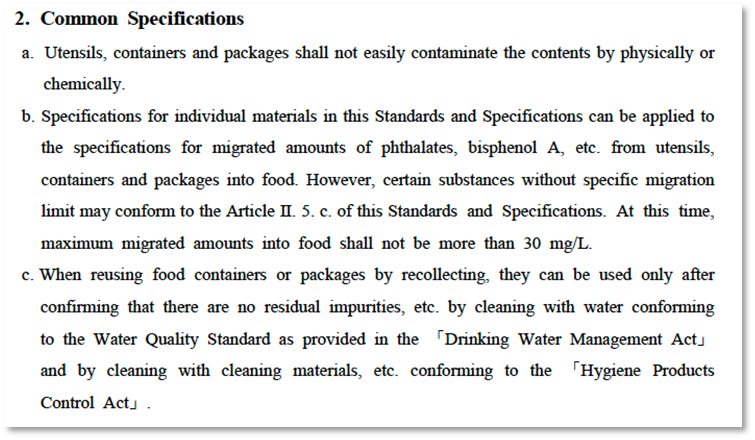
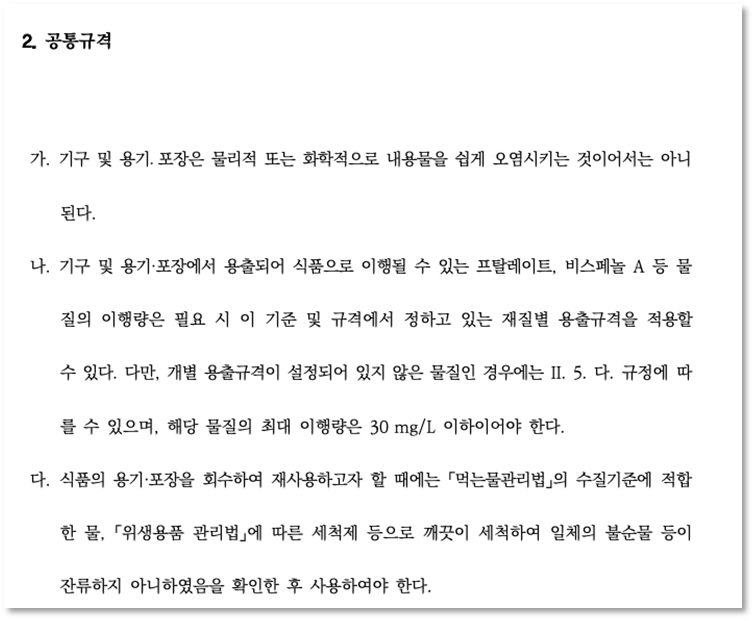
Section II.2 of the Utensils, Containers, and Packaging Code [2] provides the following general requirements:
2. Specific Requirements per Type of Food Contact Materials
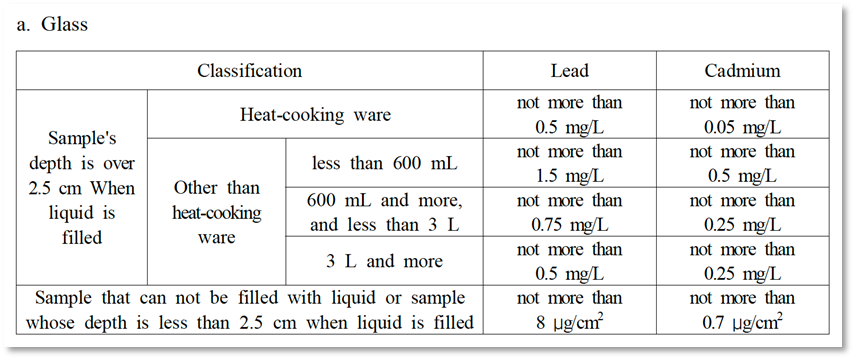
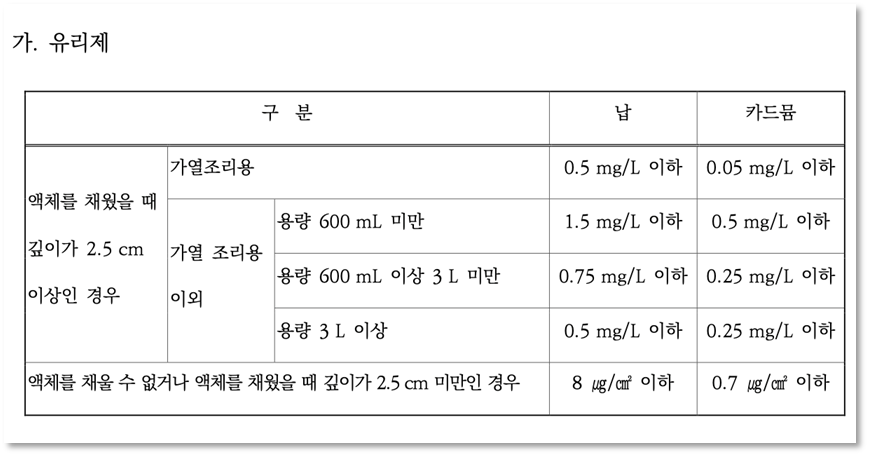
2.1 Glass Bottles (Section III.7.a of [2])
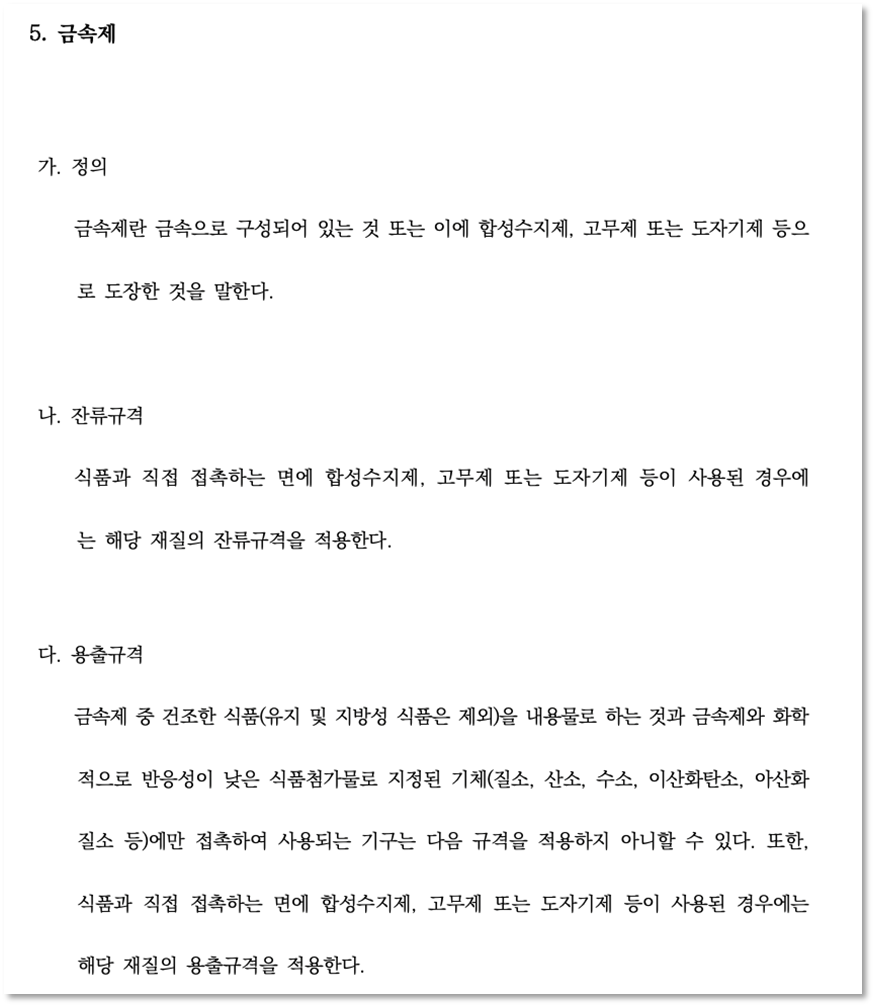
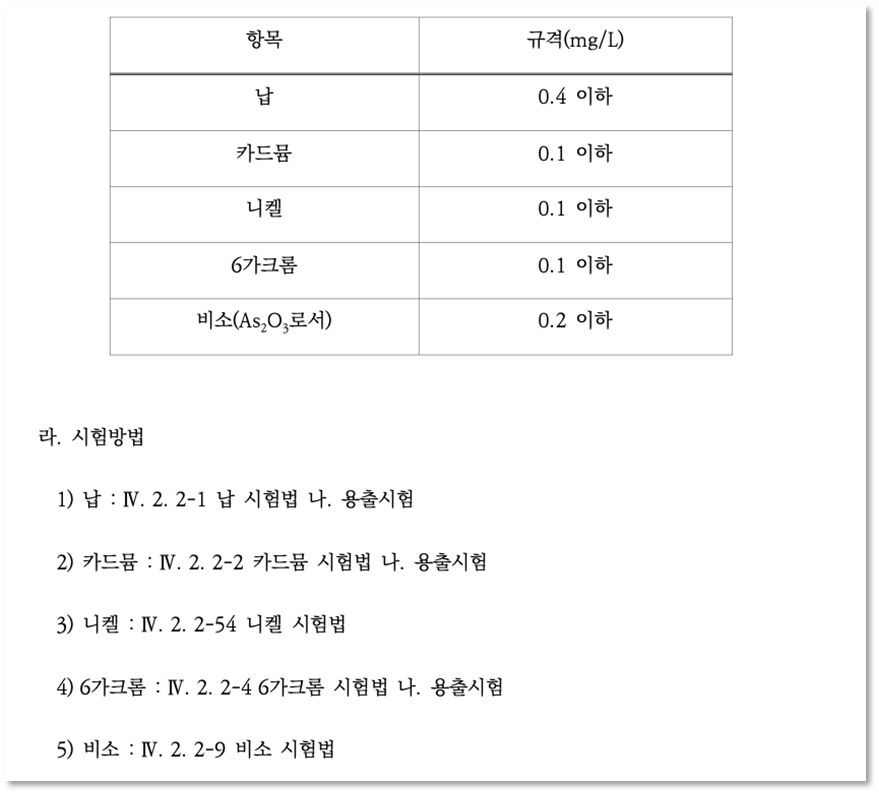
2.2 Metal Can (Section III.5 of [2])
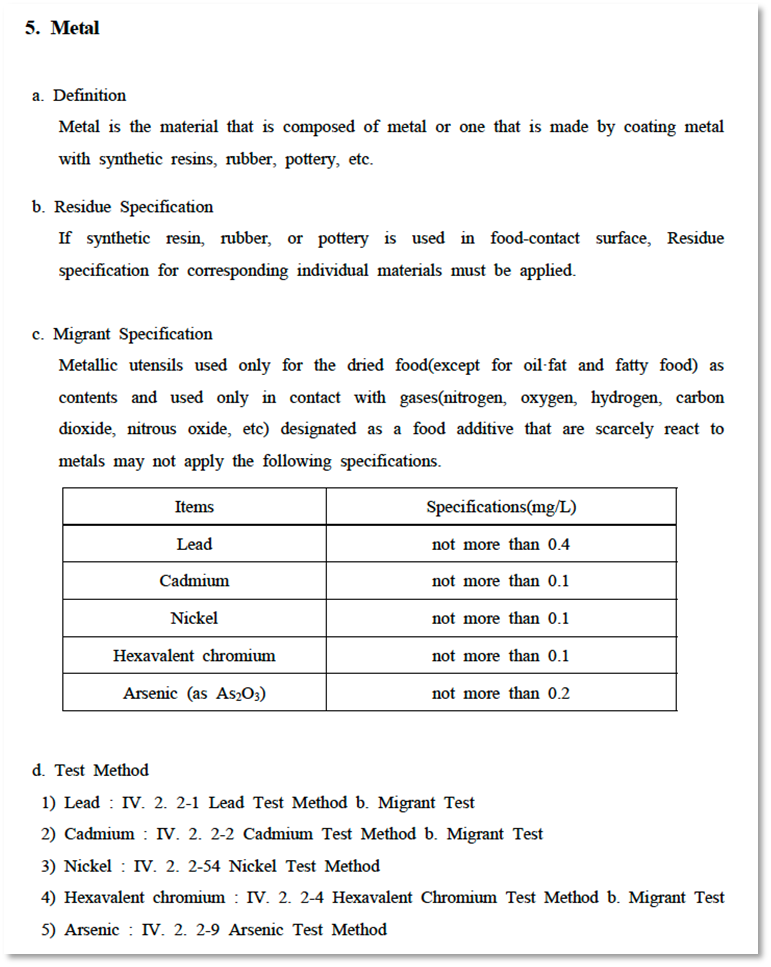 Furthermore, if synthetic resin, rubber, or ceramic materials are used in areas that come into direct contact with food, the migration specifications for those materials shall apply.
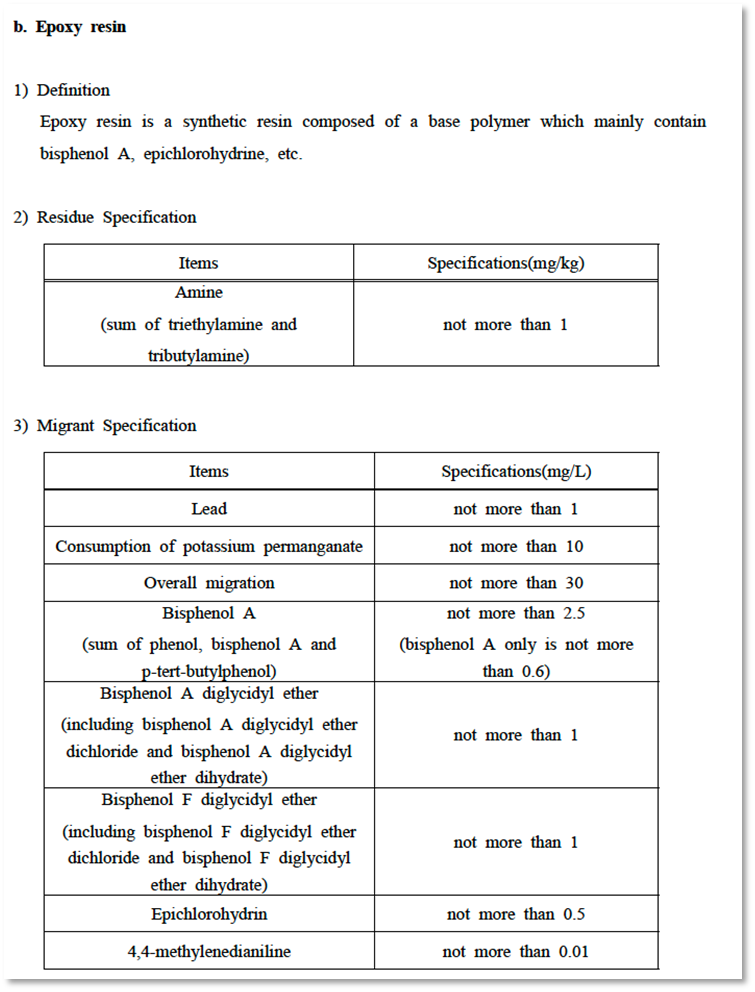
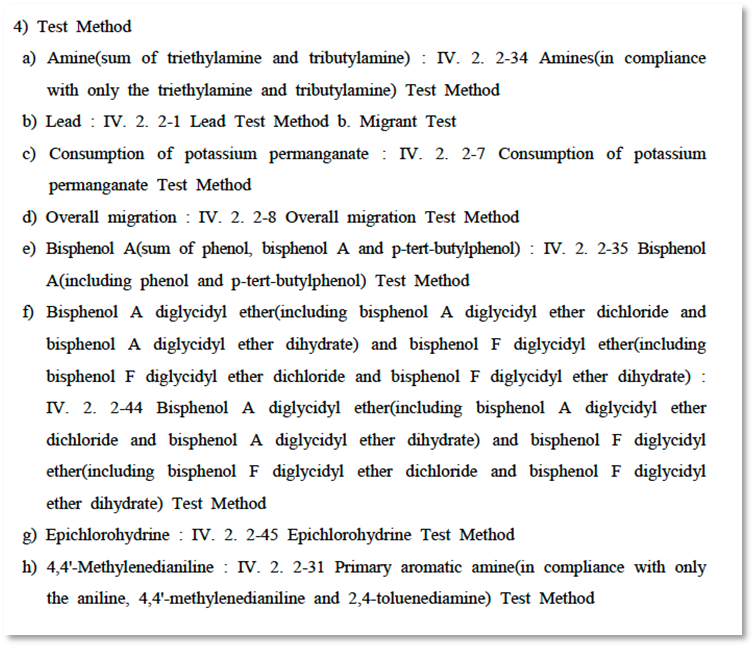
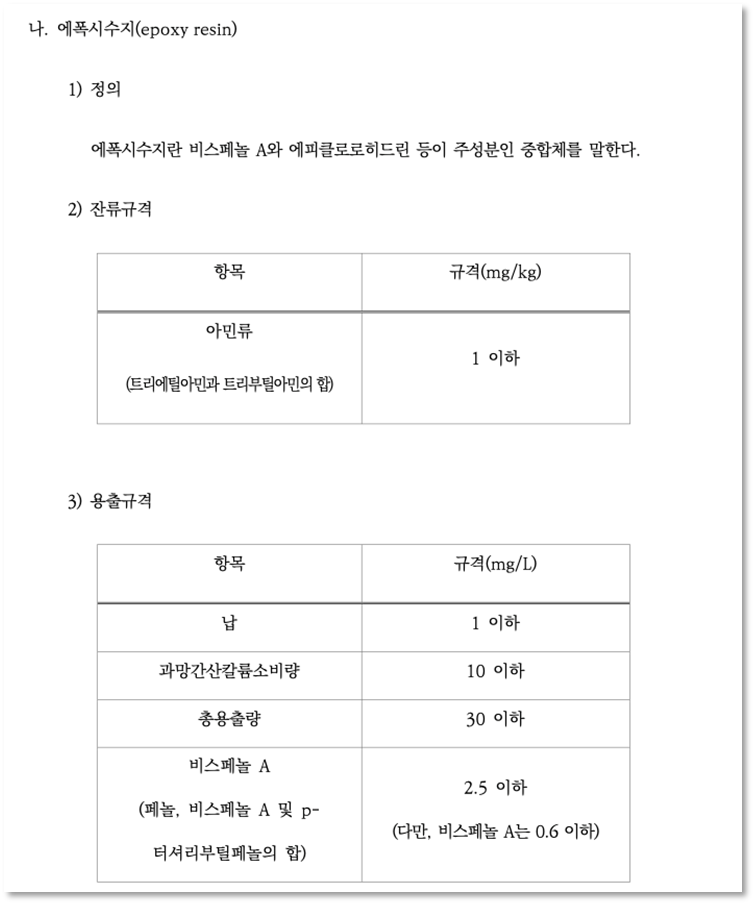
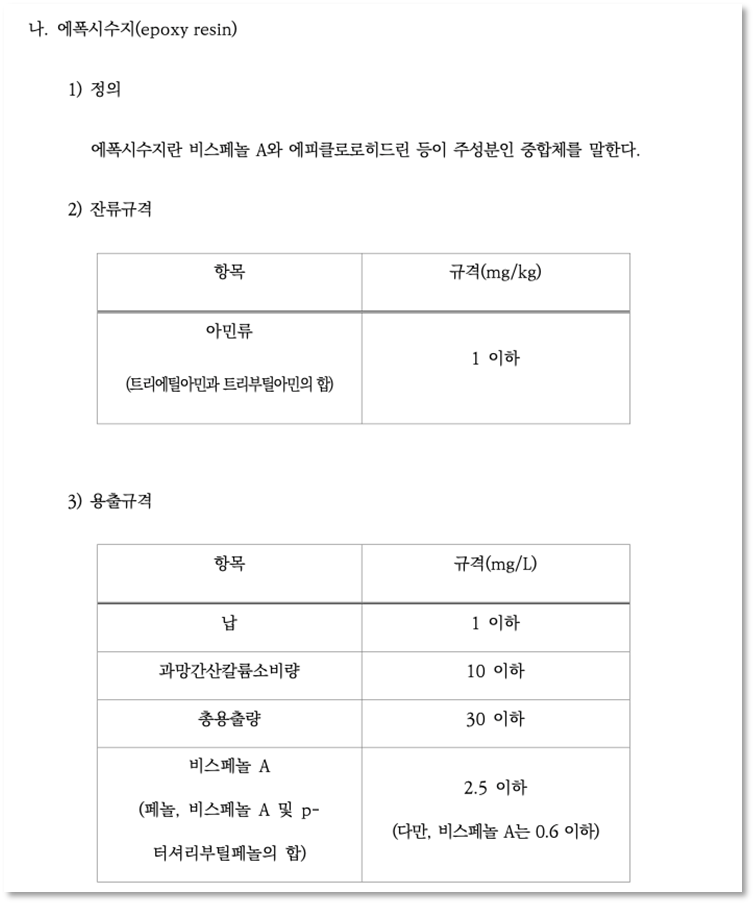
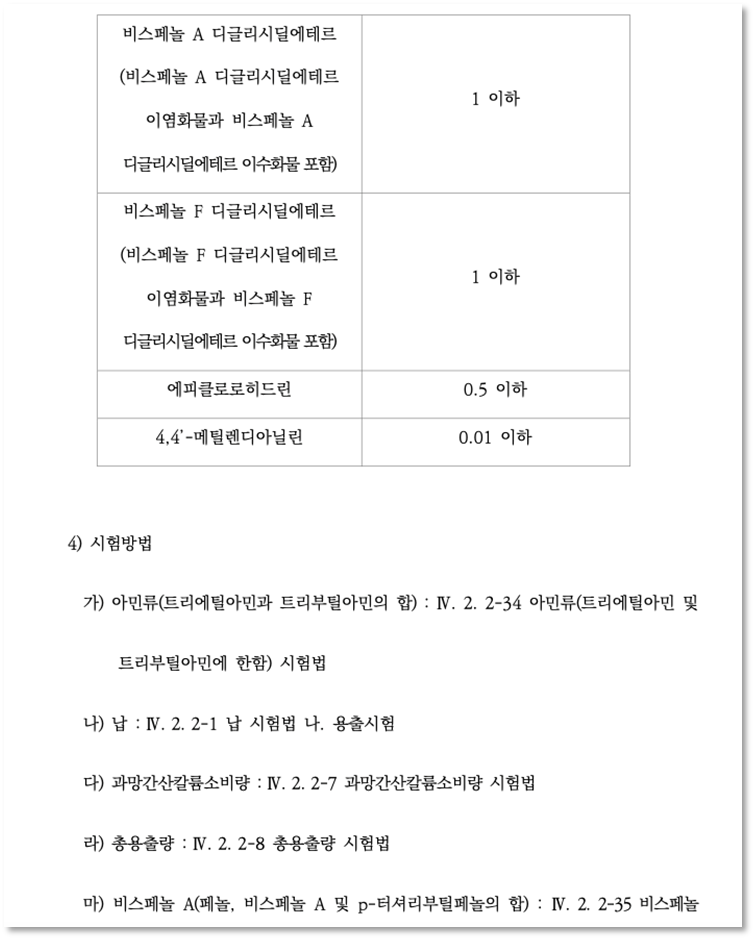
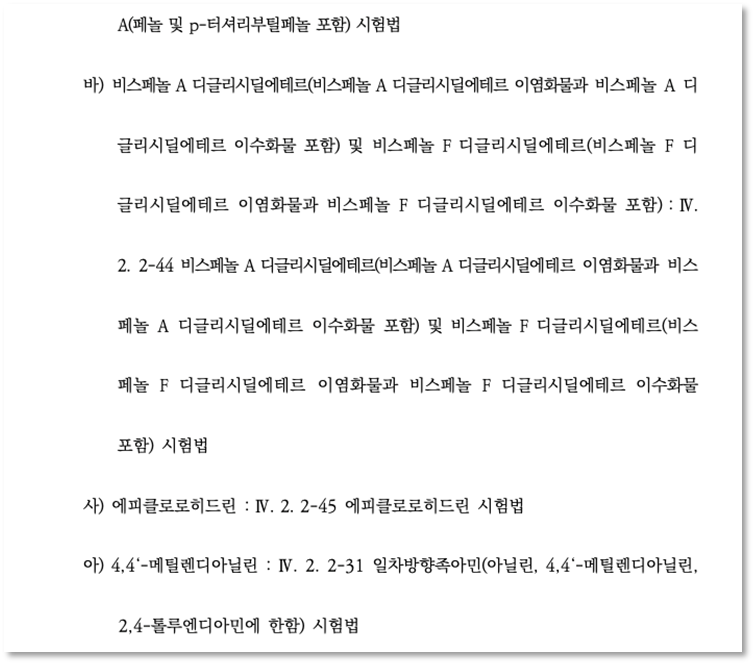
2.3 Epoxy Resin (Section III.1.1-9.b of [2])
Epoxy resin specification provides:
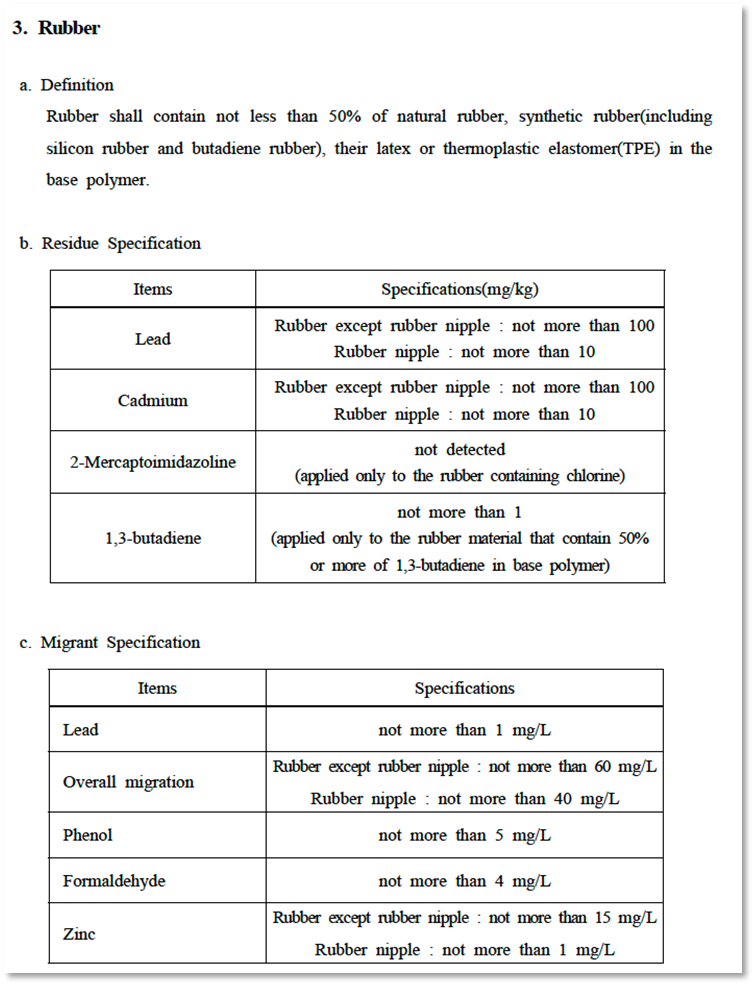
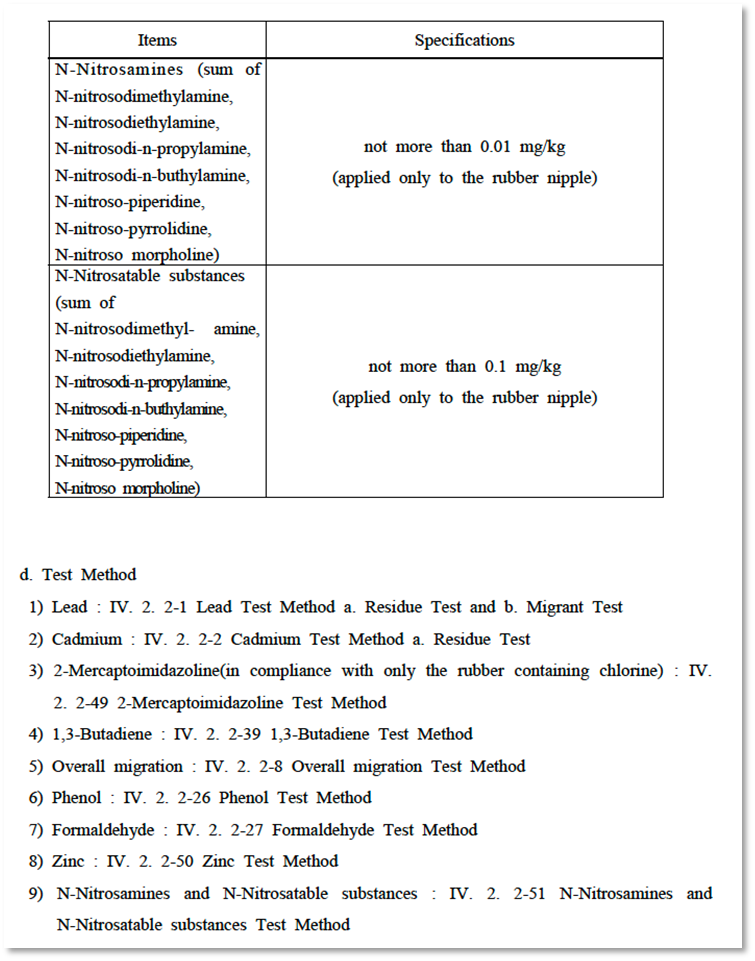
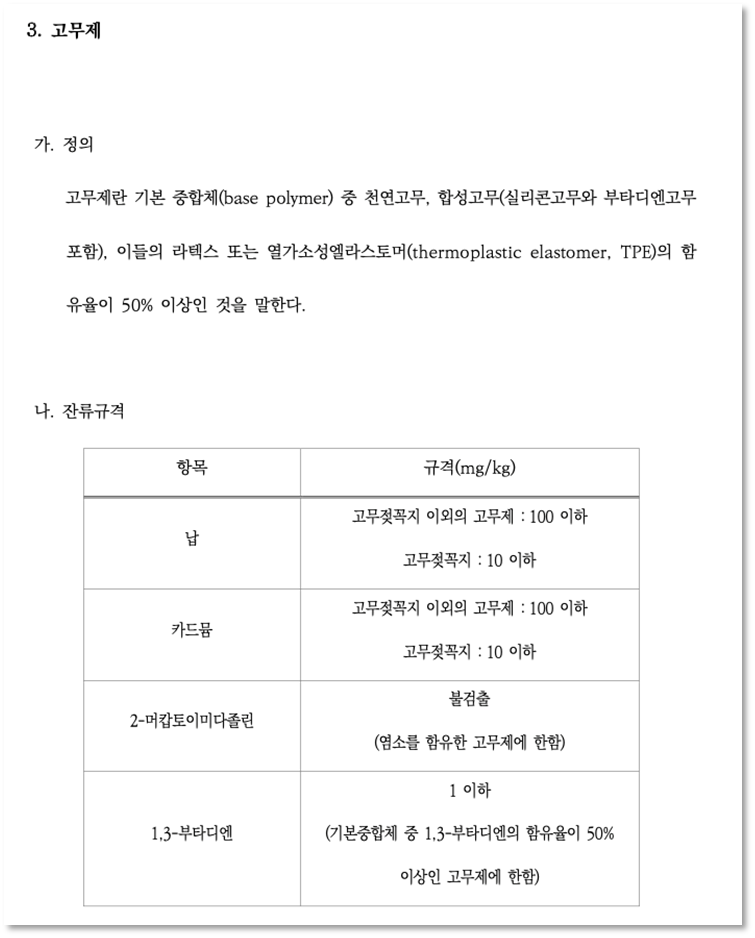
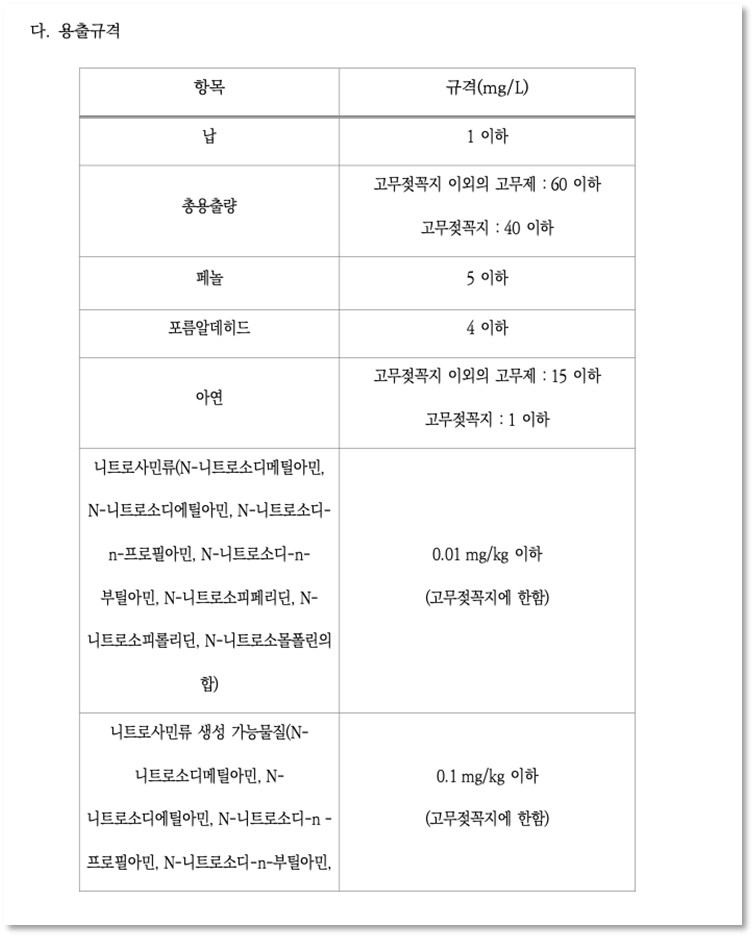
2.4 Rubber (Section III.3 of [2])
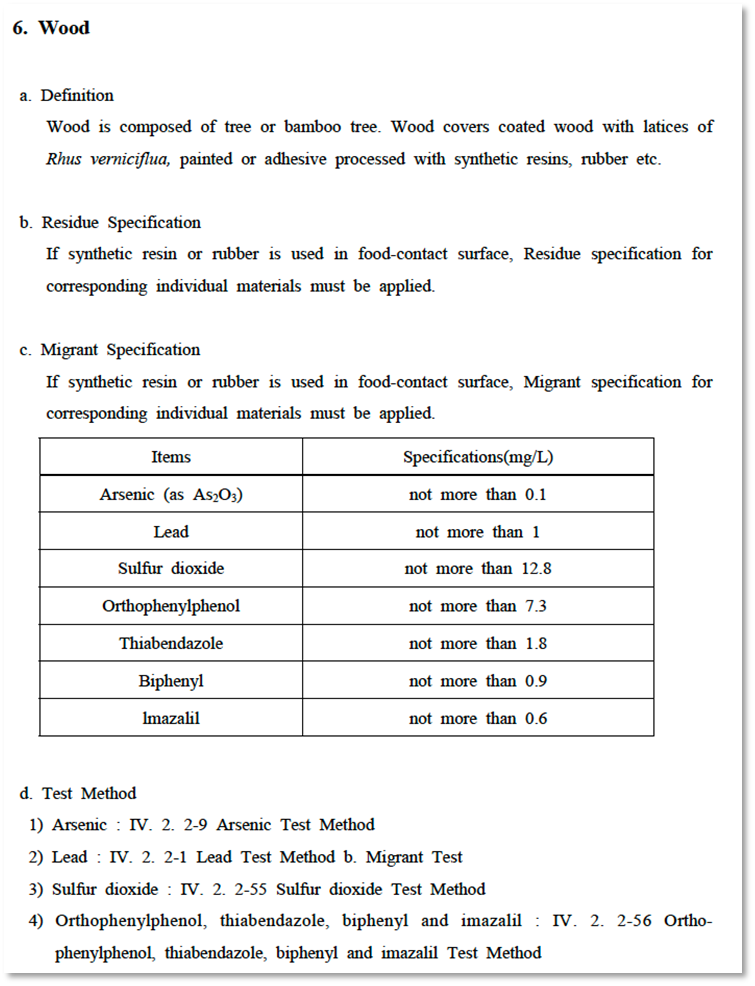
2.5 Wood (Section III.6 of [2])
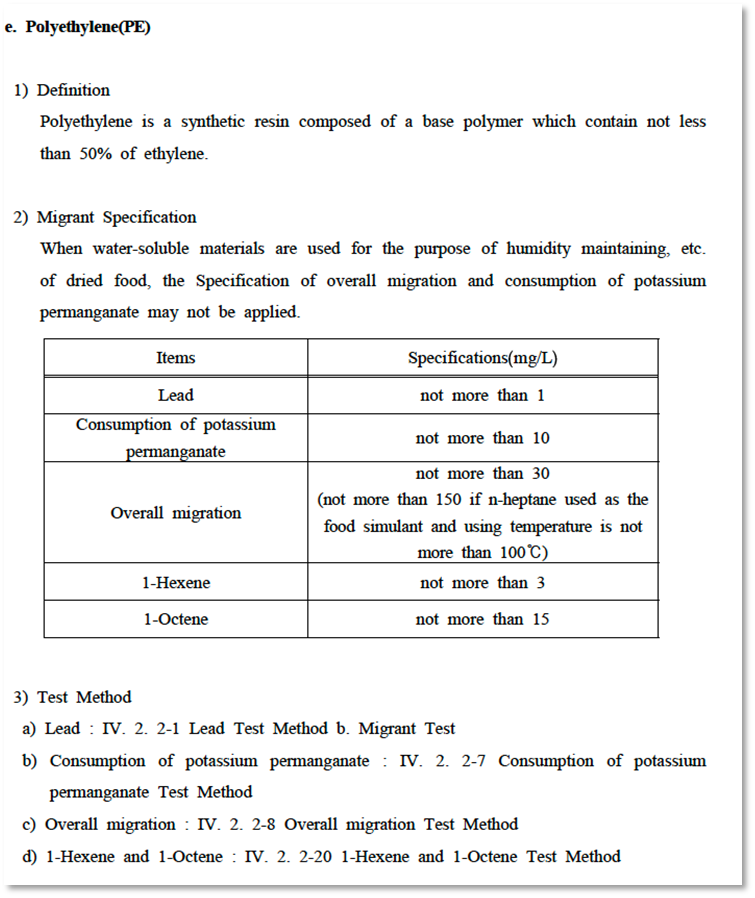
2.6 Polyethylene (PE) (Section III. 1.1-1.e of [2])
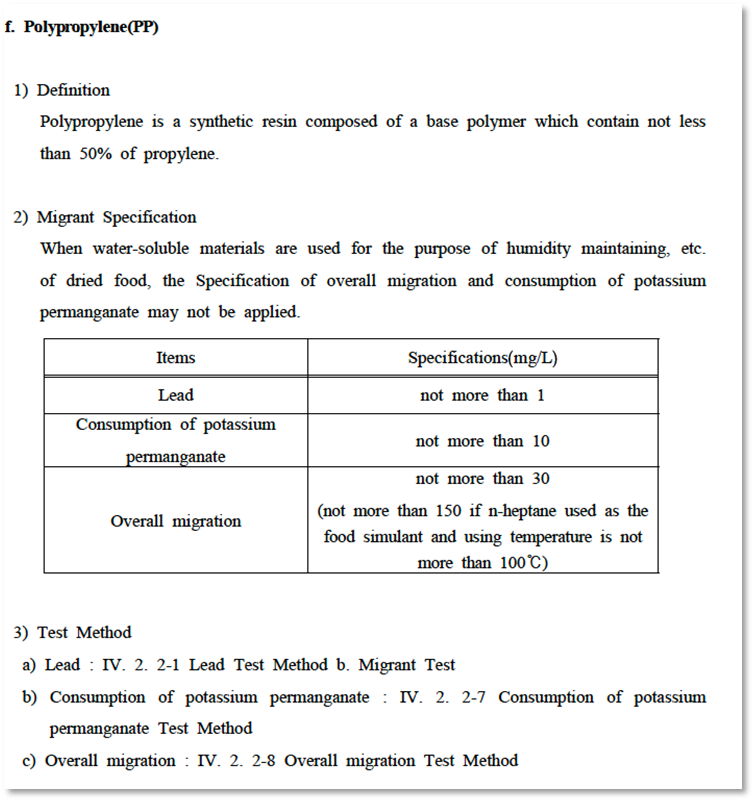
2.7 Polypropylene (PP) (Section III.1.1-1.f of [2])
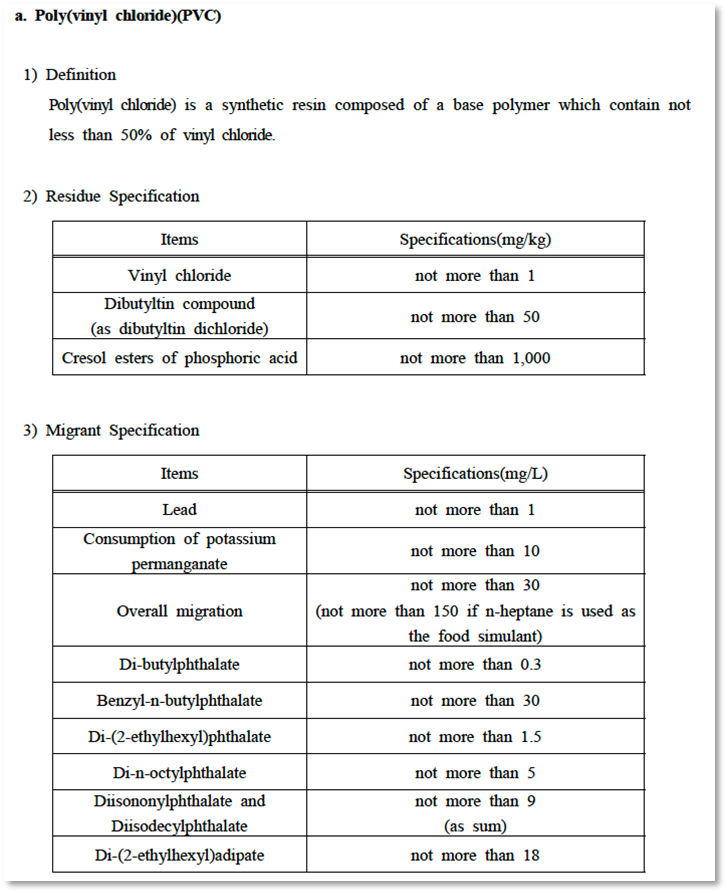
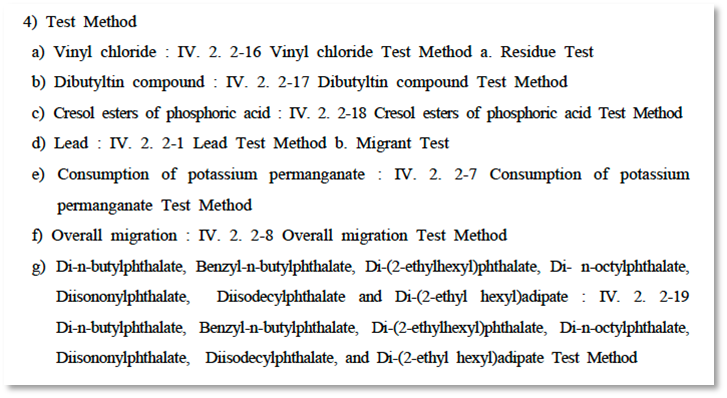
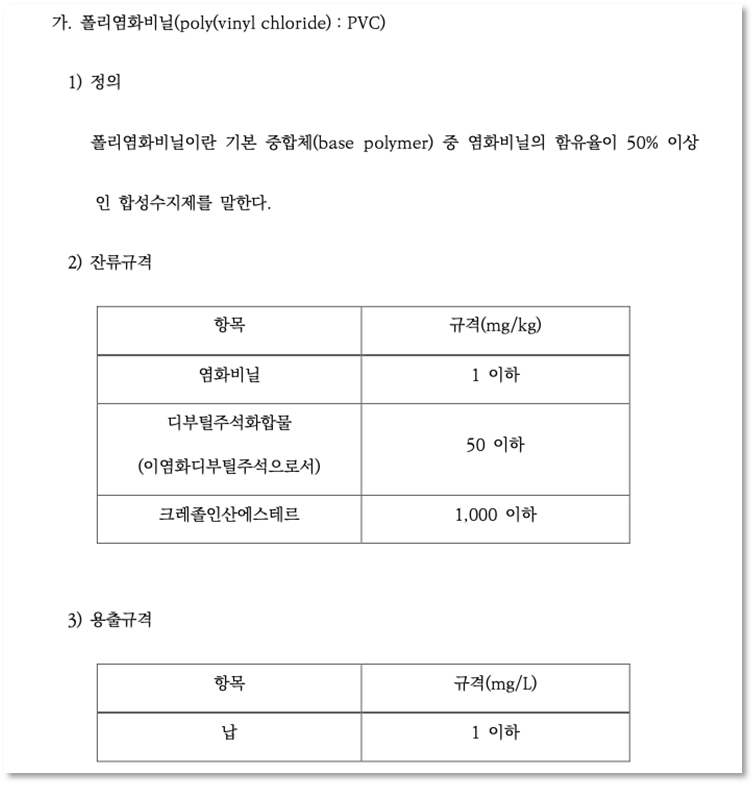
2.8 Polyvinyl Chloride (PVC) (Section III. 1.1-8.a of [2])
3. Other Rules (Section II.4 of [2])
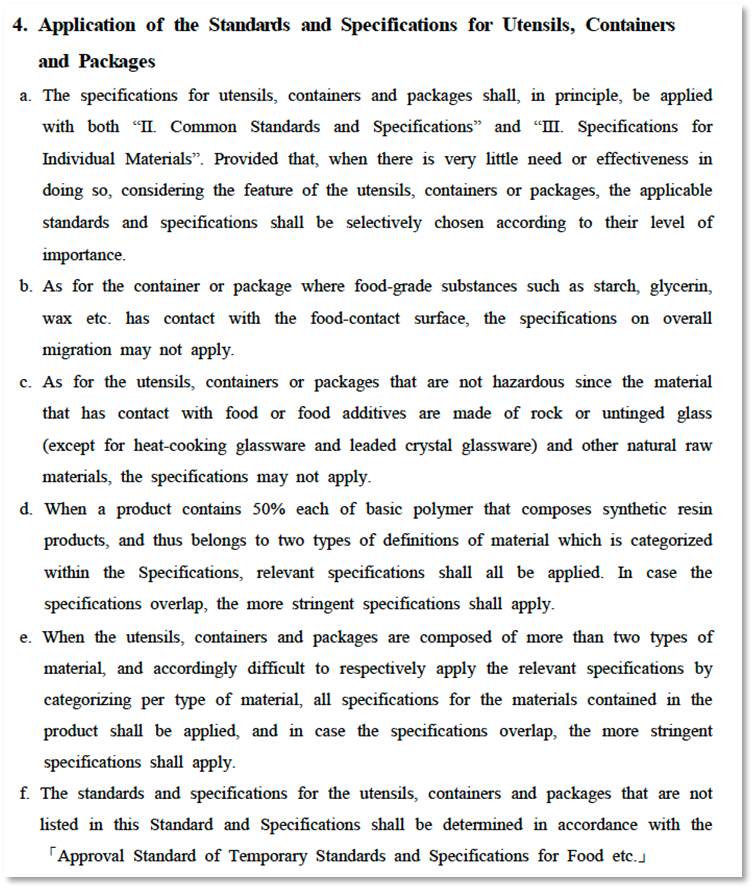
Application of the Standards and Specifications for Utensils, Containers and Packages
Section II.4 of the Utensils, Containers, and Packaging Code [2] details how to determine the relevant sections of the Code applicable to a specific material.
4. Summary Table
Food contact materials | General legislation applicable | Specific legislation applicable |
Glass | Section II.2 of [2] | Section III.7.a of [2] |
Metal | Section III.5 of [2] | |
Rubber | Section III.3 of [2] | |
Wood | Section III.6 of [2] | |
Polyethylene (PE) | Section III. 1.1-1.e of [2] | |
Polypropylene (PP) | Section III.1.1-1.f of [2] | |
Polyvinyl chloride (PVC) | Section III. 1.1-8.a of [2] | |
Epoxy resin | Section III.1.1-9.b of [2] |
5. References
1. Food Sanitation Act - Issued on 1 Apr 2025
https://www.law.go.kr/법령/식품위생법
2. Standards and Specification for Utensils, Containers and Packages (Utensils, Containers and Packaging Code) – Revision date 21 June 2024
https://various.foodsafetykorea.go.kr/fsd/#/ext/Document/CP
6. Annex
The legally binding version is the Korean version; therefore, the relevant sections of the regulations are also provided below in Korean.
General requirements
Glass
Metals
Rubber
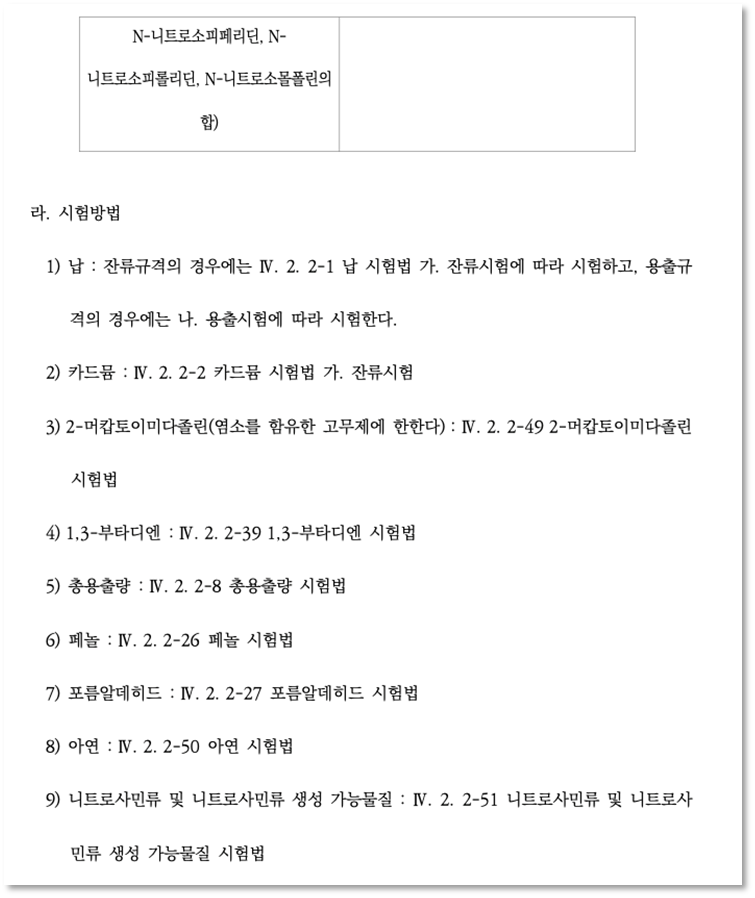
Wood
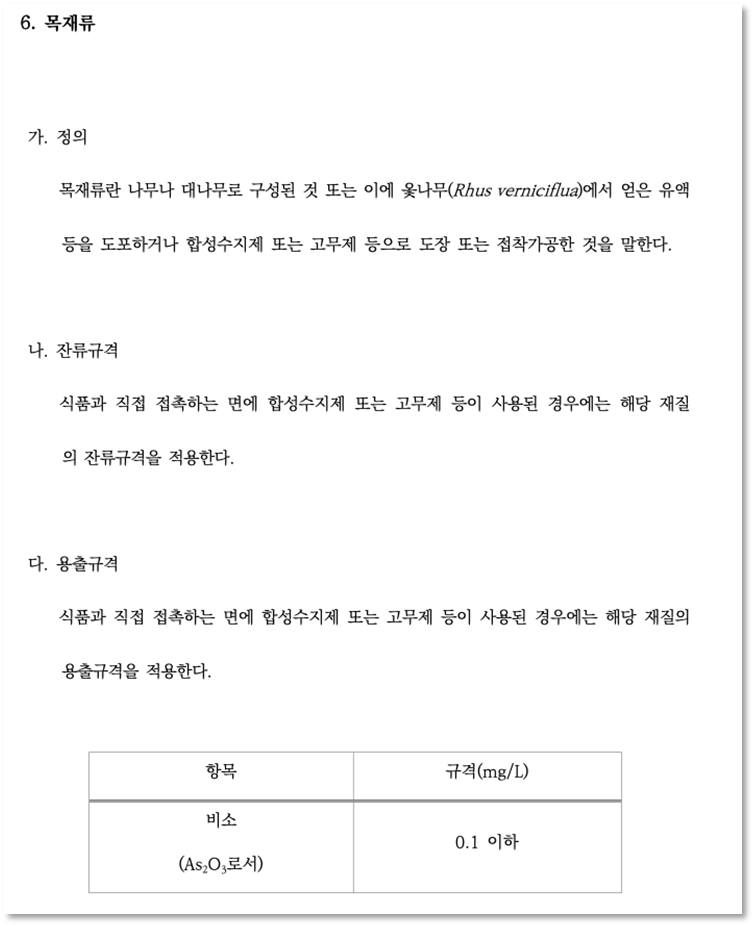
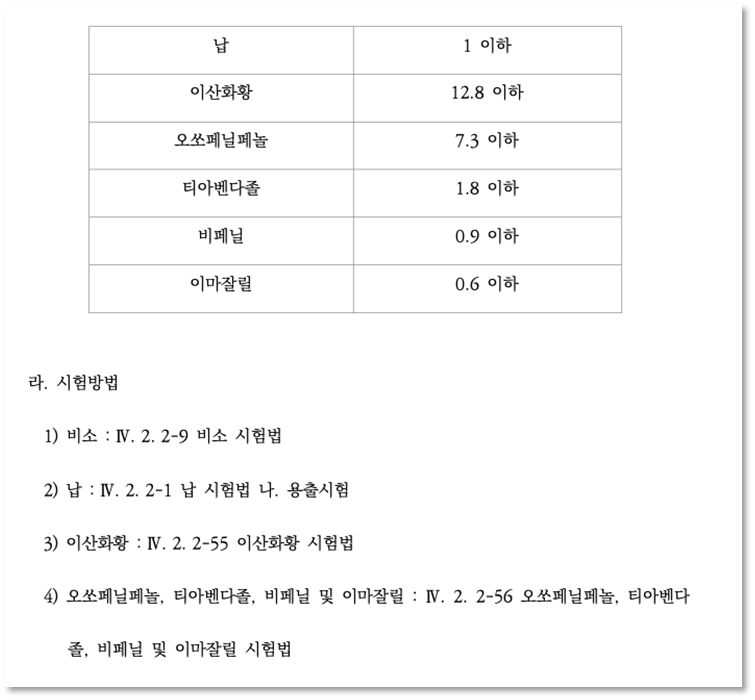
Polyethylene (PE)
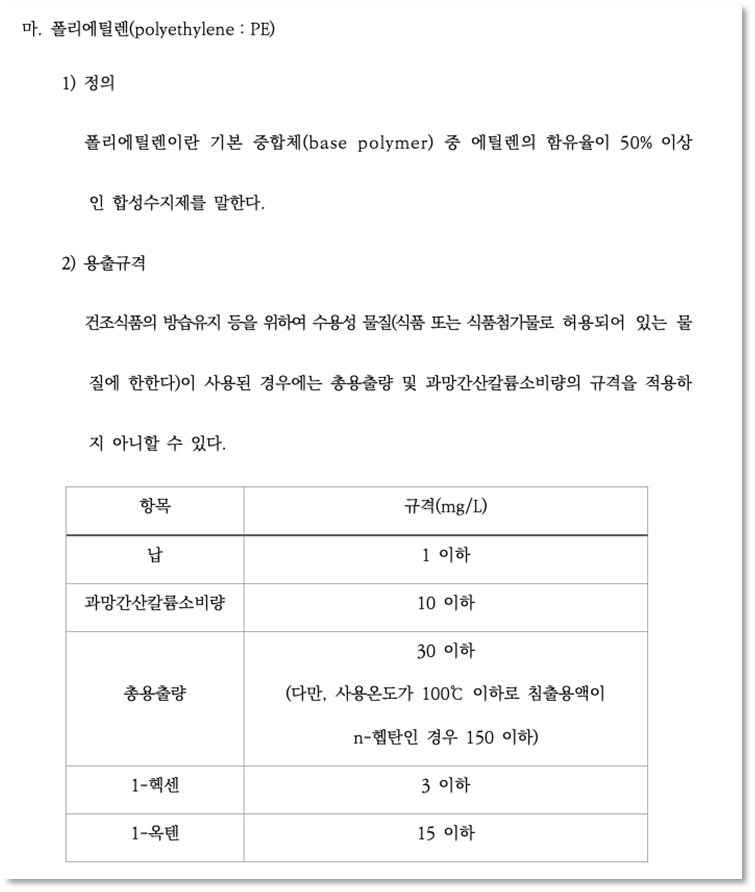
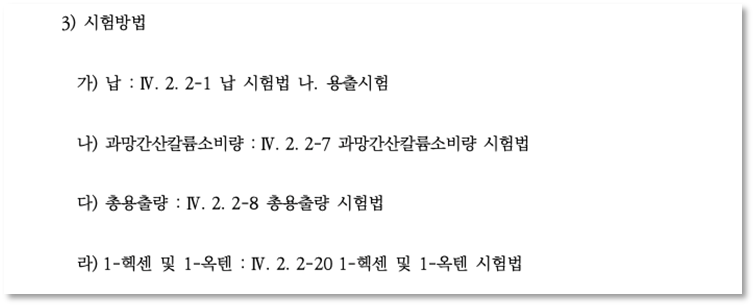
Polypropylene (PP)
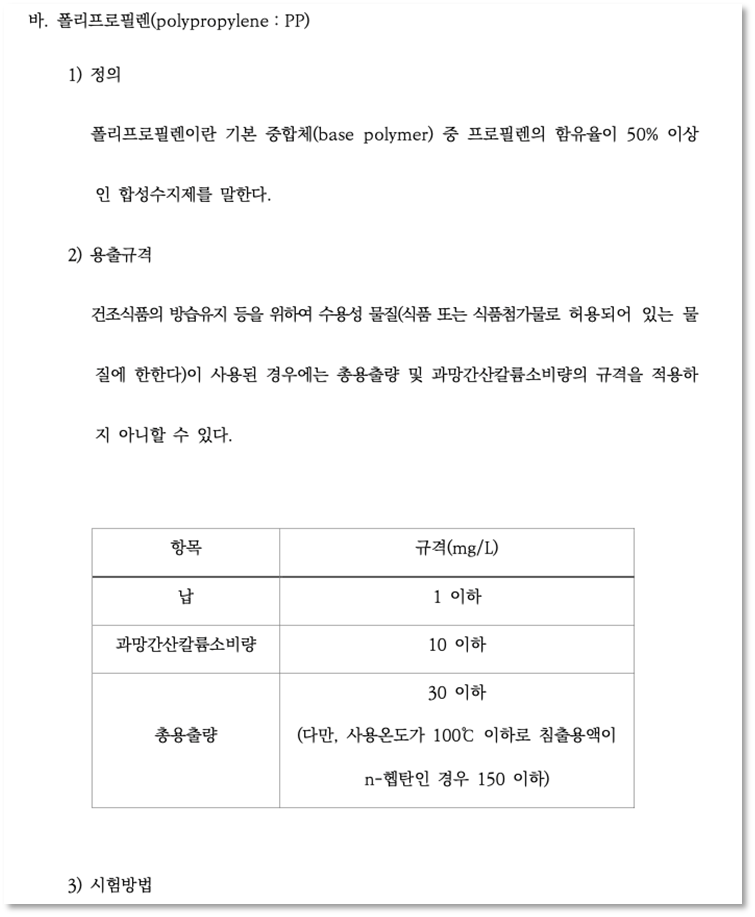
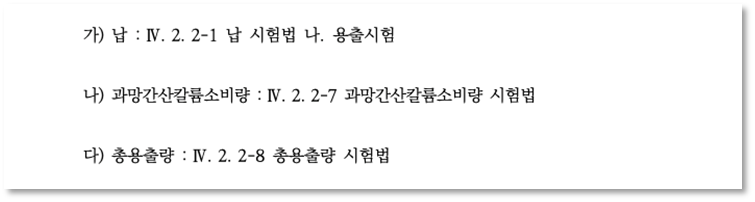
Poly (vinyl chloride) (PVC)
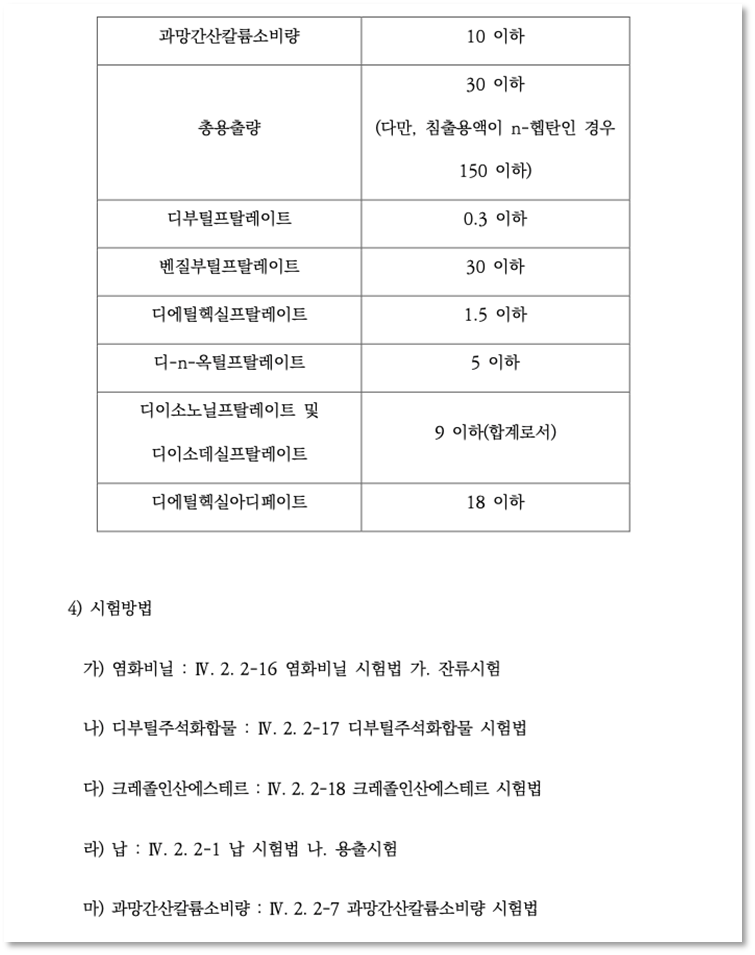
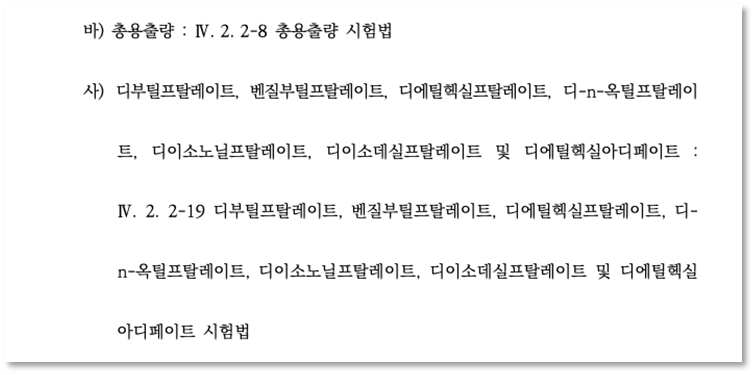
Epoxy Resin
Was this article helpful?