
HALAL Requirements (UAE, Saudi Arabia, Oman, Bahrain)
- 5 Mins to read
- DarkLight
HALAL Requirements (UAE, Saudi Arabia, Oman, Bahrain)
- 5 Mins to read
- DarkLight
Article summary
Did you find this summary helpful?
Thank you for your feedback
HALAL Requirements
UAE, Saudi Arabia, Oman, Bahrain - August 2023

This section provides a regulatory assessment for HALAL requirements in UAE, Saudi Arabia, Oman, and Bahrain.
1. Regulatory overview of Halal requirements, whether mandatory or voluntary, including certification process and logo for product labels
To gain a proper understanding of the requirements, the following definitions related to the Halal status of food apply:
- Halal Suitable Food, which refers to food considered lawful under the Islamic Law and as defined in the GSO Standard 2055-1/2015 shown below:

Figure 1. Excerpt from Chapter 3 of GSO Standard 2055-1/2015 [1]
- Halal Certified Food refers to food that undergoes the Halal certification process and has obtained a Halal certificate from a Halal certification body which is accredited by the Accreditation Authorities of Halal Certification bodies.
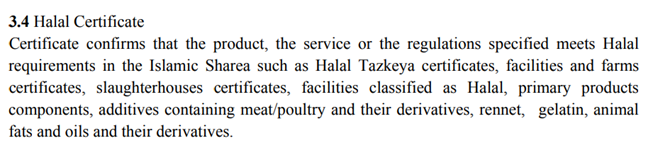
Figure 2a. Excerpt from Chapter 3 of GSO Standard 2055-1/2015
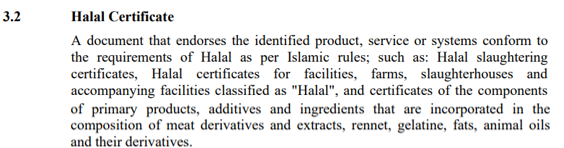
Figure 2b. Excerpt from Chapter 3 of GSO Standard 2055-2/2021 [2]
Note that all Halal-certified food is Halal suitable, but not all Halal-suitable food is certified.
- Halal Labeled Food refers to food that has a Halal logo/mark on its packaging label. It is applied on the label after obtaining the relevant Halal certification.

Figure 3. Excerpt from Chapter 3 of GSO standard 2055-2/2021
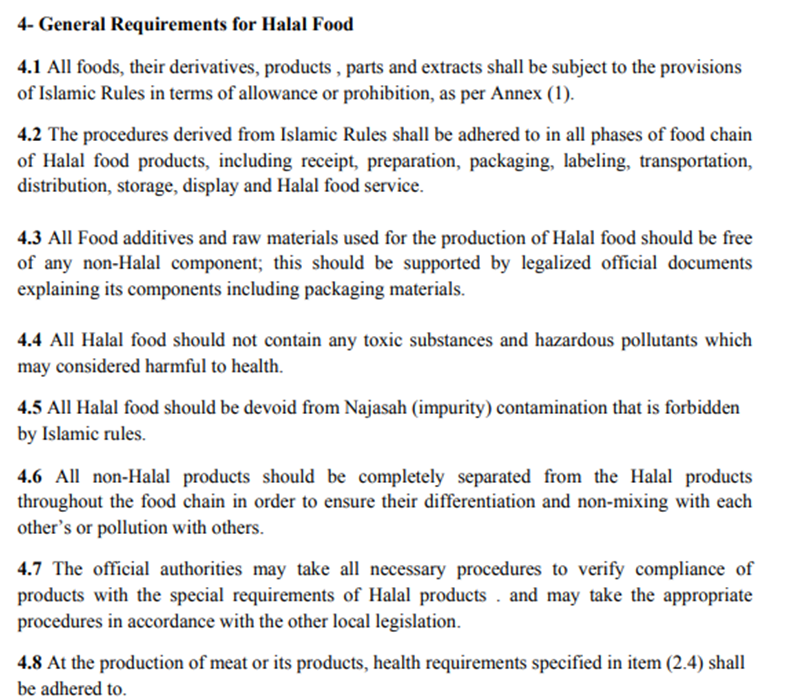
In principle, all food sold in the GCC markets is required to be Halal (i.e. Halal-suitable), unless labeled otherwise and sold in segregated sections in the retail stores. Halal food is expected to follow the general requirements for Halal food as specified by GSO Standard 2055-1/2015 (see Annex A in Section 3 below).
In addition, the following food imports entering GCC markets require a Halal certificate:
- Meat and poultry products
- Ingredients derived from animal products
- Products with a Halal logo or slogan on their label
From a labeling perspective, it is not mandatory to reflect the Halal logo/mark on food products to be imported to the GCC (see Figures 4a and 4b). Manufacturers may opt to reflect the Halal logo on their product labels voluntarily as a competitive advantage and this should be supported with a valid Halal certificate issued by a Halal certification body that is accredited by the Accreditation Authorities of Halal Certification bodies.

Figure 4a. Excerpt from Chapter 8 of GSO standard 2055-1/2015

Figure 4b. Excerpt from Chapter 4 of GSO standard 9/2022 [3]
Note that the word “Halal” cannot be declared on the label without the necessary certification and the relevant logo must be used. This applies to all food categories.
1.1 UAE
GCC requirements in the above section 1 apply.
For the import of Halal-certified products to UAE, the Halal certificate shall be issued by a certification body in the country of origin that has been registered with the Emirates Authority for Standardization and Metrology (ESMA). A list of approved certification bodies including Halal slaughterhouse facilities is published on the Ministry of Industry and Advanced Technology's website [4].
Specific to the Halal logo, the UAE has its own Halal National Mark, which is granted after verifying that products conform to the approved UAE standard. Establishments must also commit to the UAE’s requirements regarding halal products and the conditions for use of the Halal National Mark.
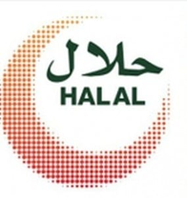
Figure 5. UAE Halal National Mark
Should the manufacturer decide to reflect the UAE Halal National Mark on the label, it is advisable to check the compatibility and mutual recognition of the logo with the other destination markets in case of shared packaging.
1.2 Saudi Arabia
GCC requirements in the above section 1 apply.
For the import of Halal-certified products to Saudi Arabia, the Halal certificate shall be issued by a certification body in the country of origin which has been recognized by the country’s National Halal Center run by the Saudi Food & Drug Authority (SFDA) [5].
1.3 Oman
GCC requirements in the above section 1 apply.
1.4 Bahrain
GCC requirements in the above section 1 apply.
2. Is Halal mandatory for vegetarian foods in the above 4 target markets?
There is no definition in the GSO standard or the local country regulations for vegetarian food.
As a general rule, all food sold in the GCC markets is expected to be Halal (Halal suitable) [6] and shall comply with the requirements in Annex A (Section 3 below) through the following procedures:
- Manufacturer to obtain confirmation from all raw material suppliers that all the ingredients are Halal (Halal suitable). For ingredients that may have either plant or animal origin such as gelatine, the supplier needs to confirm that they are of plant origin and share relevant specs.
- Manufacturer to confirm that the production line does not have any animal derivatives produced on the same line and if there is, to confirm that they follow a GMP process for proper cleaning procedures and according to Islamic requirements.
With regards to certification and product labels, it is not mandatory for vegetarian foods to be Halal-certified unless the manufacturer wants to declare a voluntary Halal logo on the product label. Any representation of the Halal logo on the product label or marketing material must be supported by a valid Halal certificate.
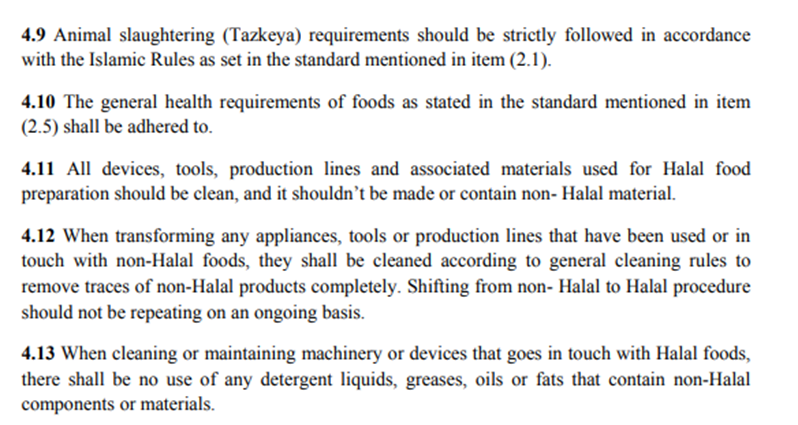
3. Annex A: Excerpt from Chapter 4 of GSO Standard 2055-1/2015 [1]
Conclusion
- In principle, all food sold in the GCC markets is expected to be Halal (i.e. Halal suitable). The requirement for mandatory Halal certification applies in certain situations such as for the import of meat and poultry products, those containing ingredients derived from animal origin and with the Halal logo/mark stated on the product label.
- For the 4 countries in scope (UAE, KSA, Oman, and Bahrain):
- Vegetarian foods need to be Halal-suitable and the manufacturer shall ensure compliance with the general requirements for Halal Food as stated in Annex A.
- It is not mandatory for vegetarian foods to be Halal-certified.
- If the manufacturer opts to reflect the Halal logo on the product label of vegetarian food, it should be supported with a valid Halal certificate issued by a Halal certification body that is accredited by Accreditation Authorities of Halal Certification bodies.
4. References
1. GSO Standard 2055-1/2015: General Requirements for Halal Food
GSO 2055-1:2015 - Standards Store - GCC Standardization Organization
2. GSO Standard 2055-2/2021: General Requirements for Halal Certification Bodies
GSO 2055-2:2021 - Standards Store - GCC Standardization Organization
3. GSO Standard 9/2022: Labeling of prepackaged foodstuffs
GSO 9:2022 - Standards Store - GCC Standardization Organization
4. UAE Halal Service Directory
https://moiat.gov.ae/en/open-data/halal/#Halal-Certification
5. Saudi Halal Center - List of recognised Halal bodies
https://api-halal.sfda.gov.sa/uploads/Clients/93405b57-5933-42b9-99f2-db5815464d22.pdf
6. GCC Guide for Control on Imported Foods
https://members.wto.org/crnattachments/2017/sps/bhr/17_0268_00_e.pdf
Was this article helpful?