
GOS in Food - Australia
- 22 Mins to read
- DarkLight
GOS in Food - Australia
- 22 Mins to read
- DarkLight
Article summary
Did you find this summary helpful?
Thank you for your feedback
Health Claim Assessment for GOS in Food
Australia - July 2023

This section provides a health claim assessment for Galacto-oligosaccharides in Food in Australia.
1. Regulatory Framework of Health Claims
Australia and New Zealand share a common food code, the Australia New Zealand Food Standards Code (FSC) [1] which consists of numerous separate Standards and Schedules.
The FSC is maintained by Food Standards Australia New Zealand (FSANZ). If eligible, foods may bear nutrition content claims and/or health claims if they meet the relevant requirements set out in Standard 1.2.7 [2]. The sections below describe the regulatory framework along with some relevant information in relation to Galacto-oligosaccharide (GOS).
1.1 Definition of health claims
There are two health claim categories described in Standard 1.2.7 [2]:
- General-level health claims
- High-level health claims
Standard 1.1.2 [3] provides definitions for these categories and other relevant terms.
A health claim and health effect are defined in Figures 1-2 [3]: 
Figure 1: Snapshot of Standard 1.1.2 – 2 (3) [3]. Definition of health claim.
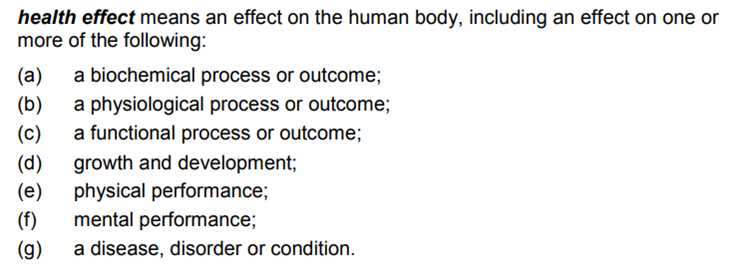
Figure 2: Snapshot of Standard 1.1.2– 2 (3) [3]. Definition of health effect.
Health claims are categorized as General-level or High-level, depending upon whether they refer to a relationship to a serious disease or to a biomarker of a serious disease (i.e., a High-Level health claim) or otherwise (i.e., a General-level health claim). The following definitions in Figures 3-6 from [3] apply:

Figure 3: Snapshot of Standard 1.1.2– 2 (3) [3]. Definition of High-level health claim.

Figure 4: Snapshot of Standard 1.1.2 – 2 (3) [3]. Definition of serious disease.

Figure 5: Snapshot of Standard 1.1.2– 2 (3) [3]. Definition of biomarker.

Examples of General-level health claims include:
- Calcium for healthy bones and teeth
- Dietary fiber contributes to regular laxation
- Beta-glucan reduces dietary and biliary cholesterol absorption
- Vitamin C contributes to normal collagen formation for the normal structure of cartilage and bones
Examples of High-level health claims include:
- Calcium reduces the risk of osteoporosis
- Beta-glucan reduces blood cholesterol
- Saturated fatty acids reduce total blood cholesterol or blood LDL cholesterol
Further examples are provided in the tables of Schedule 4 [4], General-level health claims (section S4-5), and High-level health claims (section S4-4). The tables outline the food or component of food, claim wording, and associated conditions for use. It should be noted that entries in the tables do not automatically mean a claim can be used for a particular food. Refer to section 1.2 below for more information on eligibility requirements. The wording for claims in the table can be altered, provided the meaning is kept as in Figure 7 [2]:

Although the Standard [2] does permit High-level health claims that refer to serious diseases and associated biomarkers, health claims for food products must not be therapeutic in nature per Figure 8 [2].
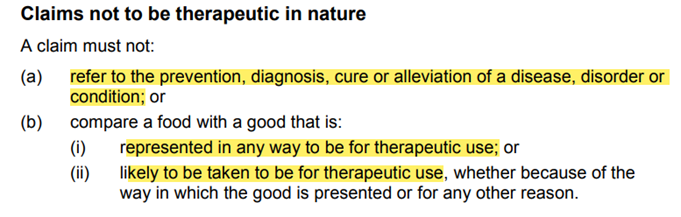
Figure 8: Snapshot of Standard 1.2.7 – 8 [2]. Prohibition on therapeutic claims.
It should be noted that GOS is permitted in foods as mentioned under the definitions in Standard 1.1.2 [3] (refer to Figure 11) and medicines in Australia. Currently, the company, FrieslandCampina Ingredients B V, has exclusivity for the use of GOS in medicines (complementary medicines) in Australia until 1 May 2025 [5]. Anyone may wish to investigate this market niche in the future when this exclusivity expires. Products described as ‘Dietary Supplements’ in overseas jurisdictions sit at the interface between foods and medicines in Australia. Care should be taken when selecting food health claims for GOS so that these do not stray into the medicines space by being therapeutic in nature.
1.2 Criteria/Requirements for Health Claims
Specific comments on the relevant regulatory and quality aspects of GOS are provided at the end of this section. The Nutrition, Health, and Related Claims Standard [2] outlines the general principles of the use of claims. The eligibility requirements for all foods will be summarized below.
Firstly, there are some foods for which nutrition content and health claims cannot be made (Figure 9 [2]):
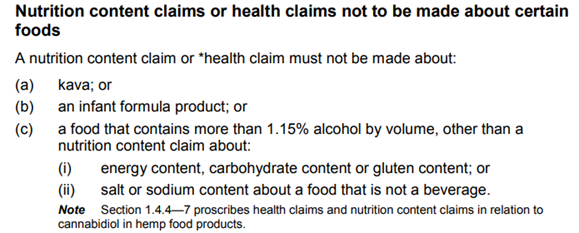
Secondly, the Standard [2] does not apply to some food categories, as described in the entry below in Figure 10 [2].
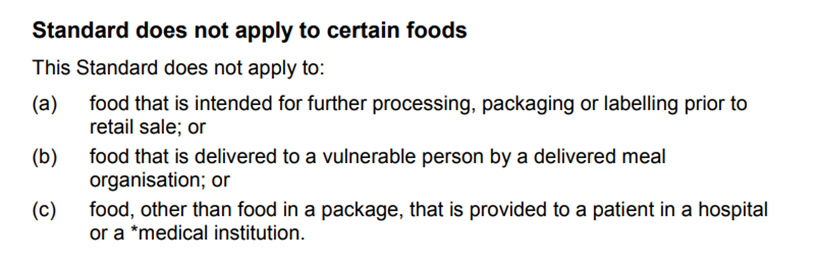
Figure 10: Snapshot of Standard 1.2.7 – 5 [2]. Application to retail sales, etc.
To be clear, a claim is based on a food/food component-health relationship, the system was designed mainly for claims on labels of retail food (B2C), not for claims in relation to individual ingredients for B2B sales. However, this does not prevent a manufacturer from applying for a health claim approval for their ingredient for commercial purposes (B2B) but does mean that not all aspects of the B2C approval process apply (more information in section 1.3 below).
Information on GOS - Definition
Galacto-oligosaccharides are defined in Figure 11 [3]:

There is no standard of identity for GOS in the FSC, as described in the following standards:
Standard 1.1.1 [7] clause 15 (Figure 12) refers to substances that have their own specifications for purity and identity.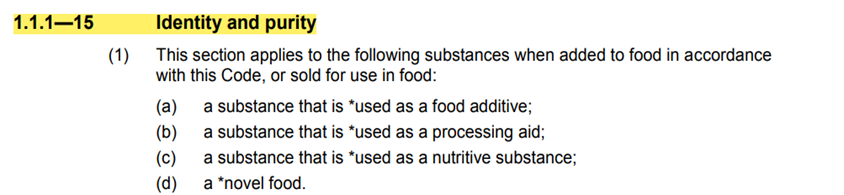

Figure 12: Snapshot of Standard 1.1.1-15 [7]. Requirement for identity and purity standards.
GOS is not considered as either substance of 1(a) – (d) and specifically nutritive substance when added to general foods unless otherwise stated in its specific exclusions from the following definition of ‘used as a nutritive substance’ in Figure 13 per Standard 1.1.2 -12 [3].
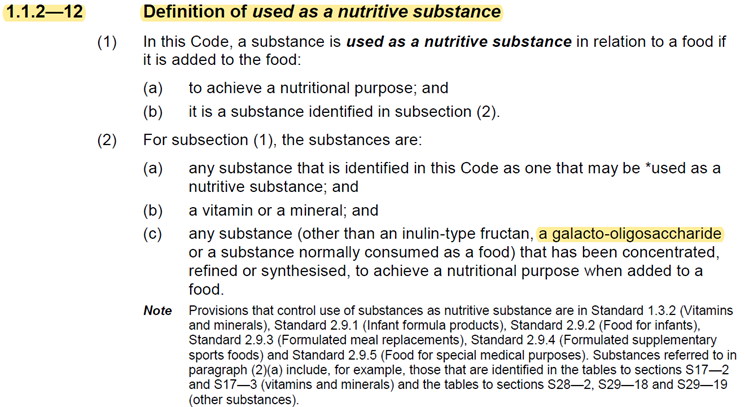 Figure 13: Snapshot of Standard 1.1.2-12 [3]. Definitions of used as a nutritive substance.
In addition, there is no entry for GOS in the table of S3-2(2) of Schedule 3[8], and therefore any internationally accepted food specification could be applied. Schedule 3[8] contains lists of suitable international standards in sections S3-2(1) and S3-3. These entries are lengthy and will not be provided in the report. Section S3-4 of the schedule [8] (Figure 14) provides limits for heavy metals if the substance does not have a standard under sections S3-2 or S3-3 [8].
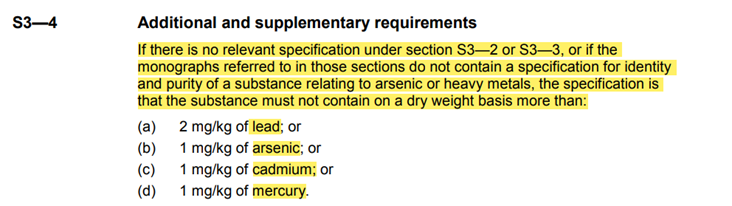
Figure 14: Snapshot of Schedule 3 – (4) [8]. Heavy metal limits.
The definition in Figure 11 means any statement in the FSC where GOS is expressed as ‘Galacto-oligosaccharides*’ (note the asterisk), must comply with this definition. GOS* produced as a result of fermentation and/or hydrolysis of lactose and used in dairy foods has a long history of use in Australia and New Zealand and is considered to be a traditional food (and therefore not Novel) per Figure 15 [6] and does not require approval for use in dairy products.
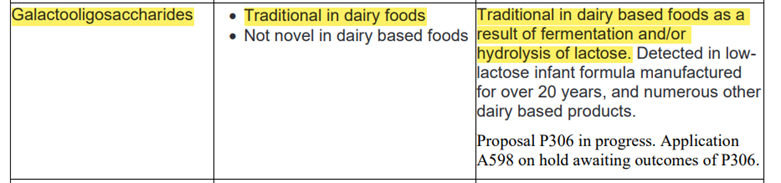
Figure 15: Snapshot of Galacto-oligosaccharides* entry in FSANZ Record of views on Novel foods versus traditional foods [6].
In addition to the use of GOS in dairy foods (milk-based beverages, yogurt, ice cream, etc.), GOS* has also been permitted for addition to infant formula products since the approval of Proposal P306 in 2008 [9]. Plant-derived GOS is permitted for other purposes as they are considered non-traditional foods that are not Novel Foods per Figure 16 [6] and can therefore be used without a Novel food application. The client should confirm that their GOS fits into the traditional or non-traditional category, based on the origin of their GOS (refer to figures 15 and 16 for further information.) In either case, these can be used in all relevant types of food, with the exception that only the traditional type is permitted in infant foods.
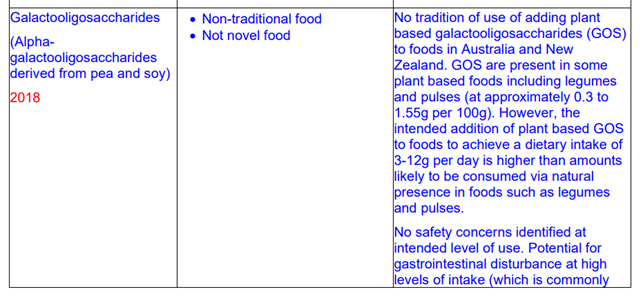
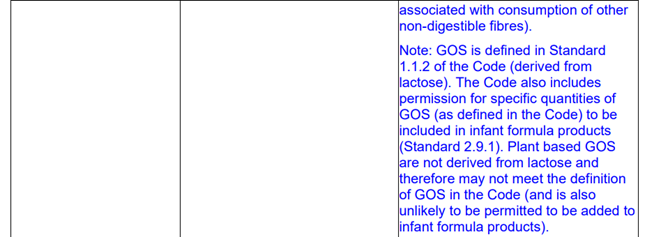
Figure 16: Snapshot of plant-derived Galacto-oligosaccharides entry in FSANZ Record of views on Novel foods versus traditional foods [6].
Information on GOS - Dietary fiber
The FSC contains a definition for ‘Dietary fiber’ which is applicable to GOS as in general fiber in Figure 17 [3]:
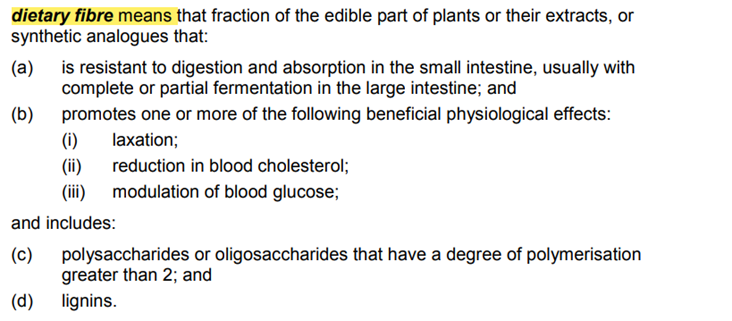
Figure 17: Snapshot of Standard 1.1.2 – 2 (3) [3]. Definition of Dietary fiber.
Schedule 11 [10] of the FSC was amended in 2021 to include a new method of analysis AOAC 2017.16 for dietary fiber which measures from GOS per Figure 18 [10] following the approval of Application 1178 [11] to amend the list of accepted analytical methods. If the client wishes to use any of the health claims of GOS relating to ‘dietary fiber’ as in Figure 19 [4] then the food must comply with the requirements for the nutrition content claims relating to dietary fiber per Figures 19 and 20 [4]), and in this case the analysis using this AOAC method should comply.
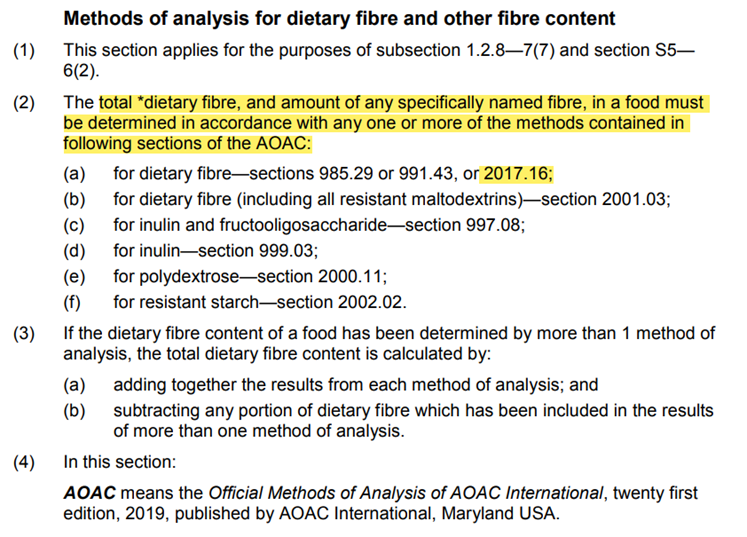
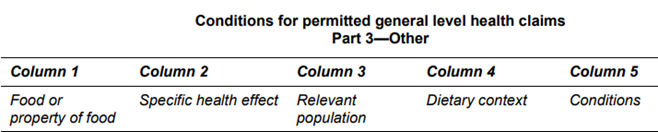
 Figure 19: Snapshot of Schedule 4-4 [4]. General Health Claim for Dietary Fiber.
The nutrition content claims for fiber are listed in the table in section S4-3 [4] of the FSC:

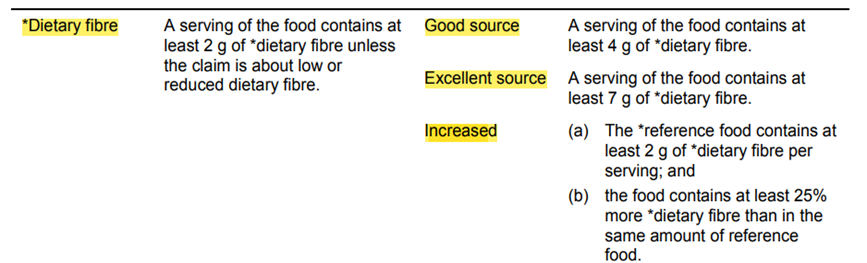 Figure 20: Snapshot of Schedule 4-3 [4]. Nutrition content claims for Fiber.
^The ‘reference food’ referred to under column 4 is a commercially available food typical for the category without added GOS or similar dietary fiber.
1.3 Positive list of health claims
There are positive lists for health claims in [4] that can be used by the food manufacturers:
- High-level health claims (section S4-4) [4]
High-level health claims must be based on pre-approved food-health relationships. Currently, there are thirteen pre-approved food-health relationships in the table in section S4-4 [4]. These can be used without notifying FSANZ provided the food meets all the conditions in the table in Schedule 4 [4] and meets the scoring requirements described in section 1(d). As the table is lengthy, it can be directed to the reference [ref 4, specifically table in section 4] for details. None of the pre-approved high-level health claims relate to dietary fiber or GOS. There are available options for new claims that are not any of the positive lists, as described below.
This list of pre-approved High-level health claims was compiled following a number of scientific and technical reviews by FSANZ committees. Reports and other information are provided on an FSANZ webpage [12]. For new high-level food-health relationships, companies must apply for a new claim which is considered to be an application to change the Schedule. This is done under the high-level health claims variation procedure (more information in section 2.2 below).
- General level health claims (section S4-5) [4]
General-level health claims can be either:
- One of the pre-approved claims in the table to section S4-5 [4], or
- A food-health relationship self-substantiated by the company using a systematic review and notification to FSANZ.
Pre-approved General health claims are those in the table in section S4-5 [4] which outlines the food or property of the food, permitted claim, and conditions. The table is lengthy and will not be reproduced in this report. It is further explained under subsection 1.2.7-18 (3) (Figure 21) of the Standard [2]. Similar to high-level health claims, these can be used without notifying FSANZ provided the food meets all the conditions in the table in Schedule 4 [4] and meets the scoring requirements described in section 1.4 below.
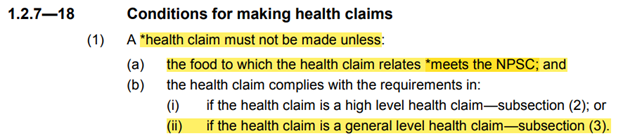

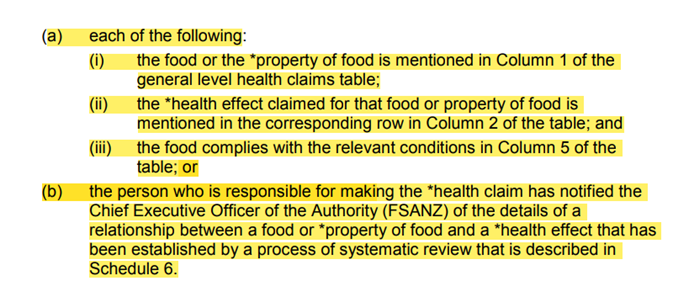 Figure 21: Snapshot of clause 1.2.7-18 [2]. General level health claims.
Nevertheless, it is worth mentioning that there is a general health claim specifically for dietary fiber but none for GOS. For a food-health relationship self-substantiated by the company using a systematic review and notification to FSANZ, the notification procedure is described in section 2.2.
There are common requirements for all health claims, independent of the level (High level or General level). To ensure that health claims are not made for ‘unhealthy’ foods, each food (i.e., retail food product) needs to meet the Nutrient Profiling Scoring Criterion (NPSC). Details on the NPSC, including how it is calculated, are provided in section 1.4 below.
1.4 Nutrient profiling scoring criterion (NPSC)
The NPSC is a measure of how ‘healthy’ a food is in order to permit health claims to be made. The food is categorized (refer to Figure 22 of standard [4]) in order to determine the target score (the score that the result must be less than). Different food types have different target scores. However, this is not applicable for ingredient alone similarly for GOS alone, it needs to be an end product containing GOS.
The actual food score is calculated as follows in accordance with Schedule 5 [13]:
- ‘Baseline points’ are first allocated for the energy, saturated fat, sugars, and sodium content of the food.
- ‘Modifying points’ can then be obtained for the percentage of the food that is fruits, vegetables, nuts, and legumes including coconut, spices, herbs, fungi, seeds, and algae (FVNL). These are known as ‘fruit and vegetable points (V points)’.
- Some foods are able to score further modifying points for the protein and dietary fiber content in the food. These are known as ‘protein points (P points)’ or ‘fiber points (F points)’ respectively.
- The final score for the food is calculated by subtracting the modifying points (V, P, and F points) from the baseline points.
Points are allocated based on 100 g or 100 mL of the food (based on the units used in the nutrition information panel).
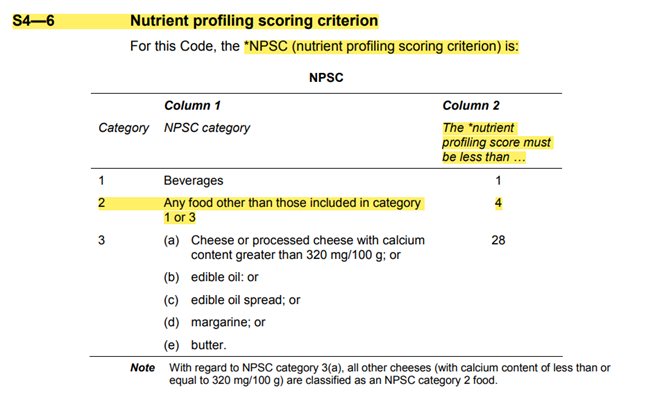
Figure 22: Snapshot of section S4-6 [4]. NPSC targets.
The NPSC can be calculated according to the instructions in Schedule 5 [13] which differ for different food types. For the relevant category, the NPSC is calculated using a formula relevant to the category as described in Schedule 5-2 [13]. For example, a category 2 food would require the following steps of calculation per Figure 23 [13]:
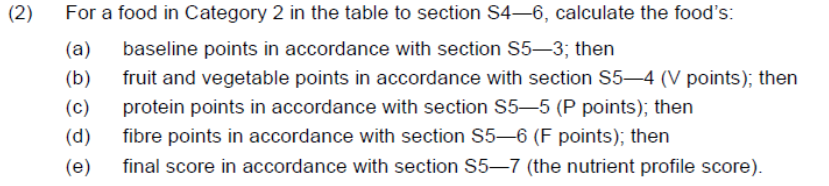 Figure 23: Snapshot of section S5-2 (2) [13]. NPSC calculation for Category 2 foods.
The remainder of Schedule 5 [13] from Schedule 5-3 onwards provides the relevant data for calculating each type of points. There is also an online NPSC calculator [14] and a guidance document [15].
2. Detailed roadmap for health claim approval process for GOS in food
2.1 Ingredient approval
As described in section 1.2 above, GOS already has approval as a food ingredient. There are different permissions based on the source of the GOS as described above. Most relevant is the restriction for GOS* permitted in infant formulas (from plant-based). However, since health claims are not permitted in this food category this would not affect any applications for health claims.
2.2 Health Claims Approval
As described above, some pre-approved claims do not require an application for formal approval and thus may be used. Details are summarized in the below table:
Type of claim | Status of claim | Criteria and/or Approval process, if required |
General-level health claim | List permitted in the table to section S4 – 5 [4] | Food product must meet the NPSC (refer to section 1.4). |
General-level health claim | New (not in the table) / Change | Food product must meet the NPSC (refer to section 1.4).
Notification must be made (refer below). |
High-level health claim | List permitted in the table to section S4 – 4 [4] | Food product must meet the NPSC (refer to section 1.4). |
High-level health claim | New (not in the table) / Change | Food product must meet the NPSC (refer to section 1.4).
Application must be made under the High-level health claims procedure (refer below). |
As mentioned above, GOS is neither in the list of general-level nor high-level health claims. Hence, a notification is required for a general-level health claim and an application is required for a high-level health claim.
Notified general-level health claim pathway
The health claims notification system is designed for new claims for food products, not for ingredients alone. However, the client may elect to notify a General-level health claim for the GOS. In this case, the scoring system described in section 1.4 above would not apply.
Once a food company has assessed the NPSC (as relevant), a systematic review of the relevant evidence for claims should be compiled. The content and process of undertaking a systematic review to provide evidence for a food/property of food and a health effect are described in Schedule 6 of the FSC [16]. To support the efforts of customers manufacturing B2C food products containing GOS, the client may opt to prepare a dossier on the ingredient in the form of a systematic review that meets the requirements even if they do not submit a notification to the regulator themselves.
B2C clients must then undertake the NPSC scoring on their food product and prepare their own systematic review, but this can be based on the client’s document if it meets the requirements. This would mean that the B2C business would need to provide any relevant updates to the information in the client document, including information on the food product formulation and how the product complies with respect to the GOS concentration used in the studies in the systematic review. The notification process and ongoing compliance with the evidence requirements would be the responsibility of the B2C business.
Information on the notification process is available on the FSANZ website [17]. Briefly, the steps for this process are:
- The food company completes the NPSC (refer to section 1.4) to ensure that their food product qualifies for using a General-level health claim. This does not need to be submitted but should be retained with the product records.
- The food company then compiles a systematic review (as per [16]), covering each desired General level health claim. Multiple claims can be covered by a single systematic review of a single food product. This does not need to be submitted to FSANZ but should be retained with the product records.
- The food company should then draft a certificate that states that “the food-health relationship has been established by a process of systematic review as described in Schedule 6 of the Code.” Specific wording and other requirements are provided under the section, “What do I need to include in the certificate?” on [17]. Note: A separate certificate is required for each claim.
- The General level health claims are then notified to the FSANZ Chief Executive Officer by email (FHR@foodstandards.gov.au) using the FHR notification form [17]. Each separate General-level health claim needs an individual FHR form, although multiple forms can be submitted in a single email, provided they are for the same food product.
There is no associated fee for the notification process. Notified claims are usually published within five working days on an online database [18]. Once published, the submitting company will be notified and the claims can be used. A company cannot use another organization’s notified health claim.
FSANZ does not review any notified food-health relationships and does not require the systematic review to be submitted. Publication of a notification by FSANZ does not indicate acceptance, approval, or validation of the relationship. Therefore, FSANZ recommends that food companies notify their local enforcement agency (usually a local Department of Health in the location of the company head office or their agent in Australia), but this is not mandatory. Lists of local agencies are available via the webpage [17]. If a general-level health claim for a food product has been submitted to one of the local agencies, it does not have to be submitted to multiple agencies. This means a submission in Australia will cover New Zealand, and vice versa.
High-level health claims procedure
Applications to add a new High-level health claim to the list in Schedule 4 [4] must follow the rules set out in section 3.2.6 (B) (page 75) of the Applications Handbook [19]. Briefly:
- The application must characterize the food or property of the food (including source, specifications, and compliance with permissions for use under the FSC) that is related to the proposed health effect.
- Information on the health effect, including the amount of the substance required for this effect, the target population, and the nature and the extent of the effect.
- A systematic review which includes information on either (a) the search strategy used for the literature search or (b) the pre-existing systematic review used as a basis for the new one.
- A summary of the literature used and an assessment of the findings.
More information on conducting the systematic review is available in [16].
Applicants are strongly encouraged to contact FSANZ before making a submission and the regulator may suggest a pre-submission meeting to discuss their application. This can be face-to-face or via video conference. Information on how to request such a meeting is provided in section 2.1.1 of [19].
Applications for new High-level health claims are assessed under the General Procedure for which there are multiple sublevels. The type and level are determined by FSANZ during the Administrative Assessment stage of the procedure. Fees are then calculated on the expected maximum hours required to undertake the technical assessment.
The client should determine if it is likely that they would wish to have an approved health claim of this level for the GOS ingredient. In this case, the scoring system described in section 1.4 would not apply. This type of application typically takes nine months (after the administrative assessment is completed). Fees can be quite high, depending on the complexity of the application. Section 3.2.6 B of [19] further describes the requirements. The High-level claim pathway to add a new claim to Schedule 4 [4] requires the same information as for the addition of a new General level claim to the schedule as well (i.e., addition to Schedule 4 rather than making a notified General level health claim).
3. Market research of existing GOS claims and whether these can be used
3.1 Search methodology
A search of the Notified food-health relationships database [18] was conducted using the search terms ‘galacto-oligosaccharides’, ‘galactooligosaccharides’, and ‘GOS’. The results are provided in references [20, 21, and 22]. Since General level health claims are linked to a component of foods (i.e., GOS) there was no need to search on claims wordings.
High-level claims are not published by FSANZ since they are only approved and then added to Schedule 4 [4]. No one can make high-level claims for GOS unless they are approved and published in the schedule.
3.2 Existing claims
Therefore, those health claims in the market are normally claims already pre-approved in schedule 4 [4] or those general-level health claims notified on the website.
As shown by the results of the above searches [20, 21, and 22] for general-level health claims, two companies have notified claims for ‘galacto-oligosaccharides’ [20]:
- Modere Australia Pty Ltd (6 claims)
- Attalia Human Health Australia Pty Ltd (1 claim)
The claims concern supporting gut health through healthy microbiota and also associated immune health.
Searching on ‘GOS’ brought up more hits [21] including many claims in relation to non-digestible fiber and prebiotic actions. However, this also captured claims for fructo-oligosaccharides. Bimuno® GOS has many health claims submitted by both OptiPharm Pty Ltd and Pathway International Pty Ltd. The latter is an ingredient supplier that acts as an Australian agent for the Bimuno® GOS. Using the search term, ‘galactooligosaccharides’ brought up more hits [22] but many of these were repeated from the other searches.
3.3 Likelihood of obtaining the same claims as existing products
Given the claims already submitted by competitors, it seems likely that obtaining the same claims would be expected. Nevertheless, the client would need to conduct their own systematic review and decide the health claims suitable for their GOS.
Conclusion
- In Australia, food products can have associated Nutrition content claims, General-level health claims, and High-level health claims. Such claims are based on a relationship between a food component (GOS) and claims.
- Health claims can be made about food/food components that have a health effect and are prohibited for certain foods (e.g. kava, infant formula product, or food that contains more than 1.5% alcohol by volume other than a nutrition content claim, etc.)
- There is no specific standard of identity for GOS in the FSC and therefore, internationally accepted food specifications can be applied.
- There are 2 types of health claims – general-level health claims and high-level health claims.
- General-level health claims are those which do not refer to a serious disease or biomarker for a serious condition. General-level claims can be taken from a pre-existing list or can be made following notification to FSANZ. This notification process requires a systematic review which does not need to be submitted. Once published, the claims can be used by the company only.
- High-level health claims will mean otherwise where it refers to a relationship to a serious disease or a biomarker for a serious disease. High-level health claims must only be one of the thirteen preapproved claims unless a full application to amend the FSC is made. Such applications can be very expensive and time-consuming as they require thorough scientific review including a systematic review of its functionality and are assessed by multiple sublevels as determined by FSANZ.
- GOS is neither in the list of general-level nor high-level health claims. Hence a notification is required for general-level health claims and an application is required for high-level health claims.
- In cases where health claims are for food containing GOS, this product will then need to meet an additional requirement of the Nutrient Profiling Scoring Criterion (NPSC).
- There are a handful of general-level health claims relating to gut health for GOS already notified on the website by other companies but are only applicable for their own use.
- It is suggested that the client reviews the current approved/notified general-level health claims (references 4, 20, 21, and 22) in order to decide which claims they wish to apply to their GOS ingredient and to conduct a systematic review based on the specific claim functionality.
4. References
1. Australia New Zealand Food Standards Code
www.foodstandards.gov.au/code/Pages/default.aspx
2. Standard 1.2.7 - Nutrition, health and related claims
https://www.legislation.gov.au/Details/F2018C00942/Download
3. Standard 1.1.2 – Definitions used throughout the Code
https://www.legislation.gov.au/Details/F2022C01054/Download
4. Schedule 4 – Nutrition, health, and related claims
https://www.legislation.gov.au/Details/F2017C00711/Download
5. TGA ingredient approval for Galacto-oligosaccharide (for medicines)
(PDF attached)
6. FSANZ Novel Foods Record of Views, April 2023
(PDF attached)
7. Standard 1.1.1 – Structure of the Code and general provisions
https://www.legislation.gov.au/Details/F2021C00661/Download
8. Schedule 3 – Identity and purity
https://www.legislation.gov.au/Details/F2023C00443/Download
9. Proposal P306 – Addition of Inulin/FOS & GOS to food. 2008. Assessment documents available here:
https://www.foodstandards.gov.au/code/proposals/Pages/proposalp306addition3639.aspx
10. Schedule 11 – Calculation of values for nutrition information panel
https://www.legislation.gov.au/Details/F2022C00248/Download
11. Application 1178 Method AOAC 2017.16 as a new method of analysis for total dietary fibre
https://www.foodstandards.gov.au/code/applications/Pages/A1178.aspx
12. FSANZ High-level health claims page ‘Reviews of food-health relationships for high-level health claims’
https://www.foodstandards.gov.au/consumer/labelling/nutrition/Pages/reviewsforhighlevelc3090.aspx
13. Schedule 5 – Nutrient profiling scoring method
https://www.legislation.gov.au/Details/F2022C01053/Download
14. FSANZ NPSC calculator
https://www.foodstandards.gov.au/industry/labelling/Pages/Calculator.aspx
15. NPSC – Short Guide for Industry
https://www.foodstandards.gov.au/industry/labelling/Pages/Short-guide-for-industry-to-the-NPSC.aspx
16. Schedule 6 – Required elements of a systematic review
https://www.legislation.gov.au/Details/F2015L00476/Download
17. Notifying a self-substantiated food-health relationship, January 2023
https://www.foodstandards.gov.au/industry/labelling/fhr/Pages/notifications.aspx
18. Database on notified health claims
https://www.foodstandards.gov.au/industry/labelling/fhr/Pages/default.aspx
19. FSANZ Application Handbook
(PDF attached)
20. Search results from Database [ref 18] – ‘galacto-oligosaccharides’
(PDF attached)
21. Search results from Database [ref 18] – ‘GOS’
(PDF attached)
22. Search results from Database [ref 18] – ‘Galactooligosaccharides’
(PDF attached)
Was this article helpful?