
7. Importation Requirements
- 11 Mins to read
- DarkLight
7. Importation Requirements
- 11 Mins to read
- DarkLight
Article summary
Did you find this summary helpful?
Thank you for your feedback
Beers, RTDs, Whisky
Mongolia

This section provides information on the importation process (shipment, customs, licenses required, and test requirements).
7.1 Shipment Declaration
General Food
Shipping Documents for Customs Clearance [1, 2, 3]
- Foreign Trade Treaty - Supporting documentation required during customs clearance to ensure compliance with trade agreements.
- Bill of Lading or Airway Bill - Documentation depends on the mode of transportation (sea, air, or other vehicles) used to ship the goods.
- Invoice and Purchase Order - Commercial invoices and purchase orders detailing the transaction between the buyer and seller.
- Licenses and permits - Appropriate permits and licenses required for the goods, especially if they are subject to tariff zone restrictions or special regulations.
- Inspection Conclusion - The official opinion or report issued by a professional inspection body, if required.
- Certificate of Origin - Essential for determining customs tariffs and ensuring compliance with trade agreements.
- Additional Documents - Other documentation as requested by authorized border or customs officials, depending on the nature of the goods and applicable regulations.
Category
Alcohol
Same as General Food above.
The permit in item 4 is the License to import alcoholic beverages. This special permit must be obtained by a registered entity in Mongolia. [5]
License for the Import of Alcoholic Beverages [5, 6, 9, 10, 11, 12, 14]:
Scope of application:
The procedure for the import license applies to:
- Importing Alcohol (New, Renewal, Recovery)
- Importing Wine (New, Renewal, Recovery)
- Importing Beer (New, Renewal, Recovery)
Competence Authority: Ministry of Food, Agriculture and Light Industry (MOFA)
The license for the production and import of alcoholic beverages and tobacco can be obtained at https://license.mofa.gov.mn/ and https://e-mongolia.mn/.
Required Documents for New License or Extension:
- Application form: Must include the organization’s official address, email, and phone number. [11]
- Proof of Payment: Stamp duty payment via the organization’s account, submitted online to the Banzurkh District Tax Department.
- Financial Statements: Certified reports for the past three years (if applicable).
- Warehouse Information: Must align with the address verified by the police agency.
- Quality Certificates: Proof that imported products meet the standards of the production and export country.
- Tax Compliance Certificate: Confirmation from the tax authority on the use of excise stamp equipment connected to the electronic payment system.
- Security Measures: Installation of video surveillance for the facility, with a police opinion verifying compliance.
- Customs Analysis: Proof that samples have passed preliminary customs analysis for hygiene compliance.
- Police Approval: Verification of security equipment installation for the storage facility.
- Tax Status: Confirmation of no outstanding tax debt.
Additional Requirements for License Extensions:
- Original license certificate.
- Review of the existing contract and issuance of a contract review report.
- Connection to the electronic payment receipt system, tax registration, and unified database.
- Ensure all imported beverages bear excise stamps.
- Issue electronic receipts for all sales and maintain an updated electronic database for import and sales records.
New Licenses:
For the issuance of a new license, the applicant is required to contact the Ministry of Food, Agriculture, and Light Industry to sign an agreement.
Fees and validation of the license [7, 8, 10,12]:
| No | Type of license | Fees | Period of validation | References |
| 1 | Alcohol | • Up to 2-25% Alcohol: New, extended, or renewed licenses o Issuance fee: 20,000,000 MNT o Extension fee: 10,000,000 MNT • 25-40% Alcohol: New, extended, or renewed licenses o Issuance fee: 100,000,000 MNT o Extension fee: 50,000,000 MNT • Above 40% Alcohol: New, extended, or renewed licenses o Issuance fee: 150,000,000 MNT o Extension fee: 75,000,000 MNT | 5 years | o Law on Licensing o Law on Alcoholic Beverage Control and Combating Alcoholism o Law on State Stamps |
| 2 | Vodka | New 100 million MNT Extension 50 million MNT | 5 years | |
| 3 | Wine | New 20 million MNT Extension 10 million MNT | 5 years | |
| 4 | Beer | New 50 million MNT Extension 25 million MNT | 5 years |
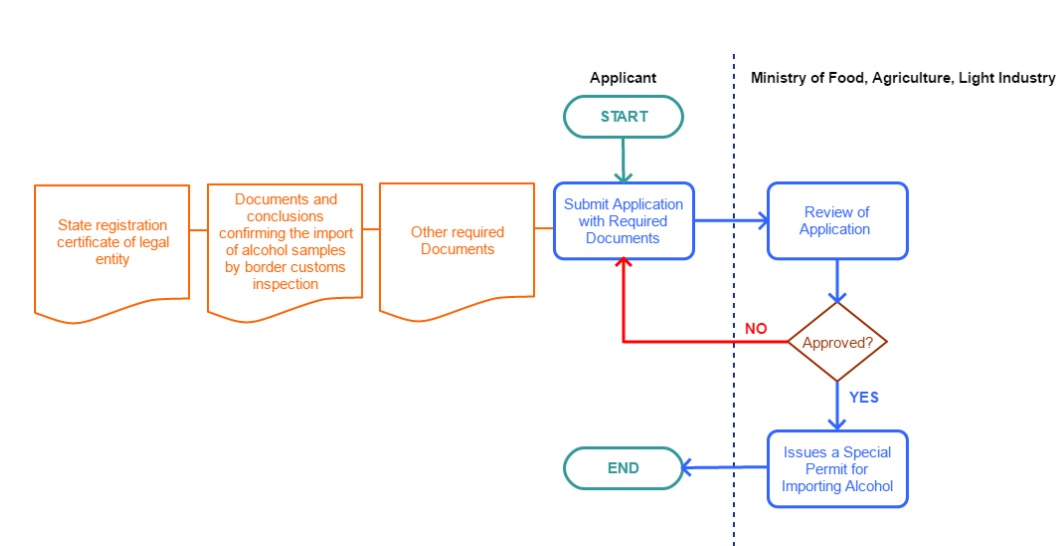 Figure 1. Procedure to obtain special permit procedure for importing alcoholic beverages [13]
Product
1) Beer
Same as "Category" (Alcohol) above.
2) Alcoholic ready-to-drink beverages (such as Chuhai) [2]
Same as "Category" (Alcohol) above.
3) Whisky
Same as "Category" (Alcohol) above.
7.2 Customs Procedure
General Food
Pre-declaration of goods: Foreign goods shipped from the territory of the sending country may be pre-declared before entering the border of Mongolia, or before entering the control of the border customs authority to the control of the deep customs authority, respectively. The customs authority will collect a copy of the documents accompanying the goods, and after the goods arrive, the original documents will be checked against the copies [2].
The Customs Declaration Process for Export and Import Goods is conducted online through the Customs Electronic Service System available on the official customs website https://www.gaali.mn/.
The steps to complete the procedure are outlined in the Service Instructions: https://st-cdn.gaali.mn/files/serviceOtherInfo/msd3c18njwp/617bc0dfc681030bb815ff2c.pdf.
Customs Declaration Process for Export and Import Goods [1, 2, 3, 4]
1. Login to the system - Choose one of the one-time passwords, digital signatures, and Internet banking privileges to access the customs electronic service system.
2. Fill out the report and send it electronically - Fill in the information of the goods and vehicles to be brought through the customs border according to the form and attach the evidence electronically.
3. Receive and distribute electronic filings - An inspector will be appointed to receive the application request received through the system and check the documents.
4. Inspection of the customs control area - Based on predefined criteria in the risk management system, the inspection status of goods and vehicles crossing the customs border is categorized into three color-coded levels: Red, Orange, and Green.
- Red: Full inspection of documents and goods.
- Orange: Document review only.
- Green: No inspection required.
Declarants are notified of the assigned inspection status. The senior customs inspector in the control zone conducts inspections according to the designated status, while the chief customs inspector retains the authority to escalate the status from Orange to Red based on professional judgment, warnings from authorized officials, or relevant information from other sources.
5. Payment of customs and other taxes - Taxes and fees imposed by the customs inspector shall be paid. Once customs taxes are paid for goods under Orange or Green status, their status is updated to "Customs Accepted," making the declaration valid.
6. Conduct and verify inspections - Thorough Inspection for Red Status: Goods and vehicles under Red status undergo meticulous inspection, including potential hiding places in vehicles. Any defects in customs markings are noted and reported.
Advanced tools, techniques, and search dogs are employed during inspections to ensure compliance with declared details like type, weight, and classification.
Entry through the border will be allowed after proper customs control.
7. Delivery of goods - If no violations are found, the senior inspector validates the declaration by marking it as "Approved." Inspectors stamp the declaration and sign it to confirm completion.
After the inspection of the border and deep customs authorities is completed, the goods that have been granted an entry permit will be issued to the applicant.
Resolution timeline: 3 days [2]
Note: Re-examinations may be conducted if suspicions arise, with coordination between senior inspectors and additional officials.
Customs duties and other taxes will be assessed after the e-declaration request is reviewed. Payment shall be processed according to the invoice.
| Customs clearance service fee scale [15] | ||
| No. | Service | Fees |
| 1 | For customs clearance of goods and vehicles that have entered the customs border: - in each main statement - for each additional submission | 7000.00 MNT 1200.00 MNT |
| 2 | For customs service in the temporary customs control area (charged in addition to the customs clearance service fee.) Fee for 1 hour: - on a working day - non-working hours, holidays, and holidays Customs | 4000.00 MNT 8000.00 MNT |
| 3 | For the purpose of customs clearance by way of a bill of lading, if the international mail parcels and passenger goods received in the name of an individual are of a commercial nature | 1200.00 MNT |
| 4 | When writing a cargo manifest (A1) for goods transported by motor vehicle, per manifest | 3000.00 MNT |
| 5 | The head of the customs-bonded factory shall pay a fee for the return of goods abroad, calculated from the value of the contract of operations to be carried out at the customs-bonded factory. | 1.0 percent |
| The fee for entering the goods into the customs-guaranteed zone (except for the customs-guaranteed factory) shall be paid by the operator of the customs-guaranteed zone, calculated from the value of the goods. | 0.1 percent | |
| 6 | When selling main and additional customs declarations, annexes to customs declarations, and cargo manifests to intermediary organizations: 1 set | 1200.00 MNT |
| Customs clearance fees for coal and mining mineral products for export: per ton | 1500.00 MNT | |
| 7 | The price of a one-time seal placed on goods and vehicles to be brought through the customs border | 1000.00 MNT |
Category
Alcohol
Same as General Food above.
Product
1) Beer
Same as "Category" (Alcohol) above.
2) Alcoholic ready-to-drink beverage (such as Chuhai)
Same as "Category" (Alcohol) above.
3) Whisky
Same as "Category" (Alcohol) above.
7.3 Manufacturing License
General Food
Not required.
Category
Alcohol
Not required.
Product
1) Beer
Same as "Category" above.
2) Alcoholic ready-to-drink beverages (such as Chuhai)
Same as "Category" above.
3) Whisky
Same as "Category" above.
7.4 Test for Importation
General Food [2,4]
Laboratory testing is not a standard procedure for imported goods; it is conducted only when deemed necessary by Customs, typically after a risk assessment. This usually applies to goods classified under Red status*. Probability analysis is performed when specialized expertise is required for customs control, goods registration, or determining product classification codes. The subordinate customs office responsible for submitting specimens, samples, or models employs double-check procedures to ensure consistency with the conclusions of the customs laboratory.
* Imported goods (food) will be classified by Customs into 3 lines including the green line, yellow line, and red line. The allocation to which line depends on the risk level of the product, import history, compliance in the importer's operations, etc.
Goods and vehicles may be detained if customs analysis, expert consultation, or additional information from professional organizations is required. Such cases are managed in accordance with the established "Procedures for Detention of Goods and Vehicles." If Customs does not independently collect samples for pre-analysis, and samples or models are voluntarily provided by a legal entity or individual for classification, the final decision must be approved by the head of the customs laboratory.
Resolution timeline for sample analysis: 5 days [2]
Analytical Indicators at the Customs Center and Branch Laboratory, as well as the applicable fees, shall refer to Appendix No. 2 of the Order issued by the Director General of Customs regarding the provision of services [16].
Category
Alcohol
Samples of imported alcoholic beverages shall be subjected to a preliminary analysis by the customs authorities [6].
Analytical Indicators at the Customs Center and Branch Laboratory and applicable fees for alcoholic beverages [16].
Product to be tested | Product category | Defined indicator | Fee (MNT) |
| Various wines | HS Code 22.04- 22.06 | - Filling | 2000 |
| - Sensory indicators (color, odor, appearance) - Alcohol content, % - Glucose, g/l - Fructose, g/l - Titratable acid, g/l - Volatile acid, g/l - Malic acid, g/l - Lactic acid, g/l | 2000 | ||
| - Tartaric acid, g/l - Specific gravity, g/cm3 - Extract content, g/l - pH - Glycerol, g/l - Gluconic acid, g/l - Total polyphenols, g/l - Reducing sugar, g/l - Sucrose, g/l - Total sugar, g/l - Brix | 34000 | ||
| - CO2 - O2 | 7000 | ||
| Beer | HS Code 22.03 | - Filling | 2000 |
| - Sensory indicators (color, odor, appearance) - Alcohol content, % - Specific gravity, g/cm3 - Color | 2000 | ||
| - ASN, % - Turbid - pH | 32000 | ||
| - CO2 - O2 | 7000 | ||
| - Foam thickness, cm - Foam stability, min | 3000 | ||
| Other spirituous beverages | HS Code 22.08 | - Filling | 2000 |
| - Sensory indicators (color, taste, odor, appearance) | 2000 | ||
| - Alcohol content, % | 12000 | ||
| - Dry matter, g/l | 7000 | ||
| - Acidity, g/l | 7000 | ||
| Vodka, whisky, ethanol alcohol | HS code 22.07 HS code 22.08 | - Filling | 2000 |
| - Sensory indicators (color, odor, appearance) - Alcohol content, % | 2000 | ||
| - Amount of toxic mixture - Aldehyde, mg/l | 3000 | ||
| - Methyl alcohol, mg/l - Fusel oil, mg/l - Total esters, mg/l - Furfural, mg/l | 43000 |
Product
1) Beer
Same as "Category" (Alcohol) above.
2) Alcoholic ready-to-drink beverages (such as Chuhai)
Same as "Category" (Alcohol) above.
3) Whisky
Same as "Category" (Alcohol) above.
7.5 Other Notes or Requirements for Importation
General Food
Summary from Customs of Documentary Requirements for Import [17]
| No. | Required Documents | Legal Reference | Requirement |
| 1 | Business registration certificate | Food Law, Article 11 | Only registered legal entities in Mongolia may import and export food. Individuals are prohibited from importing food products. |
| 2 | Trade Agreement | Food Law, Article 11.2.1 | A direct trade agreement with the exporting country or its authorized distributor is required, detailing product quantities, price, manufacturing and expiration dates, packaging standards, and transportation conditions. |
| 3 | Quality and Standards Compliance Certificates (HACCP, GMP, GHP, ISO) | Food Law, Article 11.2.2 | The importer must provide proof of implemented management systems and quality practices. |
| 4 | Documentation for manufacturing and expiration dates | Food Law, Article 11.2.2 | The product must have at least two-thirds of its shelf life remaining when entering Mongolia. Example: Manufactured in 2018, expires in 2021. |
| 5 | Transportation and Warehouse Compliance Documents | Food Law, Article 11.2.4 | Transportation vehicles must meet technical standards and be equipped for temperature control. |
| 6 | Registration with the Ministry of Food, Agriculture, and Light Industry | Food Law, Article 11.3 | Products like food additives and organic food must be registered with the relevant government authority before importation. |
| 7 | Test Results from Exporter | Food Law, Article 13.2 | Food products must meet safety standards recognized in Mongolia and internationally. |
Category
Alcohol
Same as General Food above.
Product
1) Beer
Same as "Category" (Alcohol) above.
2) Alcoholic ready-to-drink beverages
Same as "Category" (Alcohol) above.
3) Whisky
Same as "Category" (Alcohol) above.
7.6 Overview Flowchart for Importation Process
General Food [1,2,3,4]
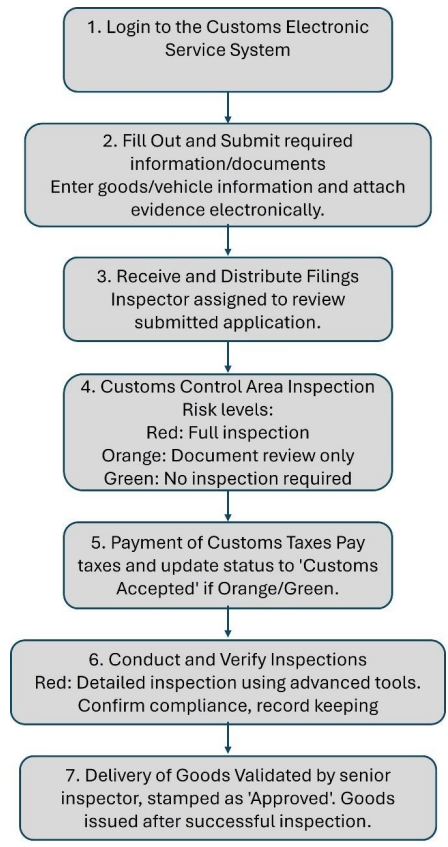 Figure 2. Flowchart for Importation Process [2]
Category
Alcohol
Same as the flowcharts for General Food above.
Product
1) Beer
Same as "Category" (Alcohol) above.
2) Alcoholic ready-to-drink beverages (such as Chuhai)
Same as "Category" (Alcohol) above.
3) Whisky
Same as "Category" (Alcohol) above.
7.7 References
1. Law on Customs
2. Customs Electronic Service System
3. Customs declaration for export and import goods - Service Instructions
https://st-cdn.gaali.mn/files/serviceOtherInfo/msd3c18njwp/617bc0dfc681030bb815ff2c.pdf
4. Annex to Order No. A/275 General procedures for customs control of goods and vehicles to be entered through the customs border
https://legalinfo.mn/mn/detail?lawId=210408&showType=1
5. Law on Permits
https://legalinfo.mn/mn/detail?lawId=16530780109311
6. Law on control of the circulation of alcoholic beverages and combating alcoholism
https://legalinfo.mn/mn/detail?lawId=16530861302491
7. Law on Stamp Duties
https://legalinfo.mn/mn/detail/515
8. Government Resolution No. 173 of 2023 on State Stamp Duty
https://legalinfo.mn/mn/detail?lawId=16759311090001
9. Electronic registration system for issuing special permits and licenses
https://license.mofa.gov.mn/#license
10. Ministry of Food, Agriculture and Light Industry – Fermentation production
https://mofa.gov.mn/branch/huns/616fa9f273bc4a5fc70f222a
11. Application form for a Special Permit to import alcoholic beverages
https://www.mongoliatradeportal.com/index.php?r=searchForms/view&id=23
12. License for the Import of Alcoholic Beverages
https://mofa.gov.mn/files/pdf-files/59gy65m6p3s/66bdc2d1eb5a6a60df09dcb4.pdf
13. Procedure to obtain special permit procedure for importing alcoholic beverages
https://www.mongoliatradeportal.com/index.php?r=searchProcedure/view1&id=12
14. Documents to be required by a business unit to obtain a new special permit to import alcoholic beverages and to extend the period of a special permit
https://mofa.gov.mn/files/pdf-files/z0ttyveehg/65c32d9bd945cd6f70cf64d4.pdf
15. Appendix No. 2 to the Order of the director general of customs regarding setting of service
https://legalinfo.mn/mn/detail?lawId=206022&showType=1
16. Customs center and branch laboratory analysis fee scale - Updated by the Order of the director general of customs regarding the setting of service - May 6, 2022
https://legalinfo.mn/mn/detail?lawId=16530342127441&showType=1
17. Requirements for importing food ingredients and products
Total esters
Was this article helpful?