
7. Importation Requirements
- 13 Mins to read
- DarkLight
7. Importation Requirements
- 13 Mins to read
- DarkLight
Article summary
Did you find this summary helpful?
Thank you for your feedback
Beers, RTDs, Whisky
China

This section provides information on the importation process (shipment, customs, licenses required, and tests requirements).
7.1 Shipment Declaration
General Foods
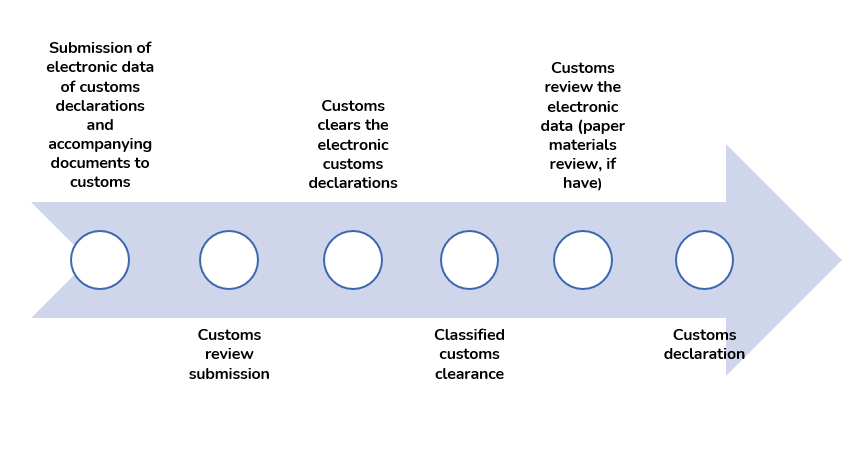
According to “Measures of the People's Republic of China for the Administration of Import and Export Food Safety” [1] and “Cargo Declaration Guide” [2], the general shipment declaration procedure is as follows:
Category
Alcoholic drinks
Same as "General Foods" above.
Product
Beer
Same as "Category" (alcoholic beverages) above.
Ready-to-drink beverages (mainly Chuhai)
Same as "Category" above.
Whisky
Same as "Category" above.
7.2 Customs Procedure
General Foods
According to “Measures of the People's Republic of China for the Administration of Import and Export Food Safety” [1], the General Food customs procedure is as follows:
- Product pre-categorization decision by GACC: http://www.customs.gov.cn/eportal/ui?pageId=373571
- Documents Submission for Review: Commercial documents such as contracts, invoices, transport documents, packing lists, etc., permits and accompanying documents required for import and export, and other import and export documents stipulated by the GACC.
- On-site inspection: Check whether the document is consistent with the name, quantity (weight), packaging, production date, container number, exporting country or region, name of the manufacturer and registration number, label, and sensory inspection.
- Taxation
- GACC conducts the inspection and quarantine for food, and will issue the "Certificate of inspection and quarantine of inbound goods".
- GACC Released
Category
Alcoholic drinks
Same as "General Foods" above.
Product
Beer
Same as "Category" (alcoholic beverages) above.
Ready-to-drink beverages (mainly Chuhai)
Same as "Category" above.
Whisky
Same as "Category" above.
7.3 Manufacturing License
General Foods
According to “Regulations of the People's Republic of China on the Registration and Administration of Overseas Manufacturers of Imported Food” [3], overseas manufacturers shall provide the manufacturing license issued by the original country (region) during registration application. There is no manufacturing license for importing food, instead, there is a certification once the GACC overseas manufacturer registration is done.
Furthermore, the importer/local distributor shall obtain the import license issued by GACC.
Category
Alcoholic drinks
Same as "General Foods" above.
Product
Beer
Same as "Category" (alcoholic beverages) above.
Ready-to-drink beverages (mainly Chuhai)
Same as "Category" above.
Whisky
Same as "Category" above.
7.4 Test for Importation
General Foods
According to “Measures of the People's Republic of China for the Administration of Import and Export Food Safety” [1] and “Law of the People's Republic of China on Import and Export Commodity Inspection” [4], the import General Food inspection shall be carried out in accordance with the mandatory requirements of the national technical specifications
Category
Alcoholic drinks
The mandatory requirements for alcoholic drinks include:
- GB 2757-2012 National Standard for Food Safety Distilled liquor and its integrated liquor [5]
- GB 2758-2012 National standard for food Safety Fermented wine and its integrated wine [6]
- GB 2760-2024 National Food Safety Standard - Standard for uses of food additives [7]
- GB 2761-2017 National Food Safety Standard – Standard for Maximum levels of mycotoxins in foods [8]
- GB 2762-2022 National Food Safety Standard – Standard for Maximum levels of contaminants in foods [9]
- GB 2763-2021 National Food Safety Standard – Standard for Maximum Residue Limits for Pesticides in Foods [10]
- GB 2763.1-2022 National Food Safety Standard – Maximum residue limit of 112 kinds of pesticides in food [11]
- GB 31650-2019 National Food Safety Standard – Maximum residue limit for veterinary drugs in food [12]
- GB 31650.1-2022 National Food Safety Standard –Maximum residue limit of 41 veterinary drugs in food under the National Food Safety standard [13]
- GB 7718-2011 Food Safety National standard - Pre-packaged food labeling General rules [14]
- GB 28050-2011 Food Safety National standard- Pre-packaged food nutrition labeling General rules [15]
- GB 7718-2025 Food Safety National standard - Pre-packaged food labeling General rules [16] (will be enforced from March 16, 2027)
- GB 28050 -2025 National food safety standard - Standard for Nutrition Labeling of Prepackaged Foods [17] (will be enforced from March 16, 2027)
- And the necessary safety inspection required by the GACC
Product
Beer
The mandatory requirements for beer include:
- GB 2758-2012 National standard for food Safety Fermented wine and its integrated wine [6]
- GB 2760-2024 National Food Safety Standard - Standard for uses of food additives [7]
- GB 2761-2017 National Food Safety Standard – Standard for Maximum levels of mycotoxins in foods [8]
- GB 2762-2022 National Food Safety Standard – Standard for Maximum levels of contaminants in foods [9]
- GB 2763-2021 National Food Safety Standard – Standard for Maximum Residue Limits for Pesticides in Foods [10]
- GB 2763.1-2022 National Food Safety Standard – Maximum residue limit of 112 kinds of pesticides in food [11]
- GB 31650-2019 National Food Safety Standard – Maximum residue limit for veterinary drugs in food [12]
- GB 31650.1-2022 National Food Safety Standard –Maximum residue limit of 41 veterinary drugs in food under the National Food Safety standard [13]
- GB 7718-2011 Food Safety National standard - Pre-packaged food labeling General rules [14]
- GB 28050-2011 Food Safety National standard- Pre-packaged food nutrition labeling General rules [15]
- GB 7718-2025 Food Safety National standard - Pre-packaged food labeling General rules [16] (will be enforced from March 16, 2027)
- GB 28050 -2025 National food safety standard - Standard for Nutrition Labeling of Prepackaged Foods [17] (will be enforced from March 16, 2027)
- And the necessary safety inspection required by the GACC
Ready-to-drink beverages (mainly Chuhai)
Same as "Category" (alcoholic drinks) above.
Whisky
The mandatory requirements for whisky include:
- GB 2757-2012 National Standard for Food Safety Distilled liquor and its integrated liquor [5]
- GB 2760-2024 National Food Safety Standard - Standard for uses of food additives [7]
- GB 2761-2017 National Food Safety Standard – Standard for Maximum levels of mycotoxins in foods [8]
- GB 2762-2022 National Food Safety Standard – Standard for Maximum levels of contaminants in foods [9]
- GB 2763-2021 National Food Safety Standard – Standard for Maximum Residue Limits for Pesticides in Foods [10]
- GB 2763.1-2022 National Food Safety Standard – Maximum residue limit of 112 kinds of pesticides in food [11]
- GB 31650-2019 National Food Safety Standard – Maximum residue limit for veterinary drugs in food [12]
- GB 31650.1-2022 National Food Safety Standard –Maximum residue limit of 41 veterinary drugs in food under the national Food Safety standard [13]
- GB 7718-2011 Food Safety National standard - Pre-packaged food labeling General rules [14]
- GB 28050-2011 Food Safety National standard- Pre-packaged food nutrition labeling General rules [15]
- GB 7718-2025 Food Safety National standard - Pre-packaged food labeling General rules [16] (will be enforced from March 16, 2027)
- GB 28050 -2025 National food safety standard - Standard for Nutrition Labeling of Prepackaged Foods [17] (will be enforced from March 16, 2027)
- And the necessary safety inspection required by the GACC
7.5 Other Notes or Requirements for Importation
General Foods
There are some key notes for the importation of General Foods.
For Customs Declaration Entity:
According to “Administrative Provisions of the Customs of the People's Republic of China on Notification of Customs Declaration Entities” [18], the following keynotes are for all the customs declaration entities:
- Where the consignee or consignor of import and export goods or the customs declaration enterprise applies for the notification, it shall obtain the qualification of the market entity.
- Where the consignee or consignor of import and export goods applies for the record, it shall also obtain the record of foreign trade operators.
- Where the consignee or consignor of import and export goods or the customs declaration enterprise has filed with the customs declaration unit, its branches that meet the conditions of the preceding paragraph may also apply for notification with the customs declaration unit.
- When applying for the record, the customs declaration unit shall submit the Information Form for the Record of the Customs Declaration Unit to the Customs.
- The record of the customs declaration unit shall be long-term effective.
The customs declaration entity can apply notification through China International trade "single window" standard edition (https://www.singlewindow.cn/)", enterprise qualification subsystem" or "Internet + customs (Http://online.customs.gov.cn/)" enterprise management subsystem, fill in relevant information and submit an application to the customs. The administration time is 3 business days.
For Food Importers:
According to “Announcement on the Promulgation of the Provisions on the Administration of the Notification of Imported Food Importers and Exporters and the Provisions on the Administration of Food Import Notification and Sales Notification (Former AQSIQ No. 55 of 2012)” [19], the following keynotes is for all food importers:
A. The consignee of imported food (hereinafter referred to as the consignee) shall apply to the inspection and quarantine institution of its industrial and commercial registration for the notification and shall be responsible for the authenticity of the information provided for the notification.
The consignee shall apply to the local inspection and quarantine institution for the record before the food import. The following materials shall be provided for notification:
- Prepare an accurate and complete consignee notification application form.
- Copy of the industrial and commercial business license, organizational code certificate, legal representative's identity certificate, and foreign trade operators' record registration form and submit the original for inspection.
- Enterprise quality and safety management system.
- Organizational setup, departmental functions, and post responsibilities related to food safety.
- The type of food to be traded and the place of storage.
- Those who have engaged in food import, processing, and sales within 2 years shall provide relevant descriptions (food variety and quantity).
- For self-care inspection, the photocopy of the registration certificate of the self-care inspection unit shall be provided and the original shall be submitted for inspection. After verifying the information provided by the enterprise, the inspection and quarantine institution shall approve the filing.
B. The administration time is 5 business days.
On January 20, 2025, GACC opened a public consultation on the draft “Announcement of the General Administration of Customs on Matters Concerning the Notification of Importers and Exporters of Imported Food (Draft)” [20] which aims to partially replace or supplement the “Announcement on the Promulgation of the Provisions on the Administration of the Notification of Imported Food Importers and Exporters and the Provisions on the Administration of Food Import Notification and Sales Notification (Former AQSIQ No. 55 of 2012)” [19] after it is officially released and implemented. The key points outlined in the draft are summarized below (please note that only the final officially released version shall be considered for implementation):
Notification of Food Importers
(1) Food importers who apply for notification with the customs shall have the legal status of a market entity and submit the "Notification Information Form for Food Importers" to the customs at their place of residence.
(2) After review, if the " Notification Information Form for Food Importers" is complete and meets the notification requirements, the customs shall approve the notification within 3 working days.
(3) If the notification information of food importers changes, they shall handle the change procedures with the customs at their place of residence within 60 days from the date of the change. If food importers change their place of residence or other information, they shall promptly apply for information change with the customs at their new place of residence.
(4) Food importers shall handle the cancellation of notification with the customs at their place of residence if they have any of the following circumstances:
- Dissolved, declared bankrupt, or otherwise legally terminated.
- Their registration or business license has been canceled or revoked by the market supervision and administration department.
- Other circumstances that require cancellation as stipulated by law.
If food importers fail to handle the cancellation of notification as required in the preceding paragraph, the customs shall handle the cancellation upon discovery.
Other Matters
(1) Food importers may apply for notification, change, or cancellation with the customs through the "Single Window for International Trade" or "Internet + Customs". Food importers may also submit the "Notification Information Form for Food Importers" in paper form to the customs at their place of residence to apply for notification, change, or cancellation. Food importers may handle the notification of food importers at the same time when handling the notification of customs declaration units.
(2) Food importers shall be responsible for the authenticity and validity of the information they provide.
(3) The General Administration of Customs shall publish the list of food importers that have been notified through the "China Customs Enterprise Import and Export Credit Information Publicity Platform".
This announcement may be enforced from May 1, 2025. Where there is any inconsistency between this announcement and the former General Administration of Quality Supervision, Inspection and Quarantine (AQSIQ) Announcement No. 55 of 2012, this announcement shall prevail.
Category
Alcoholic drinks
There are some key notes for the importation of alcoholic drinks.
The alcoholic drinks declaration shall comply with the “People's Republic of China Customs declaration of import and export commodities (2023 Edition)” [21], Chapter 22 Declaration elements for beverages, liquor, and vinegar.
For liquor, the commodities mainly refer to:
- 22.03 Beer brewed from malt
- 22.04 Wine made from fresh grapes
- 22.05 Vermouth and other wines made from fresh grapes with herbs or spices
- 22.06 Other fermented beverages (e.g., cider, pear wine, mead, sake); Mixtures of fermented beverages not included in other tax headings and mixtures of fermented beverages and non-alcoholic beverages
- 22.07 Unmodified ethanol with an alcohol concentration of 80% or more by volume; Modified ethanol and other alcohols of any concentration.
- 22.08 Unmodified ethanol with an alcohol concentration of less than 80% by volume; Distilled spirits, liqueur, and other alcoholic beverages.
Import alcoholic drinks management after launching in China market, will be under the “Measures for the administration of the domestic market of imported alcoholic drinks” [22] supervision and management. Here are some key notes for import management:
1. Import alcoholic drinks port management
The port food hygiene and quality supervision and inspection agencies shall supervise and inspect the imported alcoholic drinks (including duty-free imported alcoholic drinks) entering the territory of China according to law. The importing unit shall provide the health certificate of the origin of the importing wine exporting country (region). Imported wine (excluding duty-free imported wine) shall be affixed with Chinese labels in accordance with China's General Food Labeling Standards and relevant regulations. The port supervision and inspection institutions for the hygiene and quality of imported food shall, in accordance with this article, supervise and inspect the imported alcoholic drinks. The hygiene certificate (original and copy) shall be issued to those who have passed the supervision and inspection and affixed with the "Hygiene supervision and inspection mark for imported food". Those who fail to pass the supervision and inspection shall not be allowed to import.
2. Management of duty-free imported wine
Duty-free imported alcoholic drinks shall not be sold in the domestic market. The State prohibits any unit or individual from engaging in the purchase and sale of duty-free imported alcoholic drinks at ports and in any other areas.
Product
Beer
Same as "Category" (Alcoholic Drinks) above.
For Beer, the commodity mainly refers to: 22.03 Beer brewed from malt.
Ready-to-drink beverages (mainly Chuhai)
Same as "Category" (Alcoholic Drinks) above. In addition, Ready-to-drink beverages (mainly Chuhai) are highly likely to be classified under:
- If fermented beverage: 22.06 Other fermented beverages (e.g., cider, pear wine, mead, sake); Mixtures of fermented beverages not included in other tax headings and mixtures of fermented beverages and non-alcoholic beverages.
- If not fermented beverage: 22.08 Unmodified ethanol with an alcohol concentration of less than 80% by volume; Distilled spirits, liqueur, and other alcoholic beverages (Other).
Whisky
Same as "Category" (Alcoholic Drinks) above.
For Whisky, the commodity mainly refers to: 22.08 Unmodified ethanol with an alcohol concentration of less than 80% by volume; Distilled spirits, liqueur, and other alcoholic beverages.
7.6 Overview Flowchart for Importation Process
General Foods
The food import's main process briefing is as follows:

Category
Alcoholic drinks
Same as "General Foods" above.
Product
Beer
Same as "Category" (alcoholic drinks) above.
Ready-to-drink beverages (mainly Chuhai)
Same as "Category" above.
Whisky
Same as "Category" above.
7.7 References
1. Measures of the People's Republic of China for the Administration of Import and Export Food Safety
http://www.customs.gov.cn//customs/302249/302266/302267/3625391/index.html
2. Cargo Declaration Guide http://online.customs.gov.cn/static/pages/guides/000629002001/%E2%80%9C%E8%B4%A7%E7%89%A9%E7%94%B3%E6%8A%A5%E2%80%9D%E6%94%BF%E5%8A%A1%E6%9C%8D%E5%8A%A1%E4%BA%8B%E9%A1%B9%E5%8A%9E%E4%BA%8B%E6%8C%87%E5%8D%97.pdf
3. Regulations of the People's Republic of China on the Registration and Administration of Overseas Manufacturers of Imported Food
http://jckspj.customs.gov.cn/spj/zcfg18/bmgz91/3979122/index.html
4. Law of the People's Republic of China on Import and Export Commodity Inspection
http://www.customs.gov.cn//customs/302249/302266/302267/2369445/index.html
5. GB 2757-2012 National Standard for Food Safety Distilled liquor and its integrated liquor
https://sppt.cfsa.net.cn:8086/db?type=2&guid=2F5BA85F-715C-41D5-B095-C09F1695363F
PDF attached below
6. GB 2758-2012 National standard for Food safety Fermented wine and its integrated wine
https://sppt.cfsa.net.cn:8086/db?type=2&guid=AB8D29FD-CD06-437E-9D35-1229A1061779
PDF attached below
7. GB 2760-2024 National Food Safety Standard - Standard for uses of food additives
https://sppt.cfsa.net.cn:8086/db?type=2&guid=6CA1489A-9570-4906-8CE8-CC86FBFB1941
8. GB 2761-2017 National Food Safety Standard – Standard for Maximum levels of mycotoxins in foods
https://sppt.cfsa.net.cn:8086/db?type=2&guid=7745B309-65F0-4465-829C-A3E388BAB26C
PDF attached below
9. GB 2762-2022 National Food Safety Standard – Standard for Maximum levels of contaminants in foods
https://sppt.cfsa.net.cn:8086/db?type=2&guid=3989AF03-4750-415C-9CAE-271604C35B59
PDF attached below
10. 2763-2021 National Food Safety Standard – Standard for Maximum Residue Limits for Pesticides in Foods
https://www.sdtdata.com/fx/fmoa/tsLibCard/183688.html
PDF attached below
11. GB 2763.1-2022 National Food Safety Standard – Maximum residue limit of 112 kinds of pesticides in food
https://www.sdtdata.com/fx/fmoa/tsLibCard/194155.html
PDF attached below
12. GB 31650-2019 National Food Safety Standard – Maximum residue limit for veterinary drugs in food
https://sppt.cfsa.net.cn:8086/db?type=2&guid=CC04F293-E49D-4E83-852B-A9E216E8F0B7
PDF attached below
13. GB 31650.1-2022 National Food Safety Standard –Maximum residue limit of 41 veterinary drugs in food under the national Food Safety standard
https://sppt.cfsa.net.cn:8086/db?type=2&guid=9079BF51-62DC-4B45-9A22-8389C12ABBE3
PDF attached below
14. GB 7718-2011 Food Safety National standard - Pre-packaged food labeling General rules
https://sppt.cfsa.net.cn:8086/db?type=2&guid=9058ADC5-AFC3-4586-9798-D0170F6F879C
PDF attached below
15. GB 28050-2011 Food Safety National standard- Pre-packaged food nutrition labeling General rules
https://sppt.cfsa.net.cn:8086/db?type=2&guid=C89C7E02-42FF-4D74-BE85-EB4E764EE210
PDF attached below
16. GB 7718-2025 Food Safety National standard - Pre-packaged food labeling General rules
https://sppt.cfsa.net.cn:8086/db?type=2&guid=63F005D7-BA6F-428C-8098-826735B6C13E
17. GB 28050-2025 National food safety standard - Standard for Nutrition Labelling of Prepackaged Foods
https://sppt.cfsa.net.cn:8086/db?type=2&guid=01848F78-13AB-4F40-9DF8-DE1158E7BC26
18. Administrative Provisions of the Customs of the People's Republic of China on Notification of Customs Declaration Entities
http://www.customs.gov.cn//customs/302249/302266/302267/4020542/index.html
19. Announcement on the Promulgation of the Provisions on the Administration of the Notification of Imported Food Importers and Exporters and the Provisions on the Administration of Food Import Notification and Sales Notification (Former AQSIQ No. 55 of 2012)
http://qingdao.customs.gov.cn/qingdao_customs/406496/ztlm/3811084/3811085/3944083/index.html
20. Announcement of the General Administration of Customs on Matters Concerning the Filing of Importers and Exporters of Imported Food (Draft)
http://www.customs.gov.cn/customs/302452/302329/zjz/6326885/index.html
21. People's Republic of China Customs declaration of import and export commodities (2023 Edition)
http://www.customs.gov.cn//customs/302249/302270/302272/4764243/index.html
22. Measures for the administration of the domestic market of imported alcoholic drinks
https://www.cca.cn/wqfg/detail/13631.html
Was this article helpful?