
5. Claim Requirements
- 9 Mins to read
- DarkLight
5. Claim Requirements
- 9 Mins to read
- DarkLight
Article summary
Did you find this summary helpful?
Thank you for your feedback
General Foods
New Zealand

This section provides information on the definition of different types of claims and any restrictions or allowance of claims as well as claim registration processes.
5.1 Overview of Claims
5.1.1 Types & Definitions
A ‘claim’ is defined in Standard 1.1.2 of the Food Standards Code [1] as an express or implied statement, representation, design, or information in relation to a food or property of food which is not mandatory in the Code.
Standard 1.2.7 [2] regulates the following types of claims:
- nutrition content claims (claims that refer to a particular nutritional property of food being present or absent);
- high-level health claims (claims that a food or a property of a food product, has or may have a health effect relating to a serious disease or biomarker of a serious disease);
- general level health claims (claims that a food or a property of a food product, has or may have a health effect but are not a high-level health claim.
5.1.2 List of Prohibited Claims
5.2 Nutritional Claims
5.2.1 Permitted Claims
Schedule 4 of the FSC [4] provides the permitted list of nutritional claims that can be made along with respective conditions of use.
5.2.2 Nutritional Claim Registration
5.3 Health Claims
5.3.1 Permitted Claims
Please refer to section 5.1.1 above.
Evidence for claims
In the absence of a mandatory standard for evidence to support claims, it would be reasonable to apply either the requirements set out under Standard 1.2.7 of the FSC [2] or category/product-specific requirements.
5.3.2 Health Claim Registration
For general-level health claims, companies can base a claim on one of the more than 200 pre-approved food-health relationships in Standard 1.2.7 [2] and Schedule 4 of the FSC [4], or self-substantiate a food-health relationship by following the process for systematic review in Schedule 6 of the FSC [6].
For high-level health claims, they must be based on a pre-approved food-health relationship. Refer to Schedule 4 of the FSC [4].
5.4 Other Notes or Requirements for Claims
1) Overview of how nutrient function and other function claims are regulated in New Zealand
In New Zealand, nutrition content and health claims are primarily regulated by Standard 1.2.7 of the Australia New Zealand Food Standards Code (FSC) [1,2] with the following definition of claim:
 Figure 1. Excerpt from Standard 1.1.2-2 of the FSC [3]Under the FSC, nutrient function and other function claims are described as health claims with the following definition:

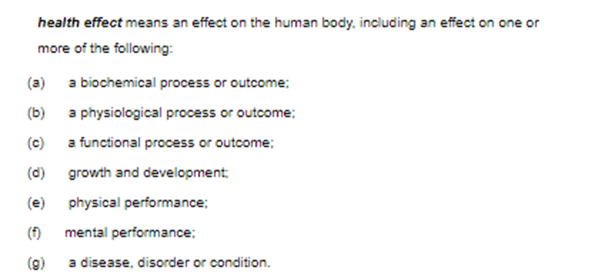 Figure 2. Excerpt from Standard 1.1.2-2 of the FSC [3]
According to the FSC, there are two types of health claims namely:
a. High-level health claim which is defined as follows:

 Figure 3. Excerpt from Standard 1.1.2-2 of the FSC [3]
Standard 1.2.7–18 states that only pre-approved claims can be used for high-level health claims and must be subject to any relevant conditions including meeting the NPSC or Nutrient Profiling Scoring Criterion (except for a special purpose food). The pre-approved claims and conditions are set out in Schedule 4—4, while the method to calculate NPSC is set out in Schedules 4 and 5 of the FSC [4,5].
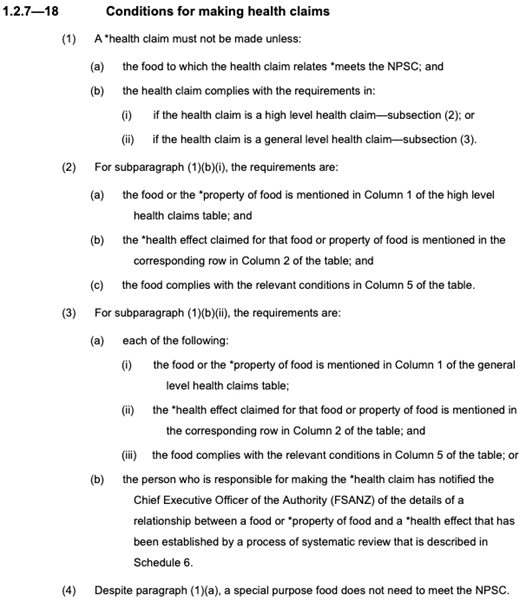 Figure 4. Excerpt from Standard 1.2.7-18 of the FSC
b. General-level health claims are all health claims apart from high-level health claims, so by definition general-level health claims do not relate to serious diseases.
 Figure 5. Excerpt from Standard 1.1.2–2 of the FSC [3]
Standard 1.2.7–18 provides that general-level health claims may be applied from the pre-approved claims in Schedule 4—5 or used if the business responsible for using the claim has notified the Chief Executive Officer of Food Standards Australia New Zealand (FSANZ) that a food-health effect has been established by systematic review (see Figure 4).
The pre-approved claims in Schedule 4—5 serve as a positive list with provision for a self-substantiated claim system. A food business can self-substantiate a food-health relationship by following the process for systematic review in Schedule 6 [6]. Food businesses self-substantiating a food-health relationship must notify FSANZ of the relationship before using the claim. Standard 1.2.7–19 sets out the requirements for the food business to notify FSANZ as shown in Figure 6. While FSANZ maintains a public list of the notified food-health relationships [7], FSANZ does not approve or assess the claim or the systematic reviews. Systematic reviews are not publicly available.
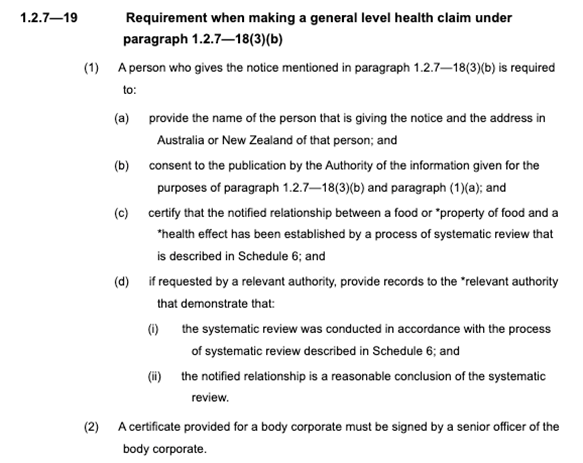 Figure 6. Excerpt from Standard 1.2.7-19 of the FSC
The FSC is applied as law by application Acts in all Australian States and Territories, as well as in New Zealand. The application Acts are enforced by the relevant authorities in each State, Territory, and in New Zealand. As shown above, Standard 1.2.7–19(1)(d) gives the relevant authorities in each jurisdiction the power to request records to demonstrate that the systematic review was conducted in compliance with Schedule 6 and that the notified relationship is a reasonable conclusion of the systematic review.
In practice, there are enforcement gaps in the regulatory regime because the relevant authorities in each State, Territory, and New Zealand enforce the FSC but do not have power under the application Acts to require a business to withdraw a notified claim even if the authorities do not believe the systematic review and its conclusions are reasonable. FSANZ does not assess the validity of the systematic reviews and does not have enforcement powers.
It shall be noted that false or misleading representations by a food business would be misleading and deceptive conduct which is unlawful in both Australia and New Zealand.
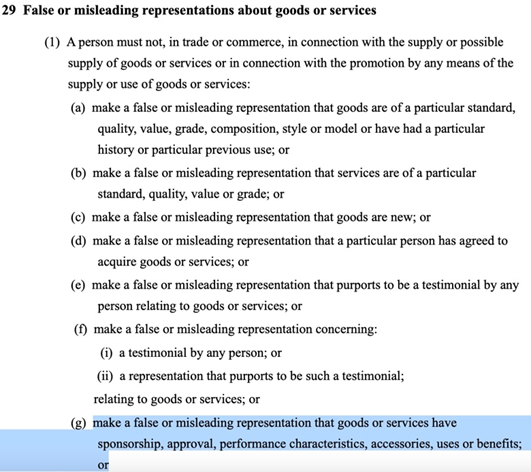 Figure 7. Excerpt from Chapter 3, Part 3-1(29) of the Competition and Consumer Act 2010 [8]
In New Zealand, the Commerce Commission enforces the Fair Trading Act 1986 (New Zealand) which also prohibits misleading and deceptive conduct in business. The maximum penalty for a business under this legislation is $600,000 for each contravention.
 Figure 8a. Excerpt from Section 10 of the Fair Trading Act 1986 [9]
 Figure 8b. Excerpt from Section 40 of the Fair Trading Act 1986
No prior approval can be, or is, given for self-substantiated health claims. However, consumer protection laws make it unlawful for food businesses to make claims that would mislead a reasonable consumer. Therefore, any systematic review used to support a self-substantiated health claim should fully comply with the requirements of Schedule 6 of the FSC and importantly, not cherry-pick only favorable studies to ensure conclusions are reasonably based on all scientific evidence.
2) Allowance of food ingredient to bear nutrient function claims
Standard 1.2.7 applies to finished foods and excludes foods intended for further processing, packaging, or labeling prior to retail sale.
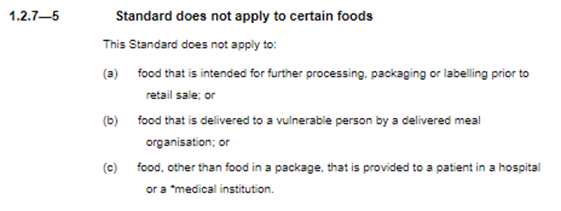 Figure 9. Excerpt from Standard 1.2.7-5 of the FSC
The FSC does not otherwise regulate nutrition and health claims on foods that are not finished foods. It is silent as to whether ingredients can bear claims.
In the absence of specific FSC regulations about health claims related to ingredient, the general law applies. This means the prohibitions on misleading and deceptive conduct in the Australian Consumer Law and the Fair Trading Act 1986 (New Zealand) would apply to regulate claims on ingredients in the B2B market. Therefore, claims by ingredient suppliers can be made but should be supported by the balance of scientific evidence and it should be made expressly clear to the finished food producers that they will need to independently determine whether the claim can be applied if the ingredient is used in the finished food product.
In practice, ingredient suppliers promote ingredients in the B2B market notifying that the marketing material is for producers of finished foods, not end consumers. Suppliers may prepare a systematic review in accordance with Schedule 6 of the FSC to support the food-health relationship. This review can then be provided on a confidential basis to finished food producers using the ingredient.
If a producer wishes to use the general level health claim on the finished food, they must comply with the FSC and the Australian and New Zealand consumer protection laws by:
- Conducting due diligence to confirm the systematic review is carried out in accordance with Schedule 6 and is a reasonable conclusion based on the totality of the evidence;
- Determining that the conclusions from the systematic review are applicable to the finished food, e.g. amount and bioavailability of the nutrient in that form of food;
- Notifying FSANZ under Standard 1.2.7—19 (see Figure 6); and
- Confirming the food is eligible for the general level health claim in accordance with Standard 1.2.7
Notwithstanding the restriction of Standard 1.2.7 to finished foods, FSANZ's list of notified food-health relationship does include some notifications from ingredient suppliers. This may reflect the enforcement gaps noted in Section 1 of this report. However, even if a supplier has notified FSANZ, the producer of the finished food is responsible for the claim on that food and must comply with Standard 1.2.7—19 and again notify FSANZ.
3) Can all finished product manufacturers use the claim from Q2 above?
No, a notified claim is not available to all manufacturers. Only the notifying party can make the claim.
As noted above, Schedule 6 systematic reviews are not publicly available. Ingredient suppliers provide them on a confidential basis to finished food producers using their ingredient. Manufacturer of the finished food products must assess the systematic review, determine that it applies to the finished product, and notify FSANZ about the intended food-health relationship to be made on their product label or in marketing.
However, there is no bar on a competitor conducting a similar review and forming the same conclusion if there are publicly available studies in relation to that food (ingredient) or the property of the food.
4) Conclusion
- In New Zealand, Standard 1.2.7 of the Food Standards Code (FSC) regulates nutrition content and health claims on finished foods. The FSC is silent as to nutrition content and health claims on ingredients.
- The overarching consumer protection laws of the Australian Consumer Law and Fair Trading Act 1986 (New Zealand) which prohibit misleading and deceptive conduct apply to claims in marketing ingredients and finished foods. Claims by ingredient suppliers can be made but should be supported by the balance of scientific evidence and it should be made expressly clear to finished food producers that they will need to independently determine whether the claim can be applied if the ingredient is used in the finished food product.
- Some ingredient suppliers have notified FSANZ of food-health relationships. In practice, it is more common for ingredient suppliers to confidentially provide finished food producers with copies of systematic reviews supporting a food-health relationship. The producer is responsible for independently assessing the review, determine if it applies to the finished food and notify FSANZ of the relationship.
- Schedule 6 systematic reviews are not available to the public. Therefore, a notified claim is not automatically available to other producers. If a competitor wishes to replicate the claim, they would need to conduct their own systematic review and take all steps to comply with Standard 1.2.7.
5.5 References
1. Australia New Zealand Food Standards Code
www.foodstandards.gov.au/code/Pages/default.aspx
2. Standard 1.2.7 – Nutrition, health and related claims
https://www.legislation.gov.au/Details/F2018C00942
3. Standard 1.1.2 – Definitions used throughout the Code
https://www.legislation.gov.au/Details/F2022C01054
4. Schedule 4 – Nutrition, health and related claims
https://www.legislation.gov.au/Details/F2017C00711
5. Schedule 5 – Nutrient profiling scoring method
https://www.legislation.gov.au/Details/F2022C01053
6. Schedule 6 – Required elements of a systematic review
https://www.legislation.gov.au/Details/F2015L00476
7. FSANZ Notified food-health relationships to make a health claim
https://www.foodstandards.gov.au/industry/labelling/fhr/Pages/default.aspx
8. Australian Consumer Law (Schedule 2 of the Competition and Consumer Act 2010)
https://www.legislation.gov.au/Details/C2023C00043/Html/Volume_4
9. New Zealand Fair Trading Act 1986
https://www.legislation.govt.nz/act/public/1986/0121/latest/DLM96990.html
Was this article helpful?