
4. Labeling Requirements
- 10 Mins to read
- DarkLight
4. Labeling Requirements
- 10 Mins to read
- DarkLight
Article summary
Did you find this summary helpful?
Thank you for your feedback
Beers, RTDs, Whisky
Mongolia

This section provides information on labeling requirements and the label approval process.
4.1 Mandatory Labeling Parameters
General Food
In Mongolia, food labeling is regulated by MNS 6648:2016 [1].
Labeling information must be accurate and must not be false, misleading, or deceptive regarding the nature of the food. Food labels must not contain descriptions, words, images, or illustrations that could cause confusion with other products, directly or indirectly reference them, or suggest an association with other products.
The food product label must be securely affixed to its packaging, or, if this is not possible, an additional sheet with the required information should be attached. The information on the label should be clear, visible, indelible, and easily readable under normal conditions of use. To enhance readability, the background color should contrast with the text. If the product is encased in an outer package, the label should be easily visible or readable through it. The name of the product and its net weight must be prominently displayed in a visible area.
Prepacked food labels must contain the following information:
1) Name of the Food Product: The food product name must reflect its nature and characteristics accurately. Additional clarifying terms (e.g., "dried," "smoked") may be added to prevent confusion.
2) Ingredients List: Ingredients must be listed in descending order by weight under the label "Ingredients." Compound ingredients should specify components if they exceed 5% of the product’s weight unless the ingredient is a food additive.
Food additives, if used, must be labeled with the name or INS code and its function (e.g., "Emulsifier," "Preservative"). Food additives or raw materials containing food additives that are included in a large amount of the product must be listed in the list of ingredients if the amount used in the food is sufficient to perform a technological role.
The following foods and ingredients that cause allergies must be labeled:
- Cereals containing gluten (gluten protein): such as wheat, rye, spelt, oats or their hybrids, and products made from them
- Crustaceans and products made from them
- Eggs and egg products
- Fish and fish products
- Peanuts and their products
- Soy and products made from it
- Milk and milk products (including lactose)
- Tree nuts and nut products
- Products containing 10 mg/kg or more sulfite
3) Quantity: The net weight/net volume should be expressed in SI units (e.g., grams, liter), and for products in a liquid medium, both the net and dry weights must be provided.
4) Manufacturer Details: The name and address of the manufacturer, packer, or importer must be included.
5) Country of origin: The country of origin must be labeled. If the food undergoes further processing in a secondary country that alters its original characteristics, the country of manufacture shall be indicated on the label.
6) Batch Number: Unique identifier for the product batch shall be labeled.
7) Date Marking and Storage: The "Manufacture Date," "Use-by Date," or "Expiration Date" must be clearly indicated. For products with a shelf life of less than three months, include the day and month; for longer, include the month and year.
8) Storage conditions must also be specified.
9) Nutritional Information:
- Mandatory nutrients include calories, protein, fat, saturated fat, carbohydrates, sugars, and sodium.
- Vitamins and minerals must be declared if they meet 5% or more of the daily recommended intake per 100 g/ml.
Daily recommended intake (DRI): Mongolia has not issued specific daily recommended intake (DRI) values for nutrients in the same structured way as some other countries. However, MNS 6648: 2016 states that this standard refers to the current guidelines and their most updated versions from Codex, such as CXS 1-1985 General Standard for the Labeling of Prepackaged Foods, CXG 2-1985 Guidelines on Nutrition Labeling, and CXG 23-1997 Guidelines for Use of Nutrition and Health Claims. In the absence of country-specific DRIs, it is reasonable for food manufacturers to refer to the Codex Nutrient Reference Values-Requirements (NRVs-R) issued under section 3.4.4.1 of CXG 2-1985 Guidelines for Use of Nutrition and Health Claims [1,3].
- Information on trans fats, cholesterol, and fiber must be detailed if relevant.
- Nutritional information should be presented in a table format, with sequential listing allowed if space is limited. Key nutritional details like calories, total fat, saturated fat, sugar, and salt content should be placed on the front of the packaging near the product name.
10) Health Warnings: Any potential adverse effects on health must be included on the label.
11) Usage Instructions: Clear instructions for the proper use of the product, including preparation steps for semi-finished products, must be provided.
12) "Food safe" symbol: to identify food contact packaging as safe - refer to the report of "Packaging requirements for food contact materials - MN".
13) Labeling information regarding packaging recycling - refer to the report on "Packaging requirements for food contact materials - MN".
Category
Alcohol
Currently, specific labeling requirements for alcoholic beverages apply to locally produced beverages, and further labeling requirements are under development (see Section 4.7 below - Additional Notes on Labeling).
For imports, market practices show that alcoholic beverages entering Mongolia comply with both General Food labeling regulations and specific alcoholic beverage requirements to avoid potential border rejection.
Product
1) Beer
Same as "Category" above.
2) Alcoholic ready-to-drink beverages (such as Chuhai)
Same as "Category" above.
3) Whisky
Same as "Category" above.
4.2 Languages
Mandatory labeling information on imported food shall be written in Mongolian, English, or Russian [2].
4.3 Mandatory Information on Stickers
Same as Section 4.1 - “Mandatory Labeling Parameters”.
If the information on the label is written in a language other than the one permitted by law, re-labeling or additional labeling may be applied [1].
In the case of re-labeling or affixing additional labels, the information must accurately and completely reflect the original label. The new label must be applied in a manner that does not obscure or cover the original label [1].
4.4 Product Legal Name
For alcoholic beverages, Article 12.1 of the Law on the Control of the Circulation of Alcoholic Beverages and Combating Alcoholism [4] mandates that product labels must clearly indicate the type of alcoholic beverage. This implies that the appropriate legal name as specified by the Mongolian National Standards (MNS), such as "Vodka," "Wine," or "Beer," shall be labeled [4].
Note: Chuhai drinks with 3–9% alcohol fall under the specific product name designated as "alcoholic soft drinks" in the Mongolian National Standards (MNS). In addition, the actual alcohol content must be clearly displayed on the label.
In case of the absence of Mongolian standards, a descriptive name mentioning the alcoholic nature can be used.
4.5 Product-specific Labeling Statements
Information regarding mandatory labeling for alcoholic beverages is outlined in Section 4.7 below. However, these requirements are still in the draft stage and have not yet been finalized or approved.
4.6 Authority Approval
There are no food label approval requirements described by the relevant legislation.
4.7 Additional Notes on Labeling
Labeling and Packaging Requirements for Alcoholic Beverages
Labeling and Packaging Requirements for Alcoholic Beverages in Mongolia are described by Article 11 and Article 12 - Law on control of the circulation of alcoholic beverages and combating alcoholism [4].
Currently, alcoholic beverages produced in Mongolia must comply with the following labeling and packaging requirements:
- Mandatory Label Information:
- Name and type of alcoholic beverage, and series number of the product (batch number)
- Producer's name and address
- Package size
- List of ingredients and food additives
- Production date (day, month, year) and storage conditions
- Alcohol content
- Applicable standards and technical regulations (i.e. the reference to the relevant Mongolian Standard needs to be on the label)
- Health warnings about the harmful effects of alcohol
- Alcoholic beverages with the same ingredients, raw materials, and hardness shall be produced only under one assigned name. (i.e a single formula with identical ingredients, quantities, and hardness cannot be marketed under two different product names).
- Additional Labeling Information: Labels may include details about trademarks, good manufacturing practices (GMP), or quality management systems.
- Approval of Labeling Requirements: The labeling and warning format must be jointly approved by the government agencies responsible for food and health.
- Language Requirements: Labels must be in Mongolian.
- For exports, the mandatory label information for alcoholic beverages covered in Article 12.1 Law on control of the circulation of alcoholic beverages and combating alcoholism may be exempted.
- Notification of Changes: Producers must inform the relevant tax and food authorities of any changes to the name or packaging size of their alcoholic products.
- Prohibited Packaging Sizes: Alcoholic beverages with 18% or more ethanol cannot be packaged in sizes less than 0.33 liters or more than 1 liter, except for special purposes such as exports, duty-free shops, hotels, or airline services.
The Law on the Control of the Circulation of Alcoholic Beverages and Combating Alcoholism became effective starting January 1, 2023. During the transition period, Article 12, which governs the labeling and packaging of alcoholic beverages, will not apply to products produced before the law's enforcement. However, the specific provisions regarding Mandatory Label Information and Prohibited Packaging Sizes for alcoholic beverages with 18% or more ethanol will be enforced only starting from January 1, 2026 [4].
To comply with the requirement that labeling must be jointly approved by the government agencies responsible for food and health, the Ministry of Food, Agriculture and Light Industry (MOFALI) and the Ministry of Health (MOH) of Mongolia are in the process of drafting a Joint Order to regulate the labeling requirements for alcoholic beverages [5]. The draft was compiled in 2024 with an unknown development or approval status. The draft has not yet been notified to the World Trade Organization (WTO).
Unconfirmed Draft Contents:
Labeling Requirements:
- The label of alcoholic beverages produced in Mongolia must contain the following information in addition to the requirements set forth in Article 12.1 of the Law on Control of Alcoholic Beverage Circulation and the Fight Against Alcoholism:
- 1.1. Shelf life
- 1.2. Barcode
- 1.3. Warning label template
- The label of alcoholic beverages produced in Mongolia must be in the Mongolian language.
- In addition to the above requirements, the following additional information may be included on the label:
- 3.1. Logos of awards received from trade and international exhibitions and competitions, information about implemented best practices, and quality management systems;
- 3.2. Information with a QR code containing shelf life, expiry date, production date, and storage conditions.
- Additional information on the label may be regulated by international and Mongolian technical regulations and standards.
- If exporting to foreign countries, the label may not comply with the requirements of Article 12.1 of the Law on Control of Alcoholic Beverage Circulation and the Fight Against Alcoholism and the requirements for "Alcoholic Beverage Labeling and Warning Labels" established by this order.
- Health claims are prohibited on the label of alcoholic beverages.
- The manufacturer is responsible for the accuracy of the information on the alcoholic beverage label.
- Warning labels on alcoholic beverage packaging must include a template highlighting the health risks, harmful effects, contraindications, and other negative impacts on human health.
- The warning label template must occupy no less than 20% of the total area of the label.
- The following warnings must be selected and placed on the label:
- 10.1. Risk of cancer and birth defects.
- 10.2. Suppresses brain function and kills nerve cells.
- 10.3. Excessive consumption may lead to criminal offenses and violence.
- 10.4. Forbids requiring others to consume alcohol.
- The warning text on the label must be written in Mongolian.
- It is prohibited to place health claims on the label of alcoholic beverages.
Additional information may include QR codes linking to production details, expiration dates, and storage conditions.
The following pictograms will be placed on the warning template:
Warning content | Graphic symbols |
| Not for use by people under the age of twenty-one. In Mongolian “Хорин нэг нас хүрээгүй хүн хэрэглэхийг хориглоно.” | 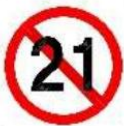 |
| Pregnant women are prohibited from using. In Mongolian “Жирэмсэн хүн хэрэглэхийг хориглоно”. | 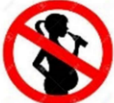 |
| It is prohibited to be used by people who are driving a vehicle. In Mongolian “Тээврийн хэрэгсэл жолоодож байгаа хүн хэрэглэхийг хориглоно”. | 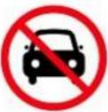 |
Export Exceptions: For exports, some of the health warnings and label design requirements may be waived.
Until January 1, 2026, during the grace period of The Law on the Control of the Circulation of Alcoholic Beverages and Combating Alcoholism and prior to the finalization and enforcement of the Joint Order from the Ministry of Food, Agriculture and Light Industry (MOFALI) and the Ministry of Health (MOH), alcoholic beverage labels may not fully comply with the labeling requirements specified in Section 4.7 above. Businesses are advised to monitor the progress of the Joint Order to ensure preparedness for compliance with the updated regulations by January 1, 2026 [4, 5].
According to Article 12 of the Law on control of the circulation of alcoholic beverages and combating alcoholism, labeling requirements apply to products produced within Mongolia. Imported products must still undergo inspection by the authorities during the import permit and customs clearance process. Therefore, compliance with labeling requirements is crucial. Current practices demonstrate that alcoholic beverages imported into Mongolia adhere to both General Food labeling regulations and specific requirements for alcoholic beverages mentioned above.
Indeed, although the process for approving imported alcoholic beverage labels is not officially outlined, labels are evaluated during the inspection of imported products. If the label does not comply with the regulations, the authorities will prevent the shipment from entering the country.
4.8 References
1. MNS 6648:2016 Requirements for labeling of food containers and packages
https://members.wto.org/crnattachments/2022/TBT/MNG/22_2973_00_x.pdf
2. Requirements for importing food ingredients and products
3. CXG 2-1985 Guidelines on Nutrition Labeling
4. Law on the control of the circulation of alcoholic beverages and the Fight Against Alcoholism
https://legalinfo.mn/mn/detail?lawId=16530861302491
5. Draft - Annex One to the Joint Order No. ... of the Minister of Food, Agriculture and Light Industry and the Minister of Health dated ..., ..., 2024
https://mofa.gov.mn/files/pdf-files/kl8rvhwbg9/660be545a53d8535c7a1c9df.pdf
Was this article helpful?