
4. Labeling Requirements
- 12 Mins to read
- DarkLight
4. Labeling Requirements
- 12 Mins to read
- DarkLight
Article summary
Did you find this summary helpful?
Thank you for your feedback
Whisky
Australia

This section provides information on labeling requirements and the label approval process.
4.1 Mandatory Labeling Parameters
General Food
General labeling requirements for all foods are covered under a number of individual general standards in Part 1.2 (Labeling and other information requirements) of the FSC [1].
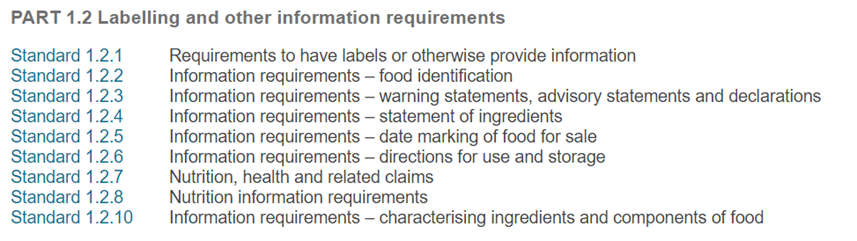
Figure 1. Screenshot of Part 1.2 [1] the Standards relating to labeling.
The mandatory elements for food in retail packaging are described in Standard 1.2.1 [2].
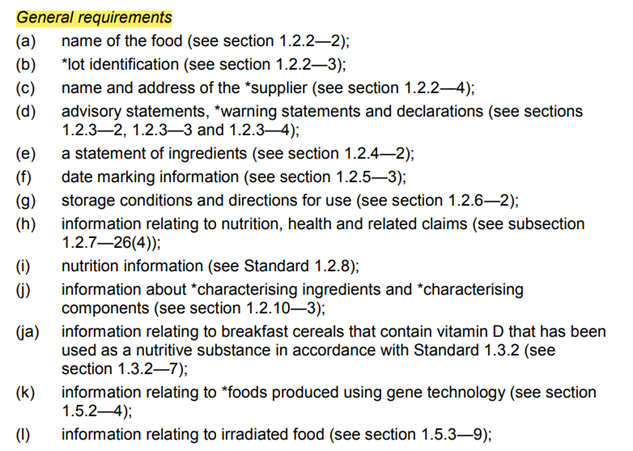
Figure 2. Required label information from clause 1.2.1-8 (1) of ref [2].
Some of the items listed in Figure 2 are not required on alcoholic beverage labels. For example, a Nutrition Information Panel (NIP) as described in Standard 1.2.8 [3] is not mandatory. Details for a list of relevant parameters are provided in Table 1 below.
Item | Details | Standard |
Name/description (Mandatory) | There is no prescribed name. ‘Whisky’ and a brand name would be suitable. Other terms can be added such as ‘single malt Scotch’, ‘blended whisky’, ’12-year-old’, and ‘Japanese pure malt whisky’. Geographic locations can be added, provided the information is accurate and truthful. E.g., A single malt Scotch would need to be aged and bottled in Scotland. | Clause 1.2.2-2 [ref 4] (see Figure 3) |
Lot identification (Mandatory) | Each alcoholic beverage must have a unique ‘lot’ or ‘batch’ identifier on its packaging. There is no standardized format for creating and placing these identifiers on the label. However, in general, they commonly take the form of an alpha-numeric sequence and are placed near the barcode. | Clause 1.2.2-3 [ref 4] (see Figure 4) |
Name and address of supplier (Mandatory) | This could be the manufacturer, packer, or importer. The business address should be complete and include street number, street name, suburb, town, and state/territory in Australia. It must be a physical address, not a post office box. | Clause 1.2.2-4 [ref 4] (see Figure 5) |
Statement of ingredients (not mandatory except where there are allergens present) | Listing ingredients on the label of an alcoholic beverage is generally not mandatory. However, some substances require an allergen warning on product labels. | Refer to Section 4.7 below. |
Nutrition Information Panel (NIP) (Not mandatory) |
| Refer to Section 4.7 below. |
Allergens statement (mandatory if allergens present) | Some substances require an allergen warning on product labels. | Refer to Section 4.7 below. |
Date marking (optional) | ‘Best before’ dates are generally not included on spirit labels since the date is generally more than two years after the date marking. If used, then storage conditions must appear on labels. | 1.2.5 [ref 5] |
Storage conditions (optional unless a ‘best before’ date appears on the product label) | If these are used, options could include: ‘Store in a cool, dark place’. | 1.2.6 [ref 6] |
Country of Origin (Mandatory) |
| Refer to Section 4.7 below. |
Table 1: Relevant general labeling parameters.
The following figures provide screenshots relevant to items in Table 1.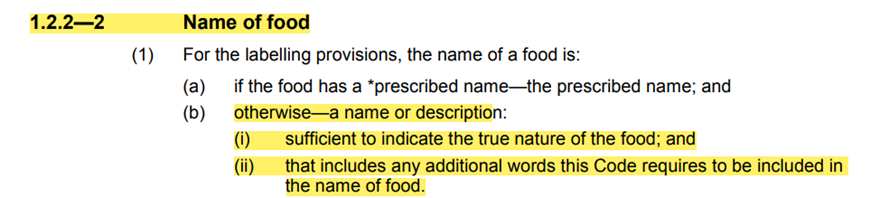
Figure 3: Product name/description from clause 1.2.2-2 of ref [4].
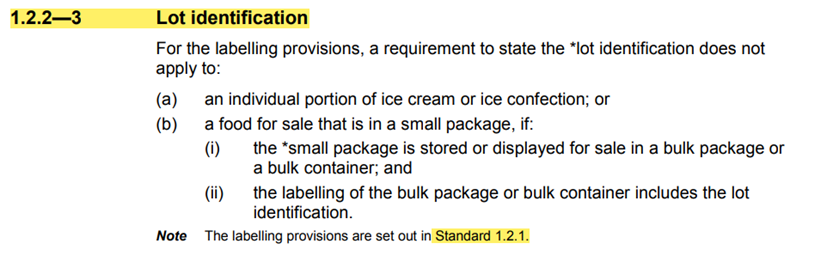
Figure 4: Requirement to have a lot identification from clause 1.2.2-3 of ref [4].

Figure 5: Requirement to have a business name and physical address from clause 1.2.2-4 of ref [4].
Category
Alcoholic beverages
In addition to the mandatory labeling parameters outlined for “General Food” above, there are specific requirements for various foods in [2], and in the case of alcoholic beverages the following apply:

Figure 6. Additional requirements for labels for alcoholic beverages from clause 1.2.1-8 (1) of ref [2].
In addition, there is a specific standard for labeling that is unique to alcoholic beverages: Standard 2.7.1 [7]. These requirements and the statements in Figure 6 are described in full in Section 4.5 below.
Product
Whisky
There are no labeling parameters specific to “Whisky”. Labeling should comply with "General Food" and with the category of "alcoholic beverages" above.
4.2 Languages
General Food
Labels should be in English, although additional foreign language text is also permitted on shared overseas labeling, provided it complies with clause 1.2.1-24 (2) [2]:
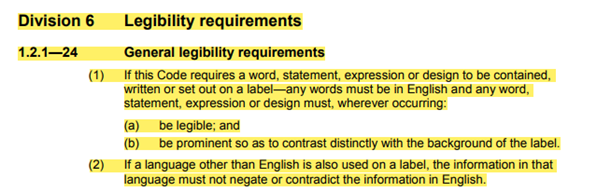
Figure 7. Language and legibility requirements for labels from clause 1.2.1-24 of ref [2].
Category
Alcoholic beverages
Same as "General Food" above.
Whisky
Same as "Category" (alcoholic beverages) above.
4.3 Mandatory Information on Stickers
General Food
It is acceptable to provide mandatory information on a sticker or label attached to an existing product label provided the conditions are met (refer to Figure 8 below).
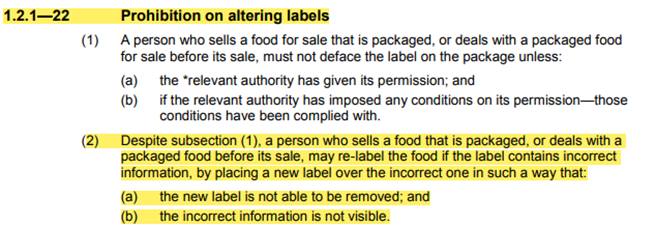 Figure 8. Use of over stickers from clause 1.2.1-22 of ref [2].
Category
Alcoholic beverages
Same as "General Food" above.
Product
Whisky
Same as "Category" (alcoholic beverages) above.
4.4 Product Legal Name
Product
Whisky
As described in Section 4.1 above, there is no ‘prescribed name’ for whisky. A prescribed name is a legally required name:
Figure 9: Definition of ‘prescribed name from clause 1.2.1-2 of ref [2].
For example, ‘honey’, ‘infant formula’, and ‘formulated supplementary food’ are all prescribed names under the FSC. The product’s legal name should reflect the nature of the beverage, i.e., whisky. Examples of how this can be expressed, and further details, are provided in Table 1 of Section 4.1 above.
4.5 Product-specific Labeling Statements
Category
Alcoholic beverages
As described in Section 4.1, there are product-specific labeling statements for alcoholic beverages. These are from Standard 1.2.1 [2] and Standard 2.7.1 [7]. Table 2 below outlines details for all the required components and some optional label items.
Item | Details | Standard |
Statement of alcohol content (mandatory) | Per clause 2.7.2-3 [ref 7]: The label statement for alcohol content must be accurate within 0.5% (for whisky) and may be expressed as mL/100 g, mL/100 mL, or as a percentage of alcohol by volume. Note: most products in the Australian market use the percentage format. The statement must be on the front of the label. It can also be placed on the back.
| Clause 1.2.1-8 (1) [ref 2] requires this item.
(see Figure 10 below) |
Statement of number of standard drinks in the package (mandatory) | Per clause 2.7.2-4 [ref 7]:
The label should include information about the number of ‘standard drinks’ in the package. A standard drink is defined in clause 1.1.2 – 3 [ref 8]:
Calculation: Number of Standard Drinks = Container Volume (liters) x % Alcohol/Vol (mL/100mL) x 0.789 (Specific Gravity of Ethanol). Beverages with 10 or Fewer Standard Drinks: The statement must accurately indicate the number of standard drinks, correct to the first decimal place. Beverages with More than 10 Standard Drinks: The statement must accurately indicate the number of standard drinks, rounded to the nearest whole number. The information can be expressed as a statement: “CONTAINS APPROXIMATELY X.X STANDARD DRINKS.”
Note that the decimal must be used and not a European decimal comma. Alternatively, a Standard Drinks Logo can be used. This is the more widely used option. The logo system has a selection of drinks glasses (the correct glass type must be selected: beer/wine/spirits glass, etc.) and a statement about the number of standard drinks added. A guidance document is available [9]. | Clause 1.2.1-8 (1) [ref 2] requires this item.
(see Figure 11 below) |
Pregnancy warning labels | Pregnancy warning labels are required on labels and packaging of ‘prescribed alcoholic beverages’. Refer to Figure 12 below for the definition of ‘prescribed alcoholic beverage’. (Note: These would include bottled whisky for retail sale).
The pregnancy warning labels consist of text and pictograms as shown in Figure 13 below. There are various rules, depending on the packaging and the volume of beverage in the container. More details are provided below, including guidance on formatting, wording, font colors, etc. | Clause 2.7.1-8 [ref 7]
(See figures 12 & 13) |
Volume statement (mandatory) | A volume statement for the total amount of liquid in the bottle. This is to be expressed in metric units (e.g. mL or L). The statement should be on the main label panel. The volume statement should be at least 2 mm away from all package edges and maintain a distance of at least 2 mm from any graphics or written content.
The character height is based on the dimensions of the bottle. Guidance is provided in [11]. For example, a standard 750 mL bottle requires the volume statement to have a minimum character height of 3.3 mm. Larger sizes require a minimum character height of 4.8 mm. | National Trade Measurement Regulations 2009 [10]. In particular, regulations 4.11 to 4:13. |

Table 2: Relevant product-specific labeling parameters.
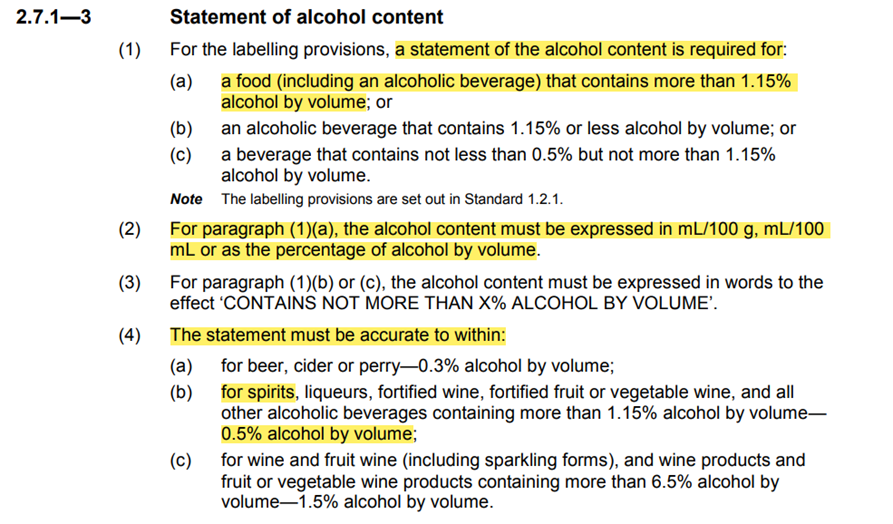
Figure 10: Statement of alcohol content from clause 2.7.1-3 of ref [7].
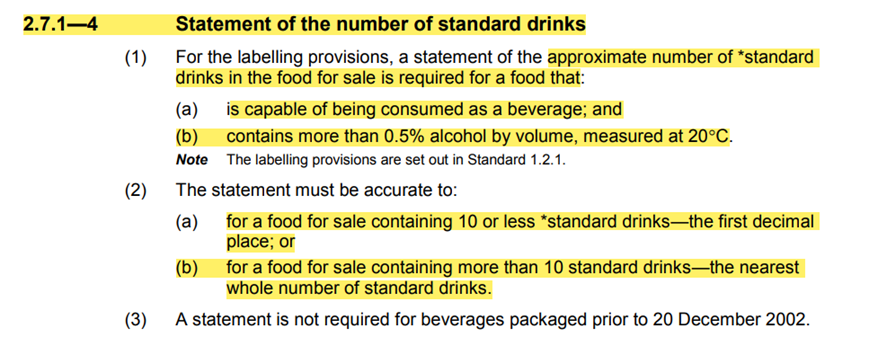
Figure 11: Statement of standard drinks in a package from clause 2.7.1-4 of ref [7].

Figure 12: Definition of ‘prescribed alcoholic beverages’ from clause 2.7.1-2 of ref [7].
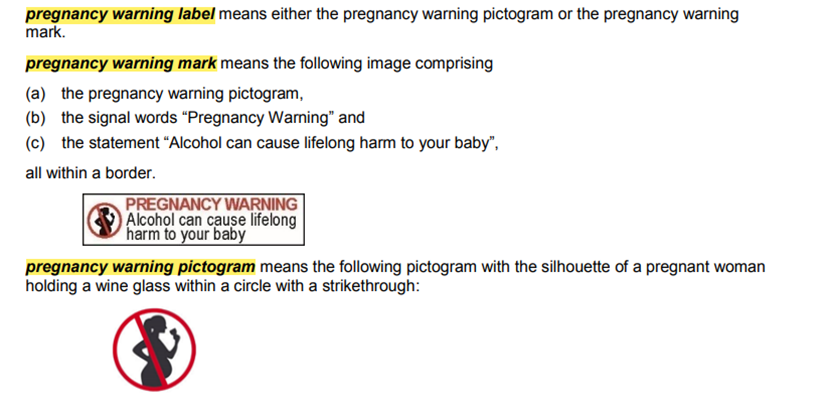
Figure 13: Pregnancy warning pictograms and text for packaging from clause 2.7.1-2 of ref [7].
Information on Pregnancy warning:
The choice of pregnancy warning label type (pictogram or pregnancy warning mark) depends on the total liquid volume of the alcoholic beverage:
- 200 mL or less: pregnancy warning pictogram only.
- Between 201 mL and 800 mL: full pregnancy warning mark, see Fig 14 below.
- More than 801 mL: full pregnancy warning mark, see Fig 14 below.
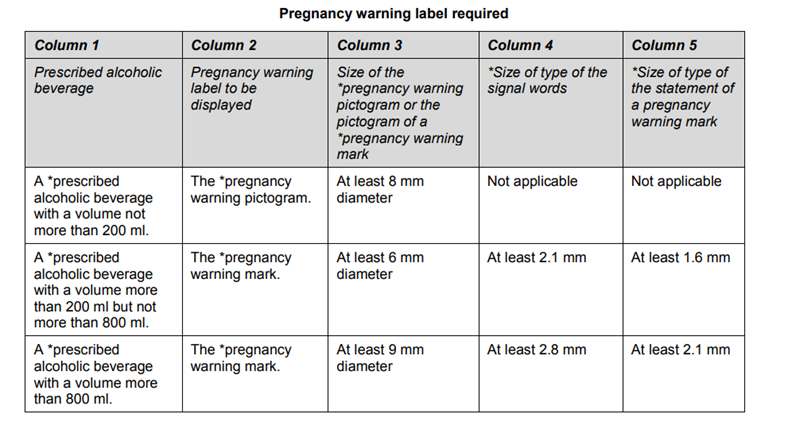
Figure 14: Pregnancy warning requirements summary (inner package) from clause 2.7.1-9 of ref [7].
For alcoholic beverages with two layers of packaging, for example, a labeled bottle inside a retail carton, the pregnancy warnings must appear on both labels. The requirements for the outer packaging are:
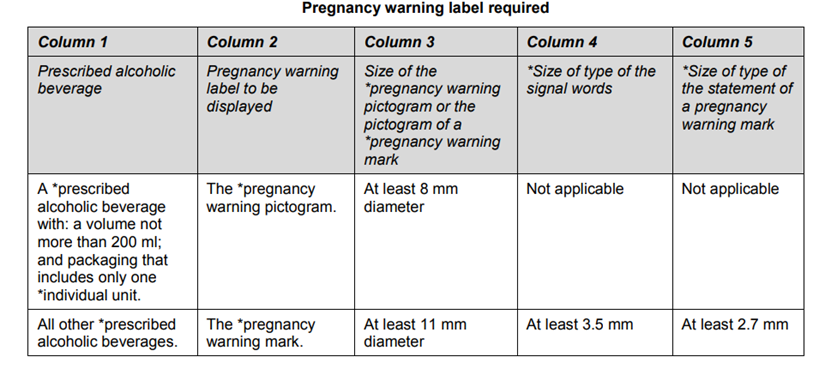
Figure 15: Pregnancy warning requirements summary (outer package) from clause 2.7.1-10 of ref [7].
More guidance and access to the artwork files for the pictogram and pregnancy warning mark (both label sizes) are available [12].
Apart from sizes of pregnancy warning messages, as described above, the FSC requires a character height of at least 3 millimeters for any other label warning statements:

Figure 16: Warning text sizes from clause 1.2.1-25 of ref [2].
Product
Whisky
Same as "Category" (alcoholic beverages) above.
4.6 Authority Approval
General Food
Product labels do not need to be approved by the authorities.
Category
Alcoholic beverages
Same as "General Food" above.
Product
Whisky
Same as "Category" (alcoholic beverages) above.
4.7 Additional Notes on Labeling
Statement of ingredients
A list of ingredients is not mandatory on alcoholic beverage labels.
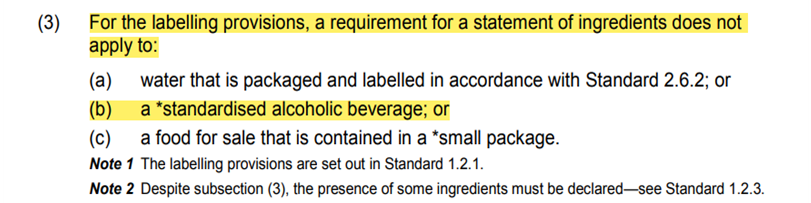
Figure 17: Exemption from ingredients list from clause 1.2.4-2 (3) of ref [13].
This does not mean that the label cannot contain references to individual ingredients such as: ‘cinnamon-flavored’ whisky, ‘elderflower liqueur’, or ‘rye whisky’. Where allergens are present (refer below) these would often need a label warning for the ingredients in question which would appear on the product label in advisory statements but would still be exempt from a complete ingredients list under clause 1.2.4-2 (3) [13].
Proposal for voluntary nutrition content claims (carbohydrate and sugar):
Proposal P1049 (Carbohydrate and sugar claims on alcoholic beverages) is intended to clarify requirements in the FSC with respect to nutrition content claims about carbohydrate content and the components of carbohydrate (such as sugar) in relation to food that contains more than 1.15% alcohol by volume (ABV), including alcoholic beverages [14]. This proposal will help clarify how such claims inform consumers with ‘healthy’ messaging relating to alcoholic beverages. The proposal has undergone consultation, and it is expected that changes will be with a final proposal and gazettal in early June 2025
Allergen statements
Standard 1.2.3 [15] outlines the requirements for allergens statements on product labels. Since these messages are generally stated in conjunction with the statement of ingredients, there is no set format for their presentation in the case of alcoholic beverage labels due to the exemption for an ingredient list in this type of product. Any allergen statements need to be clearly stated and prominent enough to be seen by consumers. Usually, they take the form of, ‘Contains x’.
Schedule 9 [16] provides a list of substances for which statements are required. The allergen may be present as a result of an ingredient, food additive, or processing aid used in the manufacture of the food:
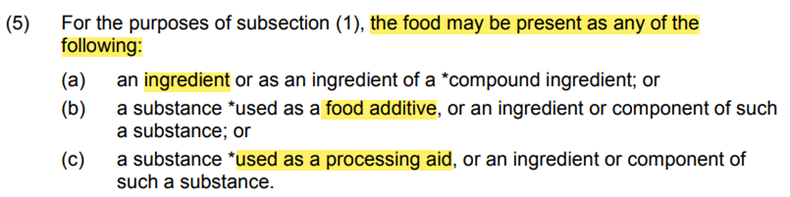
Figure 18: Sources of allergens from clause 1.2.4-4 (5) of ref [13].
Examples of such statements on alcoholic beverage labels:
- “This product is produced with milk products. Traces may remain” (on a wine).
- “Produced with egg and milk products and traces may remain” (on a wine).
- “Contains gluten” (on liqueur).
Any alcoholic beverage which contains added sulfites in concentrations of 10 mg/kg or more requires the statement: “Contains sulphites”. Spirits distilled from barley, rye, oats, or wheat are not required to declare these allergens on the label since the distilling process renders some allergens safe to consume. Likewise, distilled beverages made from whey are exempt from declaring milk products [17]. However, the use of milk products for fining purposes needs to be declared.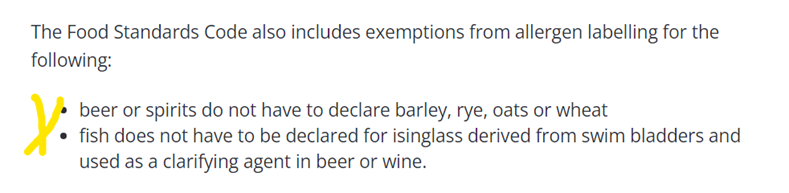

Figure 19: Exemptions for allergens declarations from the FSANZ website ref [17].
The exemptions above do not affect the Code requirements for ‘gluten-free’ labeling statements. Such claims can only be made when a food product does not contain detectable gluten, oats or oat products; or cereals containing gluten that have been malted, or products of such cereals.
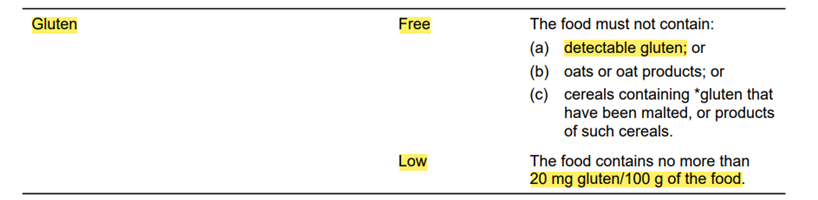
Figure 20: ‘Gluten-free’ and ‘low gluten’ claims requirements from clause S4-3 in ref [18].
Nutrition Information Panel (NIP)
Alcoholic beverages are exempt from the requirement for an NIP unless a claim is being made in relation to a nutritional content claim which requires an associated entry in the NIP. For example, ‘low carbohydrate’ or ‘gluten-free’.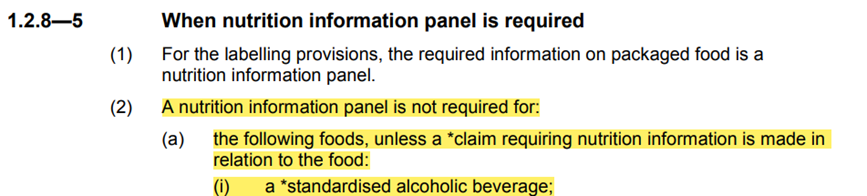

Figure 21: NIP requirements in relation to a claim on an alcoholic beverage from ref [3].
The only claims that can be made for alcoholic beverages are in relation to energy or carbohydrate levels (e.g., ‘low in carbs’). A claim in relation to gluten does not require a label NIP.
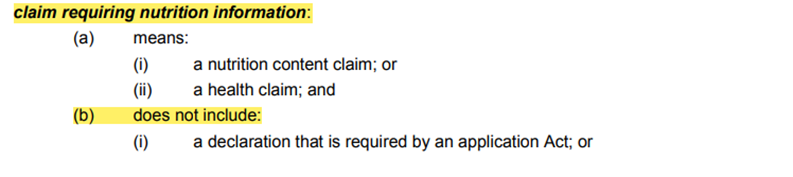

Figure 22: No NIP requirement in relation to a claim on gluten content from ref [3].
Country-of-Origin Labeling (COOL)
In Australia, food labels must include information about the country-of-origin labeling (COOL) of the product, including where each of the ingredients were sourced from and where the product was manufactured [19]. Food that is repacked in Australia may include ‘Packed in Australia’. The Australian Competition and Consumer Commission (ACCC) oversees the COOL requirements and has guidance on its website [20]. There is also an Information Standard [21]. The rules are dependent upon the type of food and the way in which it is sold and are complicated. Alcoholic beverages are categorized as non-priority foods, making including a Country-of-Origin statement on the label a mandatory requirement.
Proposed changes impacting alcoholic beverages
There are two FSANZ proposals underway that will impact these products:
- Proposal P1049 – Carbohydrate and sugar claims on alcoholic beverages (refer to Section 4.7 - Additional Notes on Labeling - above [14])
- Proposal P1059 – Energy labeling of alcoholic beverages
FSANZ is working on both in tandem to enable the alignment of potential changes with alterations to the alcohol labeling requirements.
P1059 [22] considers amending the Code to provide energy (kilojoule) labeling information on alcoholic beverages. This has undergone rounds of consultation and is now planned to be gazetted in June 2025. The proposed label changes will be in a similar format to an NIP as per the example: 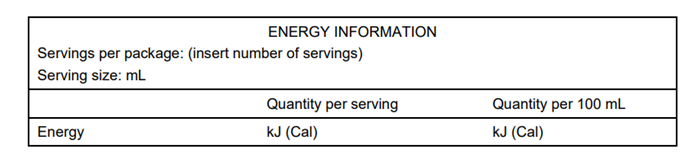
Figure 23: Proposal for energy labeling on alcoholic beverages from ‘Call for Submissions’ ref [22].
4.8 References
1. Australia New Zealand Food Standards Code (FSC). Individual standards available from the landing page
https://www.foodstandards.gov.au/food-standards-code/legislation
2. Standard 1.2.1 – Requirements to have labels or otherwise provide information
https://www.legislation.gov.au/F2015L00386/latest/downloads
3. Standard 1.2.8 – Nutrition information requirements
https://www.legislation.gov.au/F2015L00395/latest/downloads
4. Standard 1.2.2 – Information requirements – food identification
https://www.legislation.gov.au/F2015L00389/latest/downloads
5. Standard 1.2.5 – Information requirements – date marking of food for sale
https://www.legislation.gov.au/F2015L00401/latest/downloads
6. Standard 1.2.6 – Information requirements – directions for use and storage
https://www.legislation.gov.au/F2015L00393/latest/downloads
7. Standard 2.7.1 – Labelling of alcoholic beverages and food containing alcohol
https://www.legislation.gov.au/F2015L00469/latest/downloads
8. Standard 1.1.2 – Definitions used throughout the Code
https://www.legislation.gov.au/F2015L00385/latest/downloads
9. Standard drinks logo information produced by Australian Grape and Wine Incorporated
https://www.agw.org.au/assets/Standard-Drink-Logo/Std-Drinks.pdf
10. National Trade Measurement Regulations 2009
https://www.legislation.gov.au/F2009L03479/latest/downloads
11. Online guide to the sale of pre-packaged goods. Australian Department of Industry, Science and Resources. Provides information on measurement marking (volume of beverage per package)
https://www.industry.gov.au/publications/guide-sale-pre-packaged-goods
12. FSANZ information on Pregnancy warning labels, including downloadable files, fonts and text size, and colours
13. Standard 1.2.4 – Information requirements – Statement of ingredients
https://www.legislation.gov.au/F2015L00392/latest/downloads
14. FSANZ proposal P1049 – Carbohydrate and sugar claims on alcoholic beverages
https://www.foodstandards.gov.au/food-standards-code/proposals/P1049
15. Standard 1.2.3 – Information requirements – Warning statements, advisory statements and declarations
https://www.legislation.gov.au/F2015L00397/latest/downloads
16. Schedule 9 – Mandatory advisory statements
https://www.legislation.gov.au/F2015L00479/latest/downloads
17. FSANZ webpage on allergen labelling exemptions
https://www.foodstandards.gov.au/consumer/foodallergies/Allergen-labelling-exemptions
18. Schedule 4 – Nutrition, health and related claims
https://www.legislation.gov.au/F2015L00474/latest/downloads
19. FSANZ webpage ‘Country of origin labelling’
https://www.foodstandards.gov.au/consumer/labelling/coo
20. ACCC webpage ‘Country of origin food labelling’
https://www.accc.gov.au/business/advertising-and-promotions/country-of-origin-food-labelling
21. Country of Origin Food Labelling Information Standard 2016
https://www.legislation.gov.au/F2016L00528/latest/downloads
22. FSANZ proposal P1059 – Energy labelling on alcoholic beverages
Was this article helpful?