
Bacterial Lysate in Dietary Supplements (Regulatory Status & Claims)
- 27 Mins to read
- DarkLight
Bacterial Lysate in Dietary Supplements (Regulatory Status & Claims)
- 27 Mins to read
- DarkLight
Article summary
Did you find this summary helpful?
Thank you for your feedback
Bacterial Lysate in Dietary Supplements
USA

The below version control table serves to document all updates made to the report. The purpose is to ensure the information is always accurate and up-to-date.
| Version Number | Content Creation Date | Publishing Date | Section(s) Updated & Reason(s) for Update |
|---|---|---|---|
| V0 | 15 Nov 2023 | 07 Oct 2024 | N/A (new report) |
Disclaimers
A) At RegASK, we are committed to providing our clients with the most up-to-date and accurate information on regulatory requirements and compliance. To ensure the highest level of accuracy and relevance, we regularly review and update our e-guidebooks at least twice per year to reflect the latest regulatory developments in the market. (Please contact us if you wish to activate this feature.) In the meantime, our RegAlerts service is designed to keep our clients notified of any regulatory updates that may impact their business.
B) The contents on this platform are exclusively intended for the use of RegASK and its authorized representatives. All materials herein are confidential and the sole property of RegASK. Any reproduction, distribution, or display of this content to others is strictly prohibited without the express written consent of RegASK.
I. Regulatory Status of L. Fermentum Lysate
Forward on dietary supplement legislation
The 1994 Dietary Supplement Health and Education Act (DSHEA) established dietary supplements to be a sub-category of food. This new food sub-category was set up by Congress to have less FDA oversight than the general food regulatory category.
Other countries at about the same time created new “natural health product” type regulatory categories to accommodate the marketing of traditional remedies and herbal products without such products being considered drugs. This was not the case with DSHEA – the dietary supplement category is NOT a bridge between food and drugs, the category is a food sub-category and NOT a natural remedy category. DSHEA makes clear that dietary supplements cannot be intended for drug-like uses, i.e., to diagnose, cure, mitigate, treat, or prevent any disease or disease-related condition.
1. L. fermentum lysate as a dietary ingredient
There are three factors to verify in confirming that a substance is eligible for use as a dietary ingredient:
- the substance must fit into one or more of the following dietary ingredient categories [21 U.S.C. 321(ff)(1)]:
- A vitamin
- A mineral
- An herb or other botanical
- An amino acid
- A dietary substance for use by man to supplement the diet by increasing the total dietary intake (i.e., something already being used as human food or food ingredient).
- A concentrate, metabolite, constituent, extract, or combination of any dietary ingredient described in the first 5 categories.
- The substance has not been approved by FDA as a new drug or authorized for investigation as a new drug (and for which there is public knowledge of new drug clinical investigations) under section 505 of the FD&C Act. [21 U.S.C. 321].
- The substance does not present a significant or unreasonable risk of illness or injury under conditions of use recommended or suggested in labeling. [21 U.S.C. 342]
a. L. fermentum lysate does fall within 201 (ff) (1) dietary ingredient categories
L. fermentum is reported to be in the cultures used to produce various fermented foods (e.g., hard Italian cheeses and sourdough breads).
In addition, one specific strain of L. fermentum (LfQi6) is Generally Recognized As Safe (GRAS) for use as an ingredient in dairy products (fluid milk and milk drinks, milk-based desserts and meal replacements, dry and powdered milk, yogurt, and cheese); ready-to-eat cereals; fruit juices, nectars, ades (fruit flavored beverages), and drinks; confections; and chewing gum [1]. As such, intact L. fermentum qualifies as a “dietary substance” (dietary ingredient category 201(ff)(1)(F)).
Conclusion: the lysate from L. fermentum consists of constituents of the bacterium which is a dietary substance, and thus fits into the category (F) “concentrate, metabolite, constituent, or extract” of category (E). The lysate is a dietary ingredient.
b. FDA has neither approved L. fermentum lysate as a new drug nor authorized its investigation as a new drug
L. fermentum does not appear in the FDA database of approved drugs.
Determining whether a substance has been authorized for investigation as a new drug is complicated as the FDA does not provide public information about its Investigational New Drug (IND) authorizations. However, there are two key conditions of the 201(ff)(3)(B)(i) IND authorization restriction. These conditions are: (1) that substantial clinical investigations have been instituted under the IND authorization, and (2) that the existence of such investigations have been made public.
To determine whether L. fermentum lysate might be excluded from dietary supplement use under the Sec. 201(ff)(3) “prior IND authorization” restriction, public reports of L. fermentum clinical trials were searched (without limiting the search to ‘lysate”). No disease prevention/treatment clinical trials of L. fermentum were found. All identified L. fermentum clinical trials in the US are intervention administered as a dietary supplement (rather than as an IND).
Overall, no relevant public information of “substantial clinical investigations” conducted under a U.S. FDA IND authorization was found.
Conclusion: there is no evidence that L. fermentum lysate would be disqualified from dietary supplement use.
c. L. fermentum lysate does not present a significant or unreasonable risk of illness or injury under the intended conditions of use.
The principal “condition of use” relevant to the consideration of the risk of illness or injury is the consumed dose. In the absence of information regarding the intended dose of the lysate, it is assumed the magnitude of lysate consumption as a dietary supplement will be similar to that of existing consumption of intact L. fermentum cells as a constituent of conventional food.
L. fermentum is considered by the European Food Safety Authority to be suitable for the qualified presumption of safety (QPS) approach to safety assessment which does not require any specific demonstration of safety other than confirming the absence of resistance to antibiotics of human and veterinary clinical significance. L. fermentum is vancomycin resistant. The safety evaluation of the lysate ingredient should include verification that there is no transferable antibiotic resistance genetic material within the lysate. However, the QPS status of L. fermentum itself indicates that the lysate ingredient would not be expected to present a significant or unreasonable risk of illness or injury when the lysate is consumed in amounts similar to that L. fermentum cells consumed in food.
Limosilactobacilli species are commonly present in the human gastrointestinal tract normal flora, and commonly used as a probiotic bacterium ingredient in yogurt. No information was found that would question the characterization of L. fermentum as a “nonpathogenic” bacterium.
Conclusion: L. fermentum lysate is not expected to present a significant or unreasonable risk of illness or injury at levels of consumption similar to amounts of L. fermentum cells consumed in food.
2. L. fermentum lysate as a NEW dietary ingredient (NDI) requiring NDI notification
A new dietary ingredient (NDI) is defined as a dietary ingredient that was not marketed in the United States before October 15, 1994. [21 USC 350b(a)(2)]
The term NDI was defined in conjunction with establishing the requirement that manufacturers of NDI-containing dietary supplements submit to FDA a notice containing information on which the manufacturer has determined use of the NDI-containing dietary supplements is reasonably expected to be safe. An exemption from the NDI notification requirement is made for those NDIs that are “… present in the food supply as an article used for food in a form in which the food has not been chemically altered.”
L. fermentum culture is currently present in the food supply as an article used for food; the article used as food is in the form of live bacterial cells. The bacterium lysate will have a different food ingredient function than the ingredient function of live bacterial cells, thus the lysate is not the article used for food.
Given that:
- The dietary ingredient L. fermentum lysate has not yet been commercialized;
- L. fermentum lysate is an article used for food in a form in which the food has been chemically altered.
Conclusion: L. fermentum lysate is an NDI that will require submission of NDI notifications to FDA.
II. Claims
1. Overview claims legislation for dietary supplement
There are three categories of claims that can be used on dietary supplements and that are defined by statute and/or FDA regulations [2].
1.1 Nutrient content claims
A nutrient content claim is any label information that characterizes the amount of a nutrient in a food or supplement. Characterize means the nutrient amount is described with terms such as free, low, high, or more. Only nutrient content claims authorized by the FDA are permitted for foods and supplements. FDA has approved nutrient content claims only for the nutrients with FDA-established Daily Values (DVs). A summary of the rules for the use of nutrient content claims can be found in Chapter VI of The Food Labeling Guide [3].
Quantitative statement (e.g., 3 mg melatonin) that simply state the amount of an ingredient per serving without characterizing that amount (as low/high/more/free) is not considered to be nutrient content claims and is therefore allowed for substances other than just the nutrients with a” DV. In other words, a dietary supplement could bear the statement “1g L-fermentum lysate”.
Quantitative statements are restricted only in that they must be truthful and not misleading.
1.2 Health claims
Health claims characterize a relationship between a food, a food component, or a dietary ingredient and the risk of a disease. For food supplements, there are 2 types of Health claims that can be done:
a. Health claims based on authoritative statements [4,5]
FDA authorizes these types of health claims based on an extensive review of the scientific literature, generally as a result of the submission of a health claim petition, using the significant scientific agreement standard to determine whether the substance/disease relationship is well established.
There are currently no authorized health claims relating to respiratory, urinary, and immunological functions.
b. Qualified Health claims [6]
Qualified health claims are supported by scientific evidence, but do not meet the more rigorous “significant scientific agreement” standard required for an authorized health claim. To ensure that these claims are not misleading, they must be accompanied by a disclaimer or other qualifying language to accurately communicate to consumers the level of scientific evidence supporting the claim.
There are currently no authorized qualified health claims relating to respiratory and immunological functions.
For example, for dietary supplements, one qualified health claim linked to urinary tract infection exists on which FDA exercises its enforcement discretion (i.e. FDA will not consider the product uncompliant). The allowed wording (must be used verbatim) is:
“Limited scientific evidence shows that by consuming 500 mg each day of cranberry dietary supplement, healthy women who have had a urinary tract infection (UTI) may reduce their risk of recurrent UTI.”
“Consuming 500 mg each day of cranberry dietary supplement may help reduce the risk of recurrent urinary tract infection (UTI) in healthy women. FDA has concluded that there is limited scientific evidence supporting this claim.”
“Consuming 500 mg [X capsules/tablets/soft gels] each day of [this identified cranberry dietary supplement] may help reduce the risk of recurrent urinary tract infection (UTI) in healthy women. FDA has concluded that there is limited scientific evidence supporting this claim.”
Note: the claim and the qualifying language must be stated verbatim as given in the FDA's authorizing letter.
c. Structure/function claims
Structure/function claims may:
- describe the role of a nutrient or dietary ingredient intended to affect the normal structure or function of the human body, for example, "calcium builds strong bones."
- characterize the means by which a nutrient or dietary ingredient acts to maintain such structure or function, for example, "fiber maintains bowel regularity," or "antioxidants maintain cell integrity."
- describe general well-being from the consumption of a nutrient or dietary ingredient.
- describe a benefit related to a nutrient deficiency disease (like vitamin C and scurvy), but such claims are allowed only if they also say how widespread the disease is in the United States.
S/F claims need no FDA approval, but the manufacturer must notify the FDA with the text of the claim no later than 30 days after marketing the dietary supplement. The manufacturer must have substantiation that the claim is truthful and not misleading.
FDA reviews these S/F claim notifications only to ensure they are not disease-related claims; FDA will not evaluate whether the S/F claims are valid.
When S/F claims are placed on a dietary supplement label, the label must also have the following disclaimer statement prominently displayed and boldface type [21 U.S.C. 343(r)(6)].

Since S/F claims do not require FDA approval, there is no list of “FDA-approved S/F claims”.
2. Reflection on claims possibilities specific to a dietary supplement containing L. fermentum lysate
The definitions for food and drug overlap where both foods and drugs can be intended for use to affect the structure or any function of the human body. As such, there are some over-the-counter (OTC) drug uses for which a dietary supplement might also be marketed.
FDA regulations on S/F claims for dietary supplements prohibit dietary supplements from being promoted (directly or implied) as substitutes for drug products used to diagnose, cure, mitigate, treat, or prevent any disease or class of disease. FDA’s “disease-related use” qualification in the “dietary supplements cannot be used as drugs” prohibition leaves the door open to dietary supplements for product uses that are not disease-related.
FDA advises dietary supplement manufacturers that in situations where a structure/function effect can be both disease and non-disease-related, the labeling of the dietary supplement product include sufficient qualifying language to make clear that the dietary supplement is intended for use in the non-disease context only, e.g., “for relief from mild, occasional constipation.
For example, both OTC laxative drug products and dietary supplements can be intended for relief from mild, occasional constipation. The FDA's position is that chronic constipation is a disease-related condition, not a condition to be treated by dietary supplements.
Another example is joint pain; according to the FDA, the phrase “joint inflammation” or “joint pain” is so strongly associated with the disease arthritis that it is not feasible to craft qualifying language separating “joint inflammation” from its disease context. However, it is possible to promote dietary supplements for analgesic use, provided the language used makes clear that the analgesic effect is intended for relief of non-disease-related pain, e.g., “for relief of occasional discomfort brought on by exercise.” Similarly, “helps support cartilage and joint function” would be a structure/function claim because it relates to maintaining normal function rather than treating joint pain.
Understanding where FDA draws the line between S/F claims and disease-related claims is difficult. To help clarify, the FDA has a guideline “Small Entity Compliance Guide on Structure/Function Claims" [7].
Provided human clinical trials are available, the following examples of S/F claims wording would be considered acceptable for a dietary supplement as they are not disease-related:
- “Supports upper respiratory tract health”, “Helps maintain/support healthy respiratory function” “Supports respiratory wellness”
- “Supports immune function”, “Immune support”, “Supports balanced/healthy immune response, support immune cell activity, promotes immune system function
- “Supports a healthy urinary tract”
Please see Section III Substantiation required for Claims for further comment on possible S/F claims including suggestion to favor claims focused on mechanistic effects, rather than on physiological system effects in situations where no human clinical study is available.
3. Possibility to add to the lysate another ingredient with well-established properties in the targeted benefit areas in order to make an S/F claim
Question: in case of absence of substantiated claims for the lysate, in order to still be able to sell a dietary supplement with claims, is it possible to add another substance and make a combined claim such as “L. fermentum lysate + Vitamin C -- Support immune functions”?
Both the FTC and FDA have regulations that preclude making misleading claims. A non-misleading claim must identify which dietary ingredient(s) are responsible for the claimed effect. Therefore execution of the wording on the label is key:
Case 1: Claim “L. fermentum lysate + Vitamin C -- Support immune functions”
The common understanding of this claim would be that there is evidence of a synergistic effect between the lysate and vitamin C that work together in supporting immune functions. Hence, this claim would be misleading.
Case 2: “L. fermentum lysate with Vitamin C to support immune functions”
The “immunity claim” is associated with the vitamin C and not with the L. fermentum.
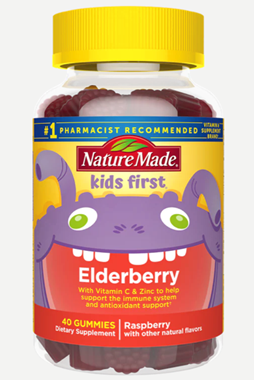
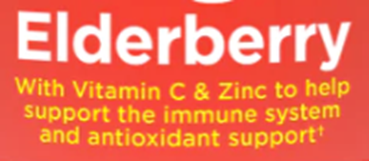
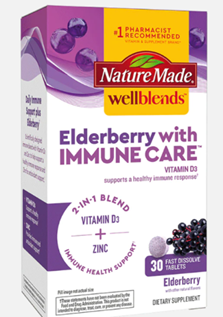
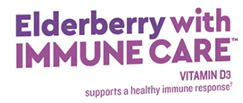
Example of the latter case are given below where the “immunity claim” is associated with vitamin C & Zinc and not with the ingredient elderberry although the latter is the prominent one.
Kid’s first – Elderberry from nature Made:
 Elderberry with Immune CareTM from Nature Made:
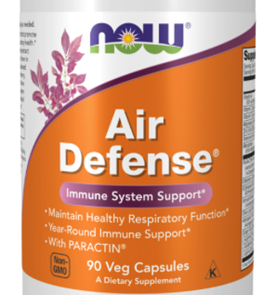
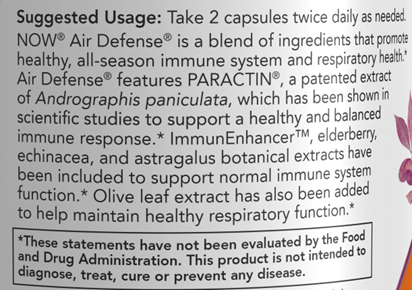
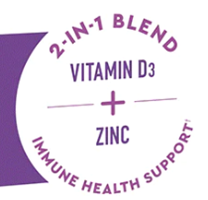 Another option, although debatable, is to use a blend containing ingredients with different properties e.g. product containing a blend of ingredients called “Air defense” from NOW:
“Air defense” from NOW
III. Substantiation required for Claims (FDA, FTC)
1. Must-have substantiation to make S/F claims
S/F claims do not need to be preauthorized by or pre-notified by FDA. In the absence of statutes and regulations specifying standards of evidence, the legal standard that SF claims must achieve is truthful and not misleading.
Manufacturers are responsible for maintaining the supportive information for SF claims. FDA recommends that manufacturers and distributors retain in their files the documentation substantiating each of their claims so that they can readily address any questions that may arise.
The FDA “Small Entity Compliance Guide on Structure/Function Claims” discusses only the requirements that apply to determining whether a claim is a structure/function claim or a disease claim, it does not provide guidance on what constitutes proper substantiation for S/F claims.
The U.S. Federal Trade Commission (FTC) 2022 Health Products Compliance Guide [8] was issued to replace the 1998 FTC Dietary Supplements: An Advertising Guide for Industry. The stated purpose for the new Health Products Compliance Guide is to provide guidance on how to ensure (to FTC’s satisfaction) that claims about the benefits and safety of health-related products are truthful, not misleading, and supported by science. Dietary supplement manufacturers are the intended audience of the FTC guide. The U.S. FDA has no oversight over the substantiation of structure/function claims made for dietary supplements. As seen above, FDA must rely upon a manufacturer’s certification (included in their S/F claim notifications) that the notifying firm has substantiation of the (S/F claim) statement being truthful and not misleading. As such, it is the FTC Health Products Compliance Guide, rather than any FDA guidelines, to look to for guidance on claim substantiation.
The “claim substantiation” guidance in the Health Product Compliance Guide is in Section III.B – Substantiating Claims, beginning on page 11 of the Guide. All of the topics about claim substantiation that the FTC makes in this Guide are illustrated by example situations. The following is a high-level summary of the principal points in the FTC claim substantiation guide:
- Consumer health products (i.e., dietary supplements) require a relatively high substantiation standard.
- Claims that consumers cannot themselves verify, or that cannot be verified without medical testing, are held to high standard.
- Level of substantiation is directly related to the consequences of a false claim.
- Substantiation must at least be at the level implied in the claim (i.e., scientists agree, or clinically tested).
- Effects claimed for humans require substantiating evidence in humans.
- Randomized, placebo-controlled, double-blind human clinical trials (RCTs) are the most reliable evidence.
- RCTs must be reviewed and approved by an Institutional Review Board (IRB).
- Animal, and in vitro, studies can predict effects in humans – but do not substantiate effects in humans.
- Surveys, healthcare practitioners’ observations, and individual experiences are anecdotal evidence – not substantiation.
The FTC position (first announced in the 2022 Guide) that claims for effects in humans need to be substantiated by human clinical trial evidence received a significant objection from the U.S. dietary supplement industry on the grounds that it imposes a new substantiation standard inconsistent with existing law. Although the FTC has signaled that they are reassessing their position on “clinical trial” substantiation for all human effect claims, there has not yet been an official change in policy at this time. The 2022 FTC Health Products Compliance Guide remains the official FTC policy on dietary supplement claim substantiation.
The law regarding dietary supplement structure/function claims [21 U.S.C. 343(r)(6)] specifies that this category of claim includes both (a) claims about the effects on structures and functions, and (b) claims about the mechanism for such effects. The ensure not getting caught up in the FTC “clinical trial substantiation” situation, it is suggested that the wording of claims focuses on specific mechanisms (e.g., support normal epithelial barrier; enhance gut anti-inflammatory processes) rather than on systems (e.g., support immune system; support urinary system health). There will be a stronger position that claims about mechanistic effects need not require clinical trial evidence, than there will be for claims about effects on system functions.
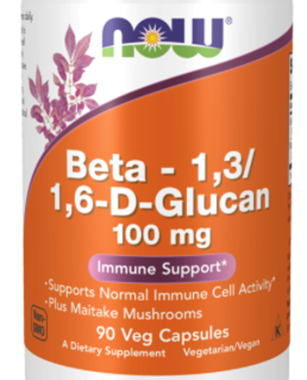
Illustration: “Beta-1.3/1.6-D-Glucan” from NOW – focus on “supports normal immune cell activity”.
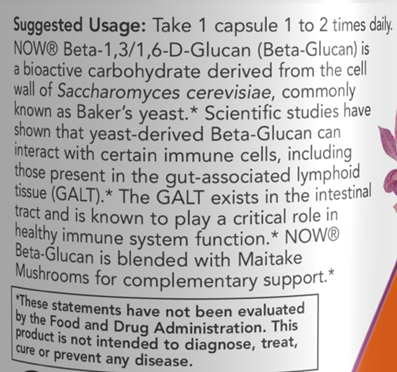
Conclusion: the “must have substantiation” is dependent on the nature of the claims being made. Keeping the wording of the claims focused on mechanistic effects, rather than on physiological system effects, should keep the manufacturer clear of FTC’s expectations that the substantiation be from clinical trial evidence.
2. Which pre-clinical and clinical studies
See details in section III.1 above.
3. Possibility to put on the market dietary supplement before doing clinical studies OR before the results of the clinical studies are known
See risk assessment elements in section V below.
IV. High level of assessment of 3 test models
Manufacturer is considering the following test model. Could these tests be used for claims substantiation? What would be the preferred test to be performed?
a. First testing will be in an in vitro model of human gut microbiota. Human gut microbiota communities will be incubated with the BL or equivalent amount of live L. fermentum. The impact of each product on microbiota composition and function will be analyzed.
b. Second in vitro testing will assess the impact of the gut microbiota exposed to the BL or live L. fermentum (see testing (a)) on the gut epithelial barrier function (described as optional model c). This will highlight an indirect protective effect of the BL mediated by the gut microbiota.
c. Optional model: to test the direct effect of the BL in an in vitro model of human gut epithelial barrier. This model is composed of cocultured human gut epithelial cells and immune cells. The objective is to expose the system to the products and to inflammatory mediators known to activate immune cells which then impair the epithelial barrier function. This is supposed to model gut inflammation triggered by various insults/exposures. The permeability of the epithelial barrier and the release of pro and anti-inflammatory cytokines will be monitored as efficacy readouts.
1. In vitro models of human gut microbiota; human gut epithelial barrier; gut inflammation
The human gut is an extremely long organ comprised of seven distinct parts – each part with distinct cellular components, glandular components, microbiota, and digestive and absorption functions. There are a multitude of factors that impact the relevance of an in vitro intestinal function model. The relevance of the in vitro intestinal model needs to be thoroughly thought out and justified. For example:
- There is no single “gut epithelium” – the epithelia cells of each gut segment are unique.
- When the in vitro study is intended to look at interactions of bacterial lysate on gut microbiota, then the in vitro epithelia cell model should be of epithelium from the same gut segment where the gut microbiota exists.
- When the in vitro study is intended to look at the potential effects of bacterial lysate in the intestinal tract beyond the stomach and duodenum, it must first be verified in vivo that the lysate survives digestion and absorption.
- An in vitro model may show some interaction between bacterial lysate and colonic microbiota, but such evidence is meaningless without knowing whether orally consumed bacterial lysate ever reaches the colon.
Conclusion: It is acceptable to use in vitro tests to substantiate a claim if the wording of the claim is focused on mechanistic effects and if the tests are relevant.
2. Would the nature of these tests be a trigger to consider the dietary supplement a drug, even if no medicinal claim is made?
The only “drug-type” testing of an ingredient that precludes an ingredient from subsequent dietary supplement use are “substantial clinical trials” conducted under an Investigational New Drug approval; and even then, the dietary supplement disqualification applies only when such clinical trials have been made public.
Conducting studies of dietary supplements for disease-related benefits does not cause a dietary supplement to be considered as an unapproved new drug. It is only the promotion of the dietary supplement for the disease-related benefit in marketing the dietary supplement that will cause it to be an unapproved new drug. A manufacturer is free to conduct any disease prevention/treatment studies of the ingredient/substance that they wish; however, they would be prohibited from the mention of such studies in the marketing of their lysate as a dietary supplement.
V. Consideration about enforcement situation (now and in the future)
Introduction
One of the somewhat unique features of US FDA Dietary supplement oversight is that is it very limited. Unlike drug products that must be proven safe and effective for their intended use before marketing, there are no provisions in the law for the FDA to "approve" dietary supplements for safety or effectiveness before they reach the consumer.
The use of a disclaimer regarding the lack of US FDA review has become a tool for many unproven “claims” on many dietary supplements sold in the US [9].
FDA oversight in the dietary supplement category in many ways restricts the effectiveness of FDA regulation of dietary supplements. But FDA is vigilant in the one regulatory aspect in which DSHEA is clear – dietary supplements cannot be marketed for use as drugs.
1. FTC and FDA’s jurisdiction
The FTC and the FDA share jurisdiction over the marketing of dietary supplements, foods, drugs, devices, and other health-related products. The agencies coordinate their enforcement and regulatory efforts pursuant to a Memorandum of Understanding [10] – often called the “FDA-FTC Liaison Agreement” – that governs the basic division of responsibilities between them.
The FDA has primary responsibility for claims that appear in labeling, including the package, product inserts, and other promotional materials available at the point of sale. The FTC has primary responsibility for claims in all forms of advertising. Because of this shared jurisdiction, the two agencies work closely to ensure that their enforcement efforts are consistent to the fullest extent feasible. Marketers should be aware that the FDA/FTC Liaison Agreement doesn’t limit the FTC’s jurisdiction or prohibit the agency from taking action against deceptive labeling claims or obtaining orders that address all forms of marketing, including claims that appear in labeling.
In addition, FDA policy has expanded the definition of “labeling” to include websites and social media from which a product can be purchased. In recent years, the FDA has been looking at dietary supplement websites and social media that do not clearly fall within “labeling” to see what the dietary supplement distributors’ intended use for a product is. It has become commonplace to see FDA WARNING Letters issued to dietary supplement companies on the basis that their websites, or social media, represent their products as intended to be used as drugs and the products therefore are unapproved new drugs.
2. Enforcement of legislation on food supplements and claims
FDA's efforts to monitor the marketplace for potential illegal products (that is, products that may be unsafe or make false or misleading claims) include obtaining information from:
- Inspections of dietary supplement manufacturers and distributors
- The Internet
- Consumer and trade complaints
- Occasional laboratory analyses of selected products
- Adverse events associated with the use of supplements that are reported to the agency
It is easier for FDA to spot and go after a product when it is a new and/or misbranded drug i.e. when it makes a claim relating to a disease on a food supplement. Such a violation is straightforward and obvious to prove (many warning letters to food supplement manufacturers are about unapproved new drugs or misbranding). Functional claims are more difficult to address as it would 1) require the FDA to look for and gather information showing the claim is not substantiated and/or misleading and 2) risk the FDA being challenged in court.
3. Risk of making disease-related claims
When the FDA becomes aware of dietary supplement manufacturers or distributors promoting dietary supplements with disease-related claims, the FDA will send a WARNING Letter to the firm. The WARNING Letter will identify the problem (e.g., claims for what the product can do) and specify a timeframe for the firm to inform the FDA of the firm’s plans for a correction (the timeframe for a response to the FDA is typically two weeks). The FDA will follow up at some point to verify that the firm corrected the problem (the FDA follow-up is typically a couple of years).
WARNING Letters are posted publicly on the FDA website.
Example of a warning letter about a company selling dietary supplements (excerpts):
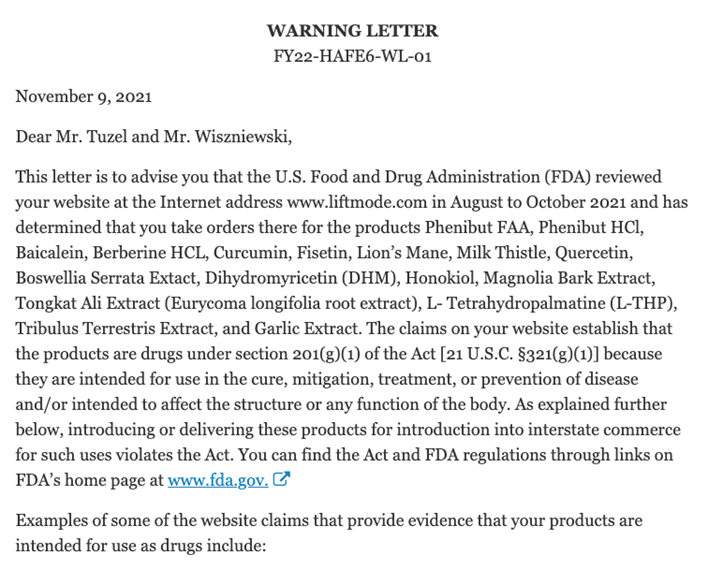
(...)
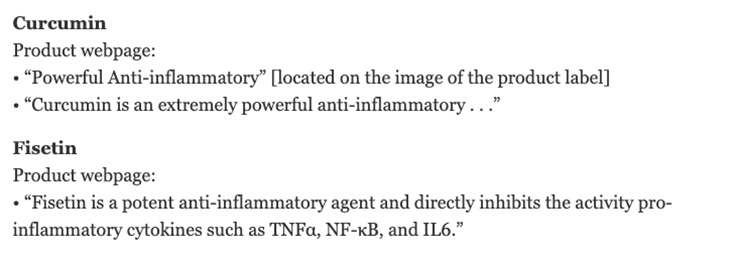 (...)
(...)
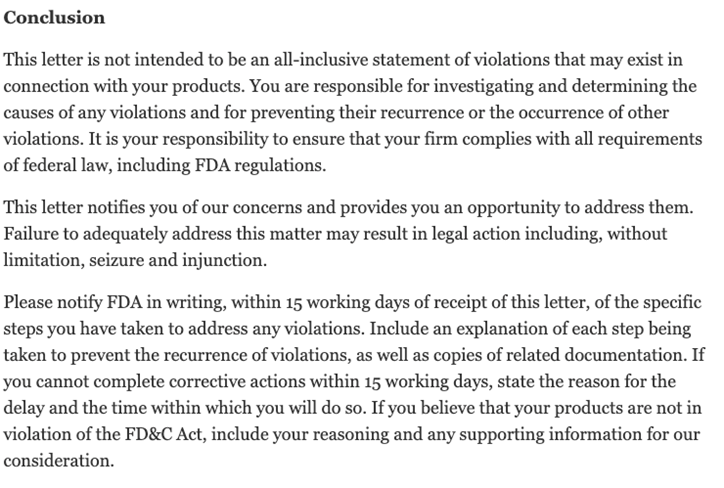
Foreign firms are at a disadvantage to US domestic firms because FDA import inspectors can quickly assert if the intended use of the product is as an unapproved new drug and block the import if that is the case. FDA can then place the name of the unapproved new drug manufacturer/distributor on an Import Alert with automatic detention of subsequent import shipments into the US by the foreign manufacturer/distributor. It is difficult to get off of an Import Alert once on.
4. Rule enforcement for structure/function (S/F) claims
As seen above, the Dietary Supplement Health and Education Act (DSHEA) does not provide FDA with strong oversight tools to effectively regulate the dietary supplement industry’s use of structure/function claims. The enormous size of the U.S. dietary supplement industry overwhelms the limited resources available to the FDA Office of Dietary Supplement Programs (ODSP).
It is not physically possible for ODSP to review all dietary supplement labels or to cite all dietary supplement manufacturers who make disease-related claims or unsubstantiated S/F claims.
ODSP is unwilling to issue warnings for borderline S/F claim violations that might be challenged and tie up ODSP resources in handling appeals. Instead, ODSP cites only the most clear-cut examples of disease claims.
As a consequence, FDA focuses on safety issues over labeling issues and on very clear cases of products making disease-related claims.
Conclusion
1. Regulatory status of L. fermentum lysate
a. A lysate from L. fermentum qualifies as a New Dietary Ingredient (NDI) that will require submission of an NDI notifications to FDA.
2. Claims
a. Dietary supplements can make nutrient content claims (quantitative statement), health claims (requires FDA approval), and structure/function (S/F) claims.
b. S/F claim describes the role or mode of action of a nutrient or dietary ingredient on the normal structure or function of the human body. S/F claims DO NOT need FDA approval, but the text of the claim must be notified to the FDA.
c. In the absence of substantiated claims for the lysate, it is possible to add another ingredient linked to a proven targeted claim, but the execution of the wording is key in order not to be misleading and imply a synergistic effect of the 2 ingredients.
d. Assuming NDI notification has been approved by the FDA, it is possible to put on the market a dietary supplement containing lysate from L. fermentum before the results of the clinical studies looking at efficacy are known.
3. Claims substantiation
a.The legal standard that SF claims must achieve is truthful and not misleading.
b. According to the Federal Trade Commission (FTC), effects in humans need to be substantiated by human clinical trial evidence.
c. If human clinical trials are available, S/F claims wording that would be considered acceptable for a dietary supplement would be e.g. “Supports upper respiratory tract health”, “Supports respiratory wellness”, “Immune support”, “Helps maintain a healthy urinary tract”.
d. In the absence of human trials, in vitro tests can be used, but then it is suggested that the wording of claims focuses on specific mechanisms (e.g., support normal epithelial barrier; enhance gut anti-inflammatory processes), rather than on systems (e.g., support immune system).
4. High level of assessment of 3 test models
a. There are a multitude of factors that impact the relevance of an in vitro intestinal function model. The relevance of any in vitro intestinal model needs to be thoroughly thought out and justified.
b. Conducting studies of dietary supplements for disease-related benefits does not cause a dietary supplement to be considered as an unapproved new drug. It is only the promotion of the dietary supplement for the disease-related benefit in marketing the dietary supplement that will cause it to be an unapproved new drug.
5. Consideration about enforcement
a. Given the enormous size of the U.S. dietary supplement industry FDA focuses on safety issues over labeling issues and on very clear cases of products making disease-related claims.
b. When the FDA identifies a dietary supplement with disease-related claims (on the label and website or social media), the FDA will send a WARNING Letter to the firm and will have to answer with a timeframe with the firm’s plans for a correction.
c. Foreign firms are at a disadvantage to US domestic firms because the name of the unapproved new drug manufacturer/distributor can be put on an Import Alert with automatic detention of subsequent import shipments into the US.VI. References
1. FDA response letter to GRAS Notice No. GRN 000988
https://www.fda.gov/media/158586/download
2. US FDA, Label Claims for Conventional Foods and Dietary Supplements,
https://www.fda.gov/food/food-labeling-nutrition/label-claims-conventional-foods-and-dietary-supplements
3. FDA GUIDANCE DOCUMENT - Guidance for Industry: Food Labeling Guide. January 2013
https://www.fda.gov/regulatory-information/search-fda-guidance-documents/guidance-industry-food-labeling-guide
4. FDA Modernization Act (FDAMA) Claims
https://www.fda.gov/food/food-labeling-nutrition/fda-modernization-act-fdama-claims
5. Authorized Health Claims That Meet the Significant Scientific Agreement (SSA) Standard
https://www.fda.gov/food/food-labeling-nutrition/authorized-health-claims-meet-significant-scientific-agreement-ssa-standard
6. Qualified Health claims
https://www.fda.gov/food/food-labeling-nutrition/qualified-health-claims
7. Small Entity Compliance Guide on Structure/Function Claims. JANUARY 2002. Center for Food Safety and Applied Nutrition
8. Health Products Compliance Guide. U.S. Federal Trade Commission. December 2022
https://www.ftc.gov/system/files/ftc_gov/pdf/Health-Guidance-508.pdf
9. US FDA, Questions and Answers for Dietary Supplements
10. Memorandum of Understanding Between the Fed. Trade Comm’n and the Food and Drug Admin., 36 Fed. Reg. 18,539 (Sept. 16, 1971)
Was this article helpful?