
7. Importation Requirements
- 5 Mins to read
- DarkLight
7. Importation Requirements
- 5 Mins to read
- DarkLight
Article summary
Did you find this summary helpful?
Thank you for your feedback
Infant, Follow-up, Young Child, and Maternal Milk Formula
Japan

This section provides information on the importation process (shipment, customs, licenses required, and test requirements).
7.1 Shipment Declaration
General Food
Requirements for import clearance can vary depending on the type of food products. Therefore, it is recommended to have a pre-import consultation with the Food Surveillance Office (FSO) of the MHLW at a local Quarantine Office by preparing documents in Japanese that explain product details such as product specification, list of ingredients (including additives and processing aids), manufacturing method [1]. The FSO would help food business operators (mainly importers) understand the procedures and information that are necessary for their specific products. Pre-import consultation is recommended particularly when the product is imported to Japan for the first time, or when there are any changes to the product (e.g., ingredient composition, manufacturing method).
Documents required to be submitted during import notification/declaration shall also be prepared in advance. All required documents are listed in Section 7.2 - Customs Procedure - below.
Category
Formulated Milk Powder
In addition to the requirements for General Foods, formulated milk powder would be subject to a tariff of up to 28% (those fall under the H.S. code 19.01) depending on the H.S. code classification code of the respective product [2]. The HS code for dairy products varies depending on the characteristics (e.g. milk fat content) and use of the product. It is highly recommended that the manufacturer (strictly speaking, their business partner in Japan) obtains prior guidance from the Customs Counselors of Japan Customs in identifying an accurate HS code [3].
Product
Infant Formula and Maternal Milk Formula as FOSDU
Same as above.
7.2 Customs Procedure
General Food
Import Clearance Procedure [4]
1. Overview
Any individual or entity wishing to import goods must declare them to the Director-General of Customs and obtain an import permit following a thorough examination of the goods in question. The process begins with the submission of an import declaration and concludes with the issuance of an import permit following the requisite examination and payment of customs duty and excise tax.
2. Import Declaration
(1) Completion and Submission of Import Declarations
An import declaration (customs duty payment) must be made by lodging a declaration that describes the quantity and value of goods as well as any other required particulars. In most cases, the import declaration must be made after the goods have been taken into a designated zone.
(2) Declarant
In most cases, the import declaration must be made by the person importing the goods. Typically, a customs broker files the declaration on behalf of the importer.
(3) Documents to be Submitted
An import declaration form must be completed in triplicate and submitted to Customs with the following documents:
- Invoice
- Bill of lading or Air Waybill
- Certificate of origin (where a WTO rate is applicable)
- Generalized system of preferences, certificates of origin (Form A) (where a preferential rate is applicable)
- Packing lists, freight accounts, insurance certificates, etc. (Where applicable)
- Licenses, certificates, etc. required by laws and regulations other than the Customs Law (when the import of certain goods is restricted under such laws and regulations)
- Detailed statement on reductions of, or exemption from Customs duty and excise tax (when such reduction or exemption is applicable to the goods)
- Customs duty payment slips (when goods are dutiable)
In principle, Customs requires only those additional documents necessary to ascertain the key considerations for permission.
Category
Formulated Milk Powder
Same as above.
Product
Infant Formula and Maternal Milk Formula as FOSDU
Same as above.
7.3 Manufacturing License
General Food
Not applicable.
Category
Formulated Milk Powder
Same as above.
Product
Infant Formula and Maternal Milk Formula as FOSDU
Same as above.
7.4 Test for Importation
General Food
The FSO of the MHLW determines test requirements on a case-by-case basis, taking into account the type of product in question. Specific test requirements can be confirmed during a pre-import consultation with the FSO of the MHLW at a local Quarantine Office (see Section 7.1 - Shipment Declaration - above).
Category
Formulated Milk Powder
Same as above.
Product
Infant Formula and Maternal Milk Formula as FOSDU
Same as above.
7.5 Other Notes or Requirements for Importation
General Food
None.
Category
Formulated Milk Powder
Same as above.
Product
Infant Formula and Maternal Milk Formula as FOSDU
Same as above.
7.5.1 Risk Assessment for Importation via E-Commerce channel on non-registered products
Currently, the majority of formulated milk powder intended for infants and children available on the Japanese market is manufactured by Japanese companies. In the case of the ‘FOSDU’ infant formula, all permitted infant formula is manufactured by Japanese companies whereas no ‘FOSDU’ maternal milk formula has been permitted yet. Although the exact reasons are not clear, high tariffs for imported formulated milk powder (up to 28%) may play a role.
While it is difficult to find non-Japanese formulated milk powder products for sale in the retail sector, it is possible to purchase non-Japanese products through e-commerce channels. In most cases, e-commerce businesses advise consumers to purchase non-Japanese infant formula in the form of a private import* from abroad by minimizing the amount purchased at one time.
*Private import refers to consumers purchasing directly from overseas via e-commerce channel for their own personal consumption.
By opting for a private import, consumers can avoid paying the associated tariffs and consumption tax. Additionally, products imported via private import are exempt from the Import Notification, which requires that products be inspected by the MHLW to ensure they comply with the relevant food regulations. This exemption means that these products are not subject to the requirements under the Food Sanitation Act.
Following an assessment of the potential risks associated with importing the client's products into Japan, it has been determined that there are no immediate and significant risks involved as long as they are sold to Japan via private import. In the event of reports of serious health issues associated with the client's products, the MHLW would take measures to prohibit consumer use. It is also worth noting that should the volume of non-Japanese formulated milk powder (including infant formula and maternal milk formula) imported via private import increase significantly to the extent of altering the current market share, the Japanese government may implement measures to safeguard the domestic industry.
7.6 Overview Flowchart for Importation Process
General Food
It is important to note that food products are subject to import notification by the MHLW prior to the customs clearance process outlined in Section 7.2 above. The MHLW carries out a conformity check of the imported food product with the Food Sanitation Act (Act No. 233 of 1947) and any other applicable regulations as part of the Import Notification process. Further details regarding the Import Notification can be found on the MHLW website in English [5].
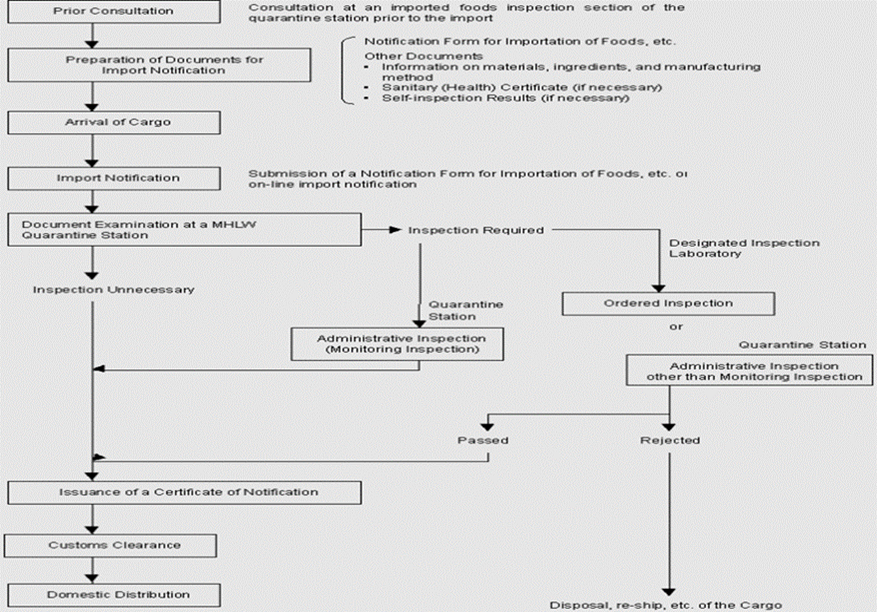
Figure 7.6-1 Flowchart of the Procedure of Import Notification
Category
Formulated Milk Powder
Same as above.
Product
Infant Formula and Maternal Milk Formula as FOSDU
Same as above.
7.7 References
1. Pre-Import Consultation (available from the webpage of the Tokyo Quarantine Station) (in Japanese)
https://www.forth.go.jp/keneki/tokyo/kanshi_hp/a013.html
2. Japan's Tariff Schedule as of April 1 2024, Chapter 19 Preparations of cereals, flour, starch or milk; pastrycooks' products (in English)
https://www.customs.go.jp/english/tariff/2024_04_01/data/e_19.htm
3. 9301 Contact list of Customs Counselors (FAQ) (in English)
https://www.customs.go.jp/english/c-answer_e/sonota/9301_e.htm
4. Import Procedure (available from the webpage of the Japan Customs) (in English)
https://www.customs.go.jp/english/summary/import.html
5. Import Procedure under Food Sanitation Act (available from the website of the MHLW) (in English)
https://www.mhlw.go.jp/stf/seisakunitsuite/bunya/kenkou_iryou/shokuhin/yunyu_kanshi/kanshi/index_00004.html
Was this article helpful?