
6. Registration Processes
- 3 Mins to read
- DarkLight
6. Registration Processes
- 3 Mins to read
- DarkLight
Article summary
Did you find this summary helpful?
Thank you for your feedback
Infant, Follow-up, Young Child, and Maternal Milk Formula
Japan

This section provides information on any product notification or registration and manufacturing site registration processes.
6.1 Product Notification
Not applicable.
6.2 Product Registration
General Food
Not applicable.
Category
Formulated Milk Powder
Not applicable.
Product
Infant Formula and Maternal Milk Formula as FOSDU
Process:
The procedure for obtaining permission for FOSDU is presented in Figure 6.2-1 below [1].
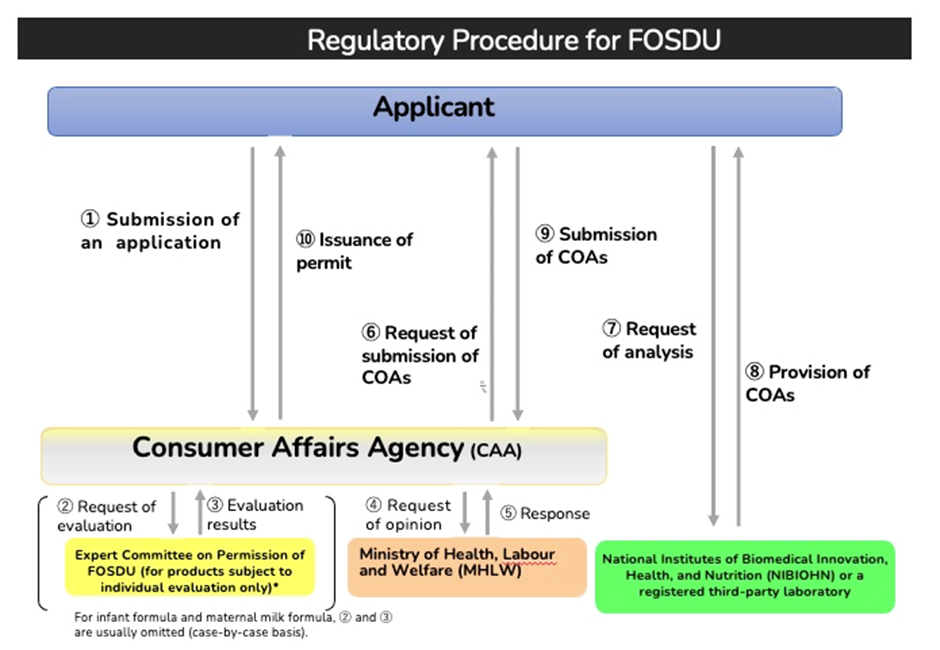 Figure 6.2-1 Regulatory Procedure for FOSDU
Required documents:
The applicant shall complete “Form 1 Application for Permission for FOSDU” by filling in the following information in Japanese [2].
- Name, address (of a principal office) of the applicant, and name of its representative
- Name and address of its business office (name and address of its manufacturing plant)
- Product name
- Expiry date or best-before date
- Formulation ratio of ingredients and additives
- Manufacturing method
- Reason for applying for permission
- Intended claim for which permission is sought
- Amounts of nutrients and calories
- Warnings for use
- Special notes for use, cooking, and/or storage
- Labeling methods
The completed Form 1 shall be accompanied by the attachments that contain the following information in Japanese [2]:
- Copy of the company’s article of incorporation
- Certificate of analysis (for compliance with the applicable FOSDU compositional requirements)
- Label samples
- Results of in-house analysis (for compliance with the product specification established by the applicant)
- A description of the structure and facilities of the manufacturing plant and a description of the quality control methods
- Other general explanatory materials related to the food in question
- A copy of the contract for the consignment of manufacturing of the food in question (if the applicant is different from the manufacturer)
Cost:
The application fee is JPY 9,800 for paper submission, and JPY 7,600 for electronic submission [3].
The analysis fee is 753,000 JPY for infant formula and 388,000 JPY for maternal milk formula when requested by the NIBIOHN [4].
6.3 Other Notes or Requirements
None.
6.4 Manufacturing Site Registration
General Food
Not applicable.
Category
Formulated Milk Powder
Not applicable.
Product
Infant Formula and Maternal Milk Formula as FOSDU
Not applicable.
6.4.1 Standard/Rules for Manufacturing Site
General Food
Article 50 of the Food Sanitation Act (Act No. 233 of 1947) requires food manufacturers to implement hygiene control measures in accordance with HACCP [5]. This requirement applies not only to food produced in Japan but also to food imported from outside of Japan. It should be noted that this does not necessarily entail the necessity for food business operators to obtain a certification of HACCP compliance by the government or a third party.
In order to comply with the requirements of HACCP, it is necessary to adhere to the 7 principles and 12 steps set out below. The guidance documents for HACCP by the type of food business can be found on the MHLW’s website [6][7].
- Step 1: Forming a HACCP team
- Step 2: Product Description
- Step 3: Identify the intended use
- Step 4: Creating a manufacturing process list
- Step 5: On-site confirmation of manufacturing process list
- Step 6: Analysis of hazards (Principle 1)
- Step 7: Determining important control points (CCP) (Principle 2)
- Step 8: Setting management standards (Principle 3)
- Step 9: Setting the monitoring method (Principle 4)
- Step 10: Setting improvement measures (Principle 5)
- Step 11: Setting the verification method (Principle 6)
- Step 12: Keep records (Principle 7)
Category
Formulated Milk Powder
Same as above.
The specific HACCP guidance document for formulated milk powder is not currently available. Manufacturer may refer to its origin country’s reference guidance for HACCP (if any) or other international standard. For information, there is Guidance on the hygiene management for the production of milk and milk beverages that incorporates HACCP concepts [8].
Product
Infant Formula and Maternal Milk Formula as FOSDU
Same as above.
6.4.2 Other Notes or Requirements for Manufacturing Site Registration
None.
6.5 References
1. Application procedure of the FOSDU (in Japanese)
2. Appendix 3 of ”Full Revision of the ‘Permission for the Labelling of FOSDU’ (Shou-Shoku-Hyou No.296 of 9 September 2019)” (in Japanese)
https://www.caa.go.jp/policies/policy/food_labeling/foods_for_special_dietary_uses/notice/assets/food_labeling_cms206_20240401_14.pdf
3. Order for Enforcement of the Health Promotion Act (Cabinet Order No.361 of 2002)
https://elaws.e-gov.go.jp/document?lawid=414CO0000000361
4. "Categories, items and amounts specified by the Prime Minister in accordance with Article 7, item 2 of the Order of Enforcement of the Health Promotion Act (CAA Public Notice No.6 of 18 September 2013)”
https://www.caa.go.jp/policies/policy/food_labeling/foods_for_special_dietary_uses/notice/assets/food_labeling_cms206_20230914_01.pdf
5. Food Sanitation Act (Act No.233 of 1947) (in English)
https://www.japaneselawtranslation.go.jp/ja/laws/view/3687
6. Guidance Documents for Hygiene Control Methods based on HACCP (in Japanese)
https://www.mhlw.go.jp/stf/seisakunitsuite/bunya/0000179028_00002.html
7. Guidance Documents for Hygiene Control Methods according to the principles of HACCP (in Japanese)
https://www.mhlw.go.jp/stf/seisakunitsuite/bunya/0000179028_00005.html
8. Japan Dairy Industry Association - Guide to hygiene management for the production of milk and milk beverages that incorporates HACCP concepts (Version 3.1)
Was this article helpful?