
7. Importation Requirements
- 12 Mins to read
- DarkLight
7. Importation Requirements
- 12 Mins to read
- DarkLight
Article summary
Did you find this summary helpful?
Thank you for your feedback
General Foods
Australia

This section provides information on the importation process (shipment, customs, licenses required, and test requirements).
7.1 Shipment Declaration
The Biosecurity Import Conditions Systems Portal (BICON) Case (Section 7.5 below) will provide details of the relevant import documentation. This includes whether the good requires an Import Permit. If an Import Permit is required, the issued permit will outline specific conditions and Manufacturer Declarations that must accompany the shipment. If an Import Permit is not required, the BICON Case example below will include information on specific conditions and Manufacturer Declarations that must accompany the shipment.
Many food products require an import permit, which is based on the ingredients, not the actual food product. Specific information regarding specific food categories will be provided in the category-specific guidebooks.
In addition, there are commercial documents required for shipments. Typically, the documentation package would include a commercial invoice, packing list, packing declaration (sea freight only, this is a list of the physical packaging materials used since some countries use restricted materials such as hay, chaff, straw, and bamboo), fumigation certificate (as required for pallets etc.), certificate of origin (assists with customs' fees reduction where Australia has a Free Trade Agreement – refer to Section 7.6 below), and perhaps a Phytosanitary certificate. Copies of all required documents should accompany the goods to facilitate the release of the goods. Any missing documents will lead to delays in the clearance of the goods, which may incur holding fees at the customs/quarantine bond facility. DAFF has information and FAQs on the minimum documentation requirements on its website [1] and also documentation templates [2], the use of which is optional.
7.2 Customs Procedure
The Customs Act 1901 [3] relates to customs law and border-related revenue. Part IV of the Act deals with the importation of goods. The Act is enforced by various departments, including the Australian Customs Service and the Australian Federal Police. Australian Border Force is responsible for the customs clearance. Shipments require an Import Declaration of which there are various types which are described in detail on the Australian Border Force website [4].
Customs charges apply and are commercially calculated on a number of factors. There is an online guide [5] on calculating fees, goods and services tax (GST), and excises. Some of these are reduced or waived if there is a Free Trade Agreement between the exporting country and Australia, which is why an accurate certificate of origin is important. The list of Free Trade Agreement countries is updated regularly and can be found on the Austrade website [6].
7.3 Manufacturing License
A manufacturing license is generally not required, however, the FSC [7] requires that food products be manufactured under a ‘suitable quality system’ that controls any foodborne hazards of concern (refer to Section 6.4.1). A food safety management system certification is not required for most foods (unless in the risk category) [8] (refer to Figure 1 below). Systems such as HACCP or one set up to meet the requirements of Codex Alimentarius would be appropriate.
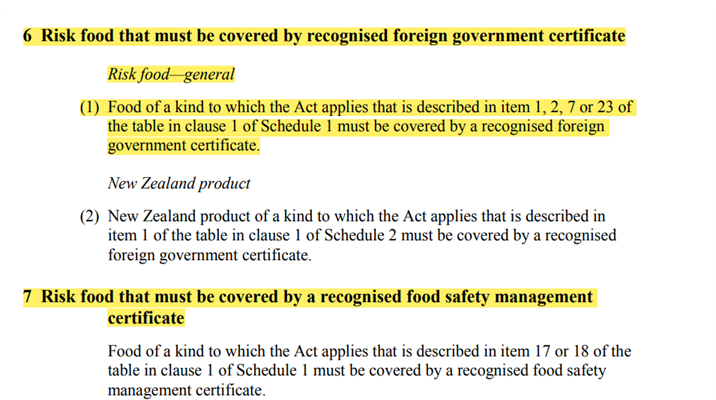
Figure 1. Screenshot from ref [8]: Food safety management system
In some cases where an Import Permit is required for food, the permit application may require information on the manufacturing site quality system and copies of the relevant manufacturing license.
7.4 Test for Importation
Imported foods need to meet the requirements of the FSC [9] including any compositional requirements and general limits in Chapter 1 for microbial and chemical contaminants and toxicants. (More information on the latter is provided in Section 8 of this guidebook).
Where an import declaration requires a certificate of analysis to accompany the goods, this should address any required testing specifications under the FSC and also any that are defined in the BICON Case (refer to Section 7.5 below for BICON information). There are also occasions where additional tests or treatments are applied, usually in response to a biosecurity risk. The DAFF website includes a reference list of testing requirements under food types [10] which is updated regularly.
If testing is required upon arrival, DAFF will issue a Food Control Certificate (FCC) to inform the importers if the food needs to be inspected, what tests are required, and whether the food will be subjected to a holding order while testing occurs. DAFF does not generally accept results from testing conducted overseas.
Many food categories require testing [10]. Refer to Section 7.4 of category-specific guidebooks for more information.
7.5 Other Notes or Requirements for Importation
Overview of the import process
All goods entering Australian territory are subject to biosecurity controls under the Biosecurity Act 2015 [11] which is designed to manage diseases and pests that may cause harm to human, animal, or plant health or the environment. In addition, imported foods need to comply with the Imported Food Control Act 1992 [12], which is designed to ensure the compliance of food imported into Australia to relevant national food standards and public health and safety requirements. Within this Act, a ‘relevant national standard’ means both:
- the Australia New Zealand Food Standards Code (FSC) [9], and
- the Country of Origin Food Labeling Information Standard 2016 [13]
Unless exempt, all foods being imported must meet the requirements for:
- Compliance with relevant parts of the FSC and the Country of Origin labeling
- Requirements under the Imported Foods Inspection Scheme (IFIS)
- Compliance with the Biosecurity requirements, which may include an Import Permit and other documentation and transport requirements (e.g., pallets and packaging, fumigation, etc.) for each shipment.
Imported Food Inspection Scheme (IFIS)
The Imported Food Control Act 1992 [12] sets up the Imported Food Inspection Scheme (IFIS) [14] under which imported food is inspected and controlled using a risk-based border inspection program. The Act [12] and the Imported Food Control Regulations 2019 [15] outline the requirements of the scheme. Most food imported from New Zealand is not inspected due to the joint FSC and agreements between the two countries unless the food is in a 'risk food' category.
Foods are categorized by risk based on advice from FSANZ. There are three classifications for foods coming into Australia [15, 8]:
(1) Risk food – After conducting a risk assessment, FSANZ provides advice to DAFF on foods that pose a medium to high risk to public health. These are known as 'risk foods', which are inspected and tested against a pre-determined list of potential hazards including microbial and chemical hazards. Examples: raw milk cheese, peanuts, meat, and meat products. Schedule 1 of the Imported Food Control Order 2019 [16] provides lists of food products and ingredients that fall into the Risk food category, with a separate list for New Zealand in Schedule 2.
(2) Surveillance food – All other foods that are not risk foods are in this category as they are considered to pose a low risk to public health and safety. Foods in this category are normally inspected at a lower rate than risk-categorized food. However, the inspection rate is increased if a surveillance food fails inspection.
(3) Compliance agreement food – Food importers are able to enter into a Food Import Compliance Agreement with DAFF. This arrangement offers food importers an alternative to inspection and testing of their products at the border. The agreement is an assurance-based regulatory arrangement undertaken through formal recognition and audit of the importer’s food safety management system by DAFF.
Import permits and other biosecurity documents
The Biosecurity Import Conditions Systems portal (BICON) [16] allows companies to determine the relevant conditions for the import of their goods. This includes whether the good requires an Import Permit. Other relevant conditions may include required import conditions, accompanying documentation requirements, and whether the good requires any treatments (sanitation, etc.). Even if an Import Permit is not required for a product, there are usually other requirements for import which could include non-commodity requirements relating to the packing materials (i.e., pallets, outer packing containers, fumigation, etc.) and seasonal requirements in relation to pests such as Brown Marmorated Stink Bug.
Import conditions are decided under Cases. Users can search for the commodity they wish to import on the BICON portal, and the system will suggest relevant Cases based on answers to questions. How the questions are answered can change the outcome within a relevant case. For example, searching on ’cake’ yields the Case “Cooked items (biscuits, bread, pastries, cakes), mooncakes, egg waffles, and uncooked cheesecakes". Clicking on the link will then present a number of questions. If the user selects only fully cooked items (including the fillings and toppings) then an Import Permit is not required. If the user selects the option for ten percent or greater content of uncooked egg and also for uncooked dairy components, then an Import Permit is required. There are various questions and options in relation to the ingredients, the format, and the use of the products, and these give different requirements for the case.
Cases can be printed to provide a summary of all requirements. It is recommended that this be saved to substantiate the requirements during future imports since sometimes local customs brokers ask why there is no import permit. Users can follow a Case to be notified of any changes to the requirements (requires a user ID for the portal which can be obtained via the 'Register' option on the BICON homepage [16]. Importers can also apply for an import permit from the Case landing page. Once the user has access via a BICON account, they can access online training resources which are very useful.
Import Permit
Import Permit applications are submitted via the BICON portal. The current costs are AU $122 for the application fee and then a charge of between AU$74 to $592, depending upon the category. Food items for human consumption are generally classified under category 2 of which the charge for initial assessment fee is AU$148. Information on charges is available on the DAFF website [17].
Permits can be used for multiple shipments and expire after two years. While DAFF advises an expected approval time of 20 working days for a permit, this is often exceeded. Applicants should apply early and can have a permit commence immediately once it is approved or from a set date. This way a permit renewal application can be made up to six months early to commence when the old permit lapses. Multiple finished products (including multiple pack sizes) can be covered by the same permit, provided the ingredients that require the permit are the same. If goods arrive without a permit, they are either destroyed or exported (the importer pays the costs) and there is no option to apply for an import permit retrospectively.
Before planning to import food products to Australia, the following points need to be checked and any relevant applications and documentation collated:
- Do the products require an import permit? (refer to the above)
- Are there any required Declarations and other import documentation? (refer to Section 7.1)
- What risk category do the foods fall into under the Imported Foods Inspection Scheme? (refer to the above)
- Does the importer plan on setting up a Food Import Compliance Agreement? (refer to the above)
- Does the product labelling comply with the requirements of the FSC [9] and the Country of Origin labeling requirements [13]?
Importers should consider engaging specialist import knowledge such as local customs brokers who are experienced in food imports. General information is available from a number of online resources about the processes: the DAFF import page [18]; the Biosecurity Australia import page [19]; Imported Foods Inspection Scheme website [14].
7.6 Overview Flowchart for Importation Process
Importation includes Shipment and customs as illustrated in Sections 7.1, 7.2, and 7.5 above followed by Quarantine procedures. Upon arrival, goods undergo Customs inspection and then, after all relevant fees and charges are paid, the goods are routed through to release, or a Quarantine check as relevant. The Quarantine steps include:
(A) Inspection under the Biosecurity Act
The requirements of the Biosecurity Act 2015 [11] for goods that arrive via sea or air are outlined in Chapter 3 of the Act. Prior notice must be given that the goods are intended to arrive (Section 120 of the Act). The goods come under biosecurity control once they arrive in Australian territory and have cleared Customs. A biosecurity officer may inspect the goods and take samples (Section 125) and may ask for documentation. The goods remain under biosecurity control until released under Division 10 (Part 1, Chapter 3) of the Act such as by way of notification or written declaration, or if non-compliant goods are exported/destroyed. If the product requires an Import Permit, this is checked at this step.
(B) Inspection under the Imported Food Control Act 1992
Food imports have a second check to manage imported food safety risks under the Imported Food Control Act 1992 [12]. It is at this second inspection that compliance with the FSC [9] and country of origin [13] labeling checks are conducted under the Imported Foods Inspection Scheme [14]. Officers from DAFF are responsible for the inspection and sampling of imported foods while the relevant agency in each state and territory (usually a local health department) monitors compliance with the FSC. At the start, DAFF will issue a Food Control Certificate (FCC) to inform the importers if the food needs to be inspected, what tests are required, and whether the food will be subjected to a holding order.
Once the inspection has been carried out, DAFF will issue an electronic Imported Food Inspection Report (eIFIR) describing how many samples were taken for testing (if any) and whether the consignment is under hold-and-test or can be released while waiting for the test results. If the inspection only involves a label and visual assessment, DAFF will issue an Imported Food Inspection Advice (IFIA) at the end of the inspection.
If a food fails inspection, it cannot be imported, and companies are given written Imported Food Inspection Advice (IFIA) outlining available options for rectification. More information on the system is available online [20]. Monthly Failing Food Reports are published on the DAWE website, outlining details of commercial food imports that failed the requirements for entry [21].
7.7 References
1. DAFF webpage on minimum documentation for imported goods
2. DAFF documentation templates
3. Customs Act 1901
https://www.legislation.gov.au/Details/C2023C00184/Download
4. Australian Border Force website ‘Import declarations’
https://www.abf.gov.au/imports/Pages/How-to-import/Import-declarations.aspx
5. Australian Border Force website Online guide to Customs fees
https://www.abf.gov.au/importing-exporting-and-manufacturing/importing/cost-of-importing-goods#
6. Austrade List of Free Trade Agreements
https://www.austrade.gov.au/australian/export/free-trade-agreements
7. New Zealand Food Standards Code (FSC). Individual standards available from the landing page:
https://www.foodstandards.gov.au/code/Pages/default.aspx
8. Imported Food Control Order 2019
https://www.legislation.gov.au/Details/F2022C01098/Download
9. Australia New Zealand Food Standards Code (FSC). Individual standards available from the landing page:
https://www.foodstandards.gov.au/code/Pages/default.aspx
10. DAFF webpage “Import requirements by food type”
https://www.agriculture.gov.au/biosecurity-trade/import/goods/food/type#daff-page-main
11. Biosecurity Act 2015
https://www.legislation.gov.au/Details/C2023C00098/Download
12. Imported Food Control Act 1992
https://www.legislation.gov.au/Details/C2021C00497/Download
13. Country of Origin Food Labelling Information Standard 2016.
https://www.legislation.gov.au/Details/F2017C00920/Download
14. Imported Foods Inspection Scheme
https://www.agriculture.gov.au/biosecurity-trade/import/goods/food/inspection-testing/ifis
15. Imported Foods Control Regulations 2019
https://www.legislation.gov.au/Details/F2023C00578/Download
16. BICON import conditions website
https://bicon.agriculture.gov.au/BiconWeb4.0/ImportConditions/Search
17. DAFF webpage “Import permit fees”
https://www.agriculture.gov.au/biosecurity-trade/import/online-services/bicon/fees-import-permits
18. DAFF webpage ‘Imports’
https://www.agriculture.gov.au/biosecurity-trade/import
19. Biosecurity Australia Importer information page
https://www.biosecurity.gov.au/business/importer
20. DAFF webpage ‘Inspecting and testing imported food’
https://www.agriculture.gov.au/biosecurity-trade/import/goods/food/inspection-testing
21. DAFF webpage ‘Failing food reports’
Was this article helpful?