
6. Registration Processes
- 4 Mins to read
- DarkLight
6. Registration Processes
- 4 Mins to read
- DarkLight
Article summary
Did you find this summary helpful?
Thank you for your feedback
Foods for Specified Health Uses (FOSHU)
Japan

This section provides information on any product notification or registration and manufacturing site registration processes.
6.1 Product Notification
N/A
6.2 Product Registration
General Food
N/A
Category
N/A
Product [1]
The full procedure for the product pre-approval is presented in Figure 4.6-1 below.
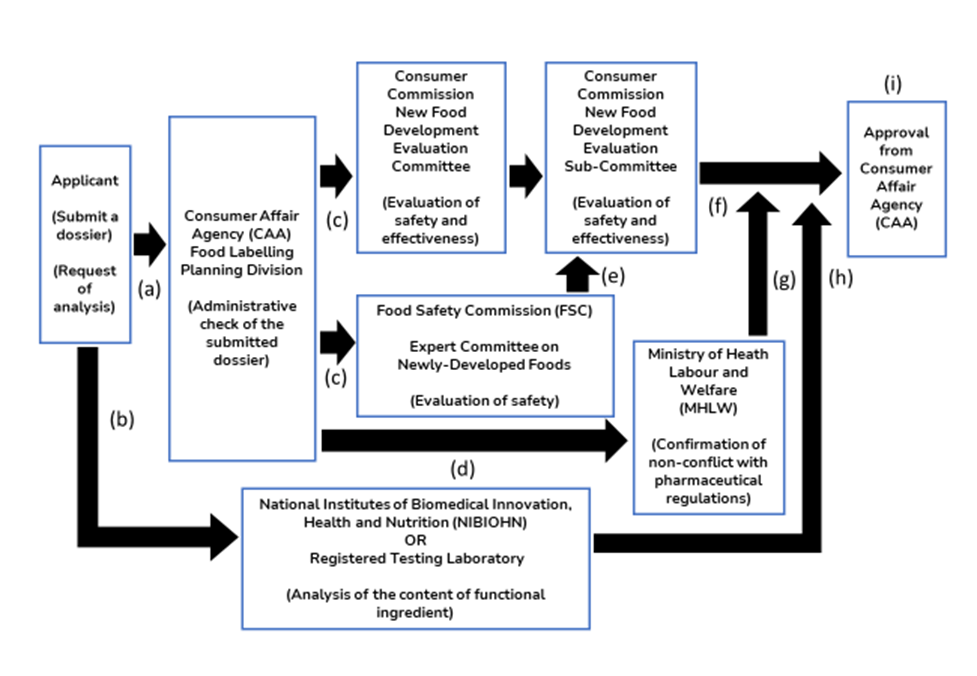
Figure 4.6-1 Evaluation Procedure for FOSHU
- Applicant to prepare a dossier that requests the CAA to evaluate and approve its product as a FOSHU
- Applicant to request the NIBIOHN or a Registered Testing Laboratory to conduct an analysis
- CAA Food Labelling Planning Division to conduct an administrative check and then send the dossier to the Consumer Commission and FSC for their evaluation
- CAA to request the MHLW to confirm non-conflict with pharmaceutical regulations
- FSC to notify the Consumer Commission of its evaluation results
- Consumer Commission to notify the CAA of its evaluation results
- MHLW to notify the CAA of its confirmation
- NIBIOHN or Registered Testing Laboratory to send a COA to the CAA
- CAA to grant approval
In the simplified evaluation procedure, the evaluation of the dossier is completed within the Food Labeling Planning Division of the CAA with no involvement of the Consumer Commission and the FSC.
Timeline:
The standard administrative processing time is 5 months for the full evaluation and 2 months for the simplified evaluation from the date of formal acceptance of a submitted dossier. This does not include the time required for Q&A, correction and modification by the applicant, and the evaluation period by the Consumer Commission and the FSC. Generally, a minimum of 2 to 3 years is required from formal acceptance until approval.
Cost:
The application fee is JPY 9,800 for paper submission, and JPY 7,600 for electronic submission [2]. The analysis fee is JPY 265,000 for the analysis that requires culture tests such as dietary fiber, and JPY 166,000 for others [3].
Information required in the dossier:
A FOSHU dossier shall be prepared by filling out a prescribed form [4] and the form shall contain the following information:
- Company name, address of its principal office, and name of its representative
- Name and address of its business office (name and address of its manufacturing plant)
- Product name
- Expiry date
- Net quantity
- Reasons to seek approval, and reasons that the product contributes maintenance and promotion of the health of the Japanese population
- Intended FOSHU claim
- List of ingredients and their formulation %
- Manufacturing method
- Nutritional facts
- Recommended daily serving
- Warnings for use
- Special notes for use, cooking, and/or storage
- Others
- Copy of the company’s article of incorporation (as an attachment)
The following documents shall be attached to the FOSHU dossier:
- Product package sample
- Reasons that the product contributes maintenance and promotion of the health of the Japanese population (i.e., scientific argument and references about the efficacy of the functional ingredient)
- Dairy serving and warnings for use.
- Summary of references used to assess:
- daily serving of the functional ingredient and the final product,
- safety of the functional ingredient and the final product,
- stability of the functional ingredient and the final product, and
- physicochemical and biological properties of the functional ingredient and its methods for analysis.
- List of references
- Certificates of analysis for nutritional facts
- Qualitative and quantitative analysis methods of the functional ingredient, and the certificates of analysis of those methods
- Documents that describe quality control of the product:
- Specifications of ingredients
- Specification of the product
- Manufacturing method including an overview of manufacturing facilities and equipment, and QA measures
- If any of the above documents are not attached, reasons why it was not submitted.
- References (copies of cited articles and documents)
More details about the information required in the FOSHU dossier are available in 2 CAA notifications [5,6].
Product
Same as above.
6.3 Other Notes or Requirements
Product Notification
None.
Product Registration
None.
6.4 Manufacturing Site Registration
N/A
6.4.1 Standard/Rules for Manufacturing Site
General Food
The Food Sanitation Act (Act No. 233 of 1947) requires food manufacturers to implement hygiene control measures in accordance with HACCP [7]. This requirement is applied not only to food products manufactured in Japan but also to food products imported into Japan. The main requirements are to follow the 7 principles and 12 steps listed below. The guidance documents for HACCP by the type of food business can be found on the MHLW's website [8,9].
- Step 1: Forming a HACCP team
- Step 2: Product Description
- Step 3: Identify the intended use
- Step 4: Creating a manufacturing process list
- Step 5: On-site confirmation of manufacturing process list
- Step 6: Analysis of hazards (Principle 1)
- Step 7: Determining important control points (CCP) (Principle 2)
- Step 8: Setting management standards (Principle 3)
- Step 9: Setting the monitoring method (Principle 4)
- Step 10: Setting improvement measures (Principle 5)
- Step 11: Setting the verification method (Principle 6)
- Step 12: Keep records (Principle 7)
Category
Same as above.
Product
Same as above.
6.4.2 Other Notes or Requirements for Manufacturing Site Registration
None.
6.5 References
1. Appendix 1 of Notification by the Deputy Director General of the Consumer Affairs Agency (Shou-Shoku-Hyou No.259 of 30 October 2014)
2. Order for Enforcement of the Health Promotion Act (Cabinet Order No.361 of 2002)
https://elaws.e-gov.go.jp/document?lawid=414CO0000000361
3. Public Notice by the CAA No.6 of 18 September 2023
4. Appended Form 2 Approval Request Form for FOSHU
5. Appendix 1 of Notification by the Deputy Director General of the Consumer Affairs Agency (Shou-Shoku-Hyou No.259 of 30 October 2014)
6. Appendix 2 of Notification by the Deputy Director General of the Consumer Affairs Agency (Shou-Shoku-Hyou No.259 of 30 October 2014)
7. Food Sanitation Act (Act No.233 of 1947)
https://www.japaneselawtranslation.go.jp/ja/laws/view/3687 (in English)
8. Guidance Documents for Hygiene Control Methods based on HACCP
https://www.mhlw.go.jp/stf/seisakunitsuite/bunya/0000179028_00002.html (in Japanese)
9. Guidance Documents for Hygiene Control Methods according to the principles of HACCP
https://www.mhlw.go.jp/stf/seisakunitsuite/bunya/0000179028_00005.html (in Japanese)
Was this article helpful?