
4. Labeling Requirements
- 6 Mins to read
- DarkLight
4. Labeling Requirements
- 6 Mins to read
- DarkLight
Article summary
Did you find this summary helpful?
Thank you for your feedback
General Foods
Australia

This section provides information on labeling requirements and the label approval process.
4.1 Mandatory Labeling Parameters
Background
The FSC covers labeling requirements under a number of individual Standards in Part 1.2 (Labelling and other information requirements) [1].
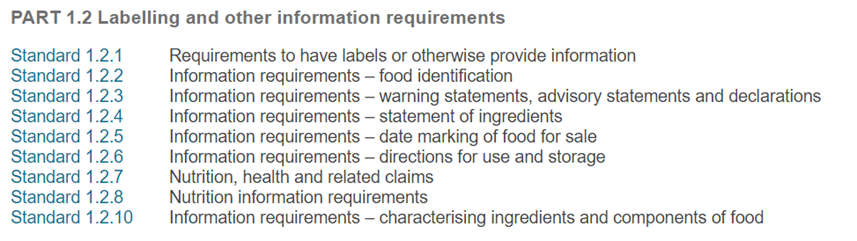
Figure 1. Screenshot of Part 1.2 [1] the Standards relating to labeling.
Standard 1.2.1 [2] outlines the labeling and information requirements for food for retail sale, food that is sold to caterers, and all other sales of food. These categories do not align exactly with the B2B, B2C, and ‘pick and choose’ scenarios. Therefore, guidance is provided in Figures 2, 3, and 4 below.
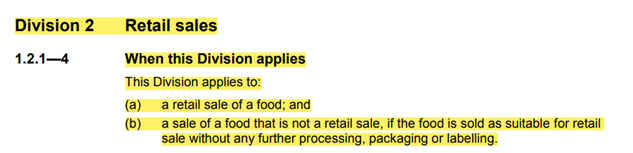 Figure 2. Screenshot of 1.2.1-4 [2] Definition of ‘retail sale’.
This applies to B2B products which are supplied in the packaging that will be sold as it is to retail outlets like supermarkets, and a B2C product already in the final retail packaging and food sold without a package (conditions apply).

Figure 3. Screenshot of 1.2.1-10 [2] Definition of ‘food sold to caterers’.
Applies to: B2B products supplied to caterers and food service stores. This would not include B2B supermarket sales and retail stores in similar.
A caterer is defined (Figure 4):
 Figure 4. Screenshot of 1.2.1-3 [2]: Definition of caterer
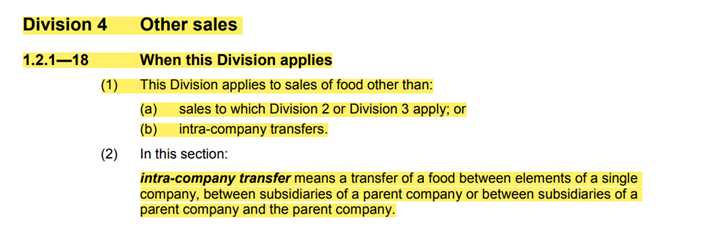 Figure 5. Screenshot of 1.2.1-18 [2]: ‘Other sales’
Applies to: all other sales not covered in the previous categories. For example, B2B products not supplied in the final B2C retail packaging which required further processing or repacking/labeling.
Miscellaneous/General Foods
1. Packaged food (B2B)
For packaged food (B2B) that is in the final retail packaging and sold as it is to e.g., retail outlets like supermarkets refer to Section 2 for mandatory labeling requirements.
For packaged food (B2B) supplied to caterers/food service stores, the following mandatory requirements apply in Figure 6:
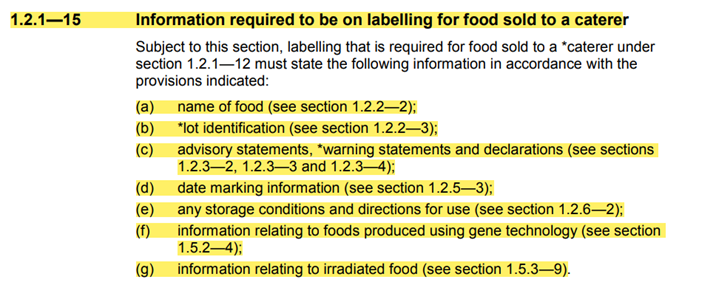
Figure 6. Screenshot of 1.2.1-15 [2]: Label items required for food sold to caterers
For packaged food (B2B) supplied to otherwise which required further processing or repacking/labeling, the following mandatory requirements apply in Figure 7:
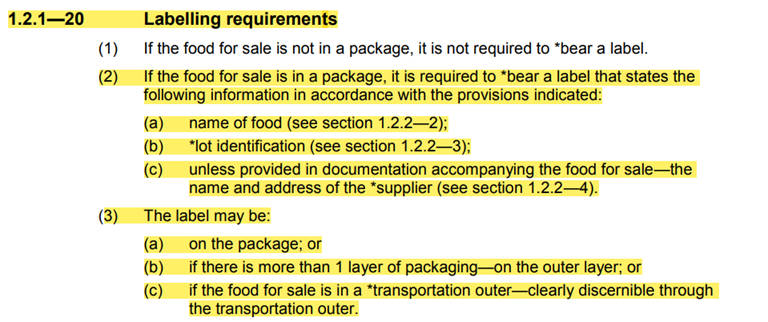
Figure 7. Screenshot of 1.2.1-20 [2]: Label items required for other food sales
2. Packaged food (B2C)
Where it is mandatory to label a product for retail sale, the following information must be included on food labels, unless an exemption applies (refer to Figures 8 and 9 below).
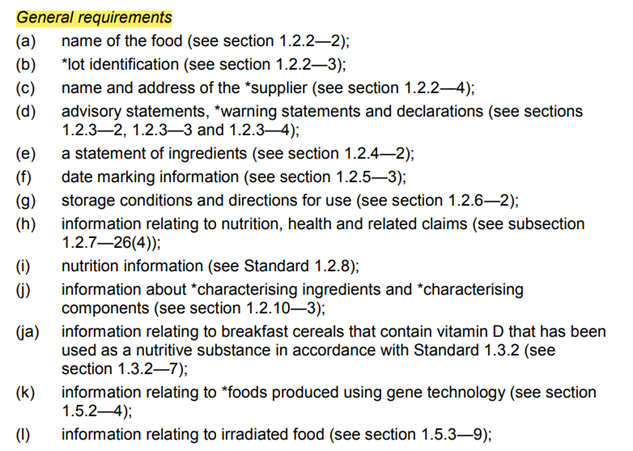
Figure 8. Screenshot of 1.2.1-8 (1)[2]: Label items required for retail sales
3. Non-packaged food (i.e. “Pick-and-choose”) (B2C)
In cases where food is not required to bear a label (as highlighted in Figure 9 below), the information must accompany the food as described in Clause 1.2.1-9 (Figure 10). The usual practice is to provide the retailer with the relevant information, which may or may not be available at the point of sale without the consumer requesting the information. For pick-and-choose supermarket or food service sales of loose nuts, seeds, dried fruit, etc., the product containers usually bear a label on the front of the canister.
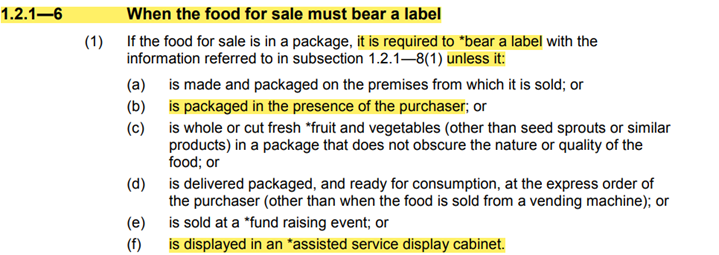 Figure 9. Screenshot of 1.2.1-6 (1): Label exemptions
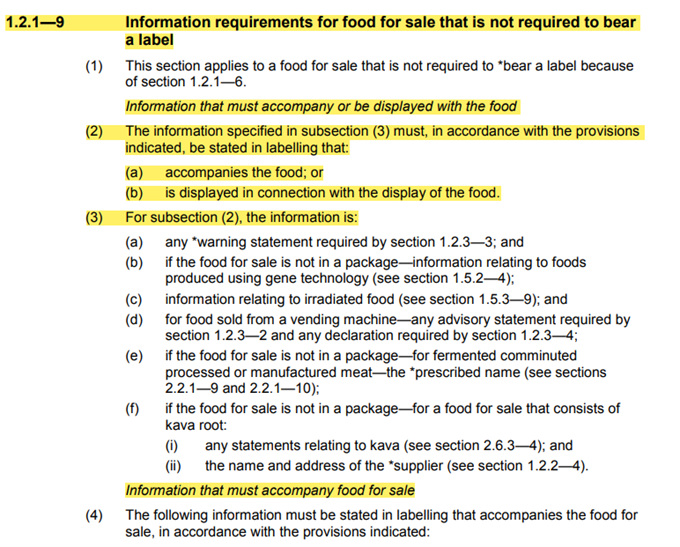
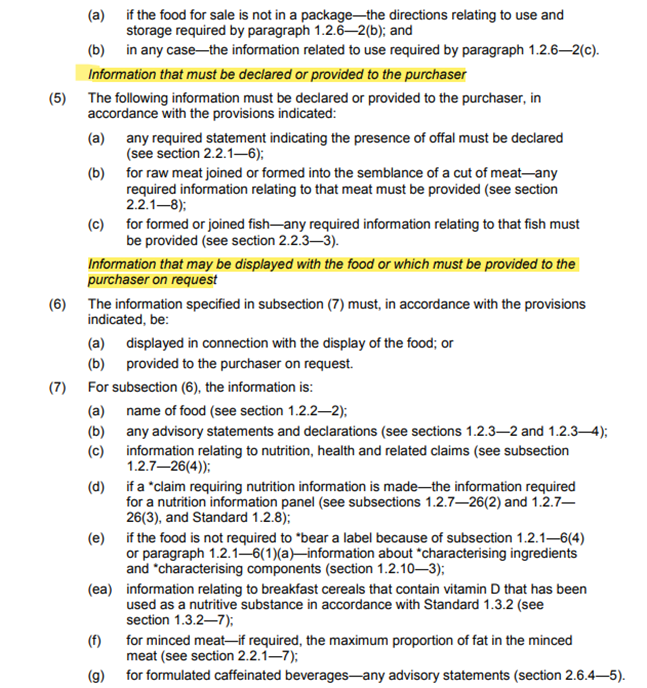
Figure 10. Screenshot of 1.2.1-9 [2]: Information to be available for unlabelled product
4.2 Languages
Labels should be in English, although additional foreign language text is also permitted provided it complies with Clause 1.2.1-24 (2) [2] as per Figure 11.
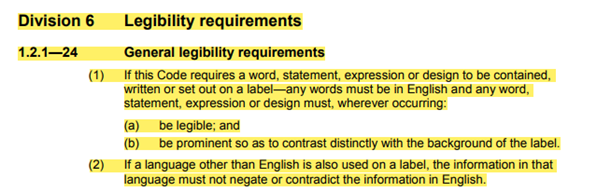
Figure 11. Screenshot of 1.2.1-24 [2]: Language requirements
4.3 Mandatory Information on Stickers
It is acceptable to provide mandatory information on a sticker or label attached to an existing product label provided the conditions are met (refer to Figure 12 below).
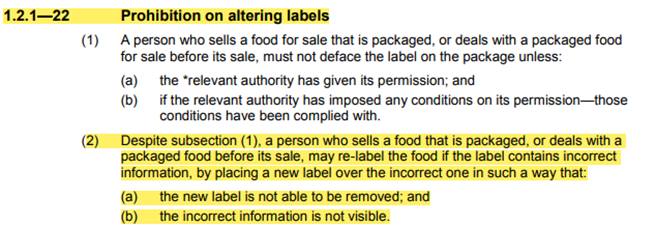 Figure 12. Screenshot of Clause 1.2.1-22 [2]: Relabeling or stickering
4.4 Product Legal Name
N/A. Please refer to Section 4.4 of specific product Guidebooks.
4.5 Product-specific Labeling Statements
Please refer to Section 4.5 of specific product Guidebooks for product-specific requirements.
4.6 Authority Approval
Miscellaneous/General Foods
1. Packaged (B2B)
Product labels do not need to be approved by the authorities.
2. Packaged (B2C)
Product labels do not need to be approved by the authorities.
3. Non-packaged (i.e., “Pick-and-choose”) (B2C)
Product labels do not need to be approved by the authorities.
4.7 Additional Notes on Labeling
Advisory statements
Standard 1.2.3 [3] provides information regarding advisory statements, including the presence of allergens, ingredient-specific warnings, and other information.
With respect to allergens, FSANZ has two approaches [4]:
- PAL (Precautionary allergen labeling)
- PEAL (Plain English allergen labeling)
PEAL is an updated format for allergens labeling which is designed to be more easily understood by consumers. The new requirements are required to be met by 25 February 2024 (which was a three-year transition from approval on 25 February 2021) [5]. Manufacturers can use the current allergens advice until that date or the new requirements.
PAL is the inclusion of messages such as “may contain/may be present egg, fish, and tree nuts” where the product formulation does not contain these ingredients but there is a risk of cross-contamination from the manufacturing site. A label statement, “Contains sesame seeds. May contain tree nuts.” means that sesame seeds are present in the product formulation and, while there are no tree nuts in the product formulation, there is a risk of cross-contamination from the manufacturing plant for tree nuts. Cross-contamination statements are voluntary; however, many manufacturers use these on Australian product labels. Ingredients and mandatory statements are summarised in Schedule 9 [6]. FSANZ also provides advice for manufacturers on its website [7].
- Notes concerning Gluten
In Australia, products containing or derived from wheat, barley, oats, and rye (and any hybrid grains derived from these) must meet the requirements for gluten warnings. Per Figure 13, gluten as an allergen and its sources need to be declared as follows:
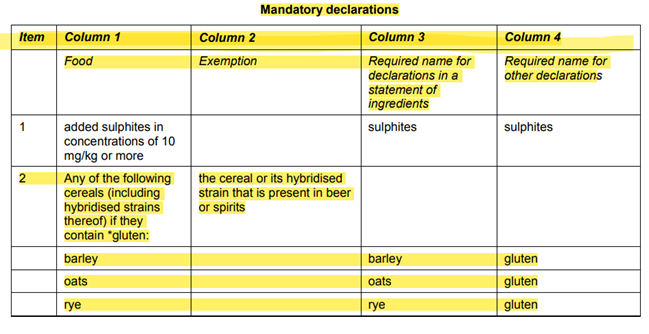
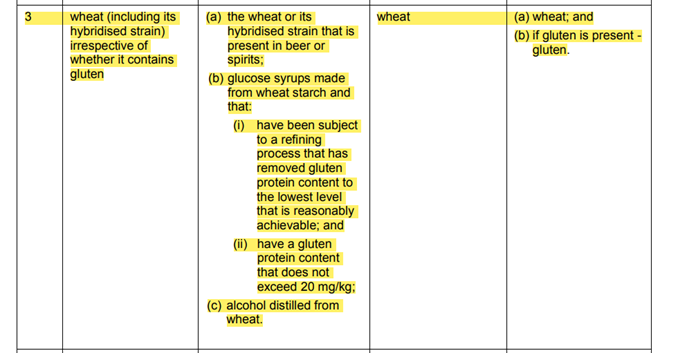
Figure 13. Screenshot of Schedule 9-3 [6]: Warnings relating to the presence of wheat and gluten
Unlike some other jurisdictions, oats are not considered to be gluten-free, and such a claim is prohibited for a product containing oats. In Australia, the limit for claiming gluten-free as ‘not present’ is not 20 mg/kg as in other jurisdictions but is ‘not detected’. A ‘low gluten’ claim is permitted at not more than 20 mg/kg.
Country of Origin
In Australia, food labels must include information about the country of origin labeling (COOL) of the product, including based on where each of the ingredients were sourced from for those main ingredients and where the product was manufactured [8]. Food that is repacked in Australia may include ‘Packed in Australia’. The Australian Competition and Consumer Commission (ACCC) oversees the COOL requirements and has guidance on its website [9]. There is also an Information Standard [10]. The rules are dependent upon the type of food and the way in which it is sold.
Weights and measures
In Australia, fair trading laws require that labels do not misinform or mislead consumers with respect to the amounts of ingredients or foods in a package. This is covered federally under Australian Consumer Law and under state and territory Fair Trading Acts. The Australian National Measurement Institute regulates this issue [11] and has specific information relating to the sale of bread and bakery goods [9]. These can be sold by weight or by number without labeling as described in Figure 14. There are also provisions for pre-packaged items (refer to Figure 15).
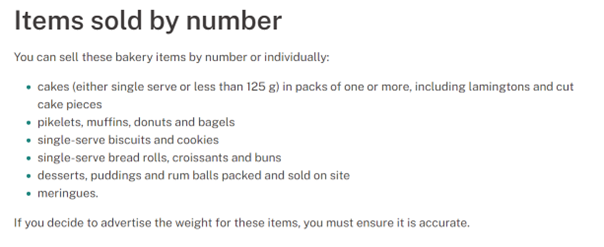
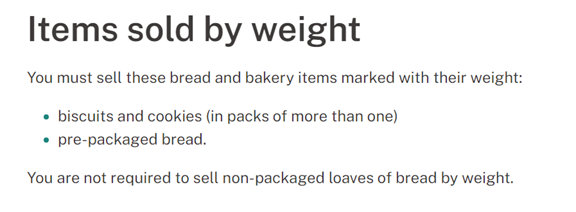 Figure 14. Screenshot from ref [12]: Bakery items sold by weight or by number
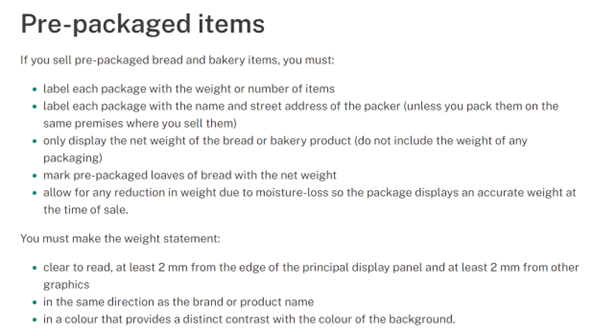
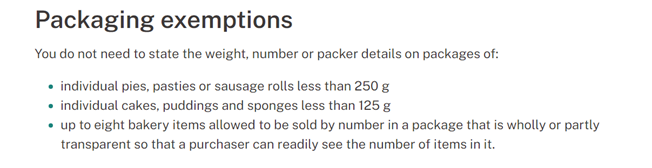
Figure 15. Screenshot from ref [12]: Bakery items sold pre-packaged
4.8 References
1. Part 1.2 (Labeling and other information requirements) from the FSC. Available on tab 1 of the landing page:
https://www.foodstandards.gov.au/code/Pages/default.aspx
2. Standard 1.2.1 – Requirements to have labels or otherwise provide information
https://www.legislation.gov.au/Details/F2022C00936/Download
3. Standard 1.2.3 – Information requirements – warning statements, advisory statements and declarations
https://www.legislation.gov.au/Details/F2021C00202/Download
4. FSANZ webpage ‘Consumers and allergens labelling’
https://www.foodstandards.gov.au/publications/Pages/Consumers-and-Allergen-Labelling.aspx
5. FSANZ webpage ‘P1044- Plain English Allergen Labelling’
https://www.foodstandards.gov.au/code/proposals/Pages/P1044PlainEnglishAllergenLabelling.aspx
6. Schedule 9 – Mandatory advisory statements and declarations
https://www.legislation.gov.au/Details/F2021C00195/Download
7. FSANZ webpage ‘Allergy information for food manufacturers, retailers and importers’
8. FSANZ webpage ‘Country of origin labelling’
https://www.foodstandards.gov.au/consumer/labelling/coo/Pages/default.aspx
9. ACCC webpage ‘Country of origin food labelling’
https://www.accc.gov.au/business/advertising-and-promotions/country-of-origin-food-labelling
10. Country of Origin Food Labelling Information Standard 2016
https://www.legislation.gov.au/Details/F2017C00920/Download
11. Australian National Measurement Institute webpage ‘Trade measurement’
https://www.industry.gov.au/national-measurement-institute/trade-measurement
12. Australian National Measurement Institute webpage ‘Selling bread and bakery goods
Was this article helpful?