
4. Labeling Requirements
- 9 Mins to read
- DarkLight
4. Labeling Requirements
- 9 Mins to read
- DarkLight
Article summary
Did you find this summary helpful?
Thank you for your feedback
General Foods
Russia

This section provides information on labeling requirements and the label approval process.
4.1 Mandatory Labeling Parameters
Food information communicated to consumers must include:
1) Product name [1]
2) Product composition, subject to certain exemptions [1]
The following does not have to be indicated on the label:
- substances that are removed during the production from those indicated in the product composition and at a subsequent stage of the technological process of production are added to food without exceeding the amount of these starting substances;
- substances that are part of one or more components and do not change the properties of food containing such components;
- technological aids;
- substances that are part of flavors or food additives as solvents, carriers of flavoring substances.
Water does not have to be indicated in cases where it:
- is used in the food production process to restore concentrated, condensed, or dry food;
- is a part of the liquid component (including broth, marinade, brine, and syrup) specified in the composition of food.
Allergens must be indicated in the product composition. Allergens include the following products:
- peanuts and products of their processing;
- aspartame and aspartame-acesulfame salt;
- mustard and products of its processing;
- sulfur dioxide and sulfites, if their total content is more than 10 milligrams per kilogram or 10 milligrams per liter in terms of sulfur dioxide;
- cereals containing gluten and products of their processing;
- sesame and products of its processing;
- lupine and products of its processing;
- shellfish and products of their processing;
- milk and products of its processing (including lactose);
- nuts and products of their processing;
- crustaceans and products of their processing;
- fish and products of its processing (except for fish gelatin used as a base in preparations, containing vitamins and carotenoids);
- celery and products of its processing;
- soy and products of its processing; and
- eggs and products of their processing.
Product components must be indicated in descending order according to their mass fraction. If the share of a component is 2% or less, then such components can be indicated in any order after the components with a mass fraction above 2%.
If there is a complex component (consisting of two or more components) in the product, the list of all components that make up such a constituent component must be indicated in the composition section, or the complex component must be indicated and its subcomponents must be indicated in brackets in descending order by their mass fraction. If the mass fraction of the constituent component is 2 percent or less, it is allowed not to indicate the components included in it, with the exception of food additives, flavors, and their constituent food additives, biologically active substances and medicinal plants, components obtained using GMOs and allergens as above.
All food additives must be indicated by their name and/or E-number and/or INS index plus their function in the product.
Flavorings can be indicated as “flavoring (s)” without the name of the flavoring.
3) Product quantity [1]
Product quantity must be indicated in grams, kilograms or pieces. It is possible to indicate both the weight and the number of pieces.
4) Date of manufacture [1]
The date of manufacture must be indicated in the following way:
- "date of manufacture" ("дата изготовления") indicating the hour, day, month – if the product’s shelf life is up to 72 hours;
- "date of manufacture" indicating the day, month, year if the product’s shelf life is from 72 hours to 3 months;
- "date of manufacture" indicating the month, year, or date, month, year if the product’s shelf life is 3 months or more;
After the words "date of manufacture", the date of manufacture must be indicated or the place where the date of manufacture is located on the consumer packaging. The words "date of manufacture" can be replaced by the words "production date" or similar words.
5) Shelf life [1]
The product’s shelf life must be indicated subject to the following requirements:
- "use by" ("годен до") indicating the hour, day, month, with an expiration date of up to 72 hours;
- "use by" indicating the day, month, and year, with an expiration date of 72 hours to three months;
- "best before end" ("годен до конца") indicating the month, year or "best before" ("годен до") indicating the day, month, year, with a shelf life of at least three months.
In order to indicate the shelf life, the word "good" ("годен") may be used, indicating the number of days, months, or years, or if the shelf life is up to 72 hours, the word "good" indicating the number of hours.
After the words "use by", "best before", and "best before the end", either the expiration date of the food product or the location where this period is applied to the packaging must be indicated.
The words "use by", "best before", and "best before end" can be replaced by words with similar meanings.
6) Storage conditions [1]
Storage conditions are usually determined by the manufacturer. For products for which quality and safety change after opening the package that protected the product from spoilage, the applicable storage conditions after opening the package must be indicated.
7) Manufacturer and importer details [1]
The name and location of the manufacturer and (if applicable), the name and location of the entity authorized by the manufacturer must be indicated. The label must also bear the name and location of the importing organization.
The information provided to the consumer (purchaser) must include the officially registered name and location (address, including country) of the manufacturer. In addition, and if different from the manufacturer’s address, the address(es) of the actual production facility and of the person authorized by the manufacturer to accept claims from consumers (purchasers) in the country of the manufacturer (if any) must also be indicated.
8) Use restrictions or recommendations [1]
The label must have recommendations and (or) restrictions on the use, including the preparation of food products if the absence of such recommendations or restrictions makes the consumption of the product difficult or may cause harm to the health of the consumers, their property, or lead to a decrease or loss of taste properties of the product.
9) Nutritional values [1]
The nutritional value of food products (per 100 g of product and/or per one portion, provided that the size of the portion is also indicated), indicated in its labeling, must include the following indicators:
- energy value (calorie content) – in Joules and calories (usually kJ and kcal);
- the amount of proteins, fats, carbohydrates (usually in grams);
- the amount of vitamins and minerals (in mg or mcg). These must only be included if the content of each in 100 g of the product OR in one portion (if the values are indicated per portion) exceeds 5% RDI (according to Annex 2 to the TR on Food Labeling).
10) GMO information [1]
The information on the presence of components obtained using genetically modified organisms (GMOs) must be indicated on the label.
For products obtained with the use of GMOs, including those not containing deoxyribonucleic acid (DNA) and protein, the following information must be provided: "genetically modified products", "products obtained from genetically modified organisms", or "products contain components of genetically modified organisms” ("генетически модифицированная продукция", OR "продукция, полученная из генно-модифицированных организмов", OR "продукция содержит компоненты генномодифицированных организмов").
In addition, and next to the EAC mark (see below), a sign saying “GMO” and identical in shape and size to the EAC mark, must be applied.
If the manufacturer did not use genetically modified organisms in the production of food, then the content of GMOs in food products of 0.9 percent or less is considered an accidental or technically unremovable impurity and such food products do not belong to food products containing GMOs. It is not required to label such products with the GMO marking.
The food label does not have to indicate the presence of GMOs if the used technological aids are made from or with the use of GMOs.
Additional labeling requirements apply to products produced from genetically modified microorganisms (bacteria, yeast, and filamentous fungi) the genetic material of which has been changed using genetic engineering methods.
11) EAC mark
The EAC mark used for products circulated on the EAEU market must be present on the label.
12) Recommended: batch number or batch identification
Batch identification is mandatory for transport packaging but recommended for consumer packaging.
4.2 Languages
The Russian language is mandatory for the Russian market, but if the product is placed on the EAEU market, then the languages of other EAEU Member States must be included. Additional languages are permitted. [1]
It is allowed to use Latin characters for the name and address of the foreign manufacturer provided that the name of the country is translated into Russian. [1]
4.3 Mandatory Information on Stickers
It is allowed to use a sticker provided that it is not easily removable from the consumer packaging and that it contains the mandatory information. [1]
4.4 Product Legal Name
The name of the food product indicated in the labeling should allow the product to be classified as a food product, reliably characterize it, and allow it to be distinguished from other food products.
All information about distinguishing features of the product (including the absence of GMO, halal, kosher, or a “high quality” statement) must be substantiated.
The invented name of the food product (if any) must be included in the name of the food product and located in close proximity to it.
Information on the physical properties and (or) special methods of processing food products (restored, smoked, pickled, ground, processed with ionizing radiation, freeze-dried food products, and similar information about it) is to be included in the name of the food product or placed in close proximity to the name, if the absence of such information may mislead the consumer (purchaser).
It is not allowed to indicate components in the name of a product if they or their derivatives are not a part of the product.
4.5 Product-specific Labeling Statements
Please refer to Section 4.5 of category and product-specific guidebooks.
4.6 Authority Approval
Authority approval is not required.
4.7 Additional Notes on Labeling
Voluntary information
Voluntary information on the label must not be misleading. [1]
Labeling of Organic food
Organic food labeling must conform to the State Standard GOST 33980-2016 “Organic Production. Production regulations, processing, labeling, and implementation” [3]. Organic products are to be labeled in accordance with the following requirements:
- if 95% to 100% of the ingredients (by weight) are organic, the product may be labeled "organic";
- water and salt are not included in the calculation of the percentage of organic ingredients.
Labeling relating to recycling
Food packaging must be labeled with the material code and Mobius loop [4].
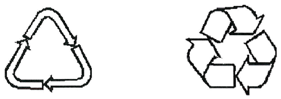
Material coding is indicated, for example, as follows:

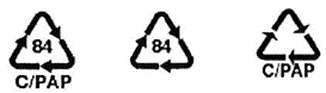
Labeling of Halal, Kosher, Vegan, etc.
There is no legislation on the labeling of Halal, Kosher, or Vegan. However:
- There is a draft Halal standard [5].
- Kosher certification is done by a specialized body: Департамент кашрута при Главном Раввинате России (Kashrut Department under the Chief Rabbinate of Russia) [6].
- Vegan certification (V-mark) is done by Veganmark Russia [7].
4.8 References
1. Technical Regulation on Food Labelling, TR TS 022/2011 adopted by Decision No. 881 dated 9 December 2011.
https://docs.cntd.ru/document/902320347
2. Technical Regulation TR EAEU 051/2021 on the Safety of Poultry Meat and Poultry Meat Products, adopted by Decision No. 110 dated 29 October 2021
https://docs.cntd.ru/document/726913772
3. State Standard GOST 33980-2016 “Organic Production. Production regulations, processing, labelling and implementation”
Consolidated text: Regulation (EC) No 1829/2003 of the European Parliament and of the Council of 22 September 2003 on genetically modified food and feed
https://docs.cntd.ru/document/1200141713
4. Technical Regulation on Packaging Safety, TR TS 005/2011
https://docs.cntd.ru/document/902299529
5. Proposed standard GOST “Halal production. Requirements for production, storage, transportation, sale and labelling. Main Provisions”
https://iso-management.com/wp-content/uploads/2017/07/%D0%93%D0%9E%D0%A1%D0%A2-Halal.pdf
6. Департамент кашрута при Главном Раввинате России (Kashrut Department under the Chief Rabbinate of Russia) (kosher.ru)
7. Veganmark Russia: V-MARK | Веганская сертификация и маркировка (Vegan certification and labeling V-МАРК) [7]
Was this article helpful?