
3. Compositional Aspects
- 9 Mins to read
- DarkLight
3. Compositional Aspects
- 9 Mins to read
- DarkLight
Article summary
Did you find this summary helpful?
Thank you for your feedback
Whisky
Australia

This section provides the compositional requirements for the food category and/or food products in scope and information on permitted nutrients, ingredients, and additives.
3.1 Composition Requirements
General Food
The FSC includes compositional requirements for all foods in the Chapter 1 standards [1], including those relating to:
- Ingredients
- Use of processing aids and food additives
- Permitted flavors and colors
- Materials produced using genetic modification techniques
- Novel foods
- Irradiation of foods or ingredients
Under Standard 1.1.1 [2], there are compositional requirements for foods for sale, including:
Permission to use another food as an ingredient in a food
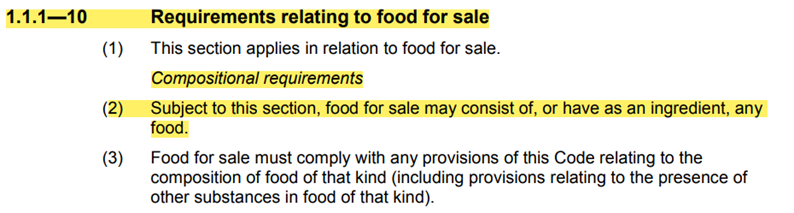
Figure 1: Compositional requirements from sections 1.1.1-10 (2) and (3) of ref [2].
This means that a food (including whisky) can contain any other food as an ingredient, providing that the added food ingredient is permitted for use in that particular food type and all other relevant compositional requirements are met. This permits the blending of whiskies from different sources.
In the specific standard that applies to whisky, Standard 2.7.5 [3], the addition of other foods as ingredients would be more restricted than in General Foods due to the definition of a spirit, particularly given that the ‘taste, aroma and other characteristics generally attributed’ would apply:
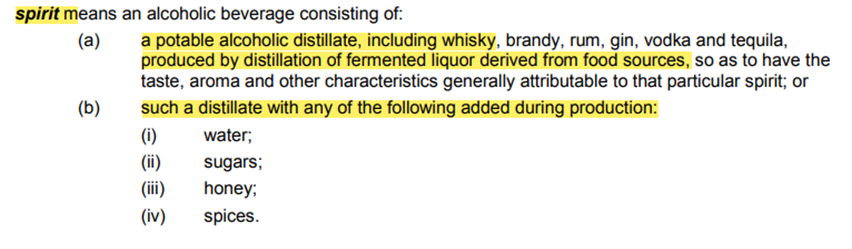
Figure 2: Definition of ‘spirit’.
While this does not mean other ingredients could not be added, any additions would need to maintain the organoleptic features expected of a whisky. This would not restrict the permissions for other components such as food additives, colors, flavors, etc., unless they altered the expected organoleptic profile. The requirements for these are described in Sections 3.5 (permitted additives), 3.6 (permitted flavors and colors), and 3.7 (permitted processing aids) below. Compositional information relating to the use of materials produced using genetic modification techniques, Novel foods, and irradiated ingredients is provided in Section 3.8.
Category
Alcoholic beverages
Same as "General Food" above.
Additionally, information on alcohol content and the order of specific gravity varies between different types of alcoholic beverages. Therefore, these items will be covered under the whisky section below.
Product
Whisky
Same as "General Food" above.
Additionally, information specific to whisky applies:
Alcohol content:
Whisky must contain no less than 37 percent alcohol by volume [3]. There is no mandatory upper limit since the definition of ‘spirit’ would limit this to having a taste and characteristics typical of the spirit and the expected amount of alcohol achievable from the distilling process.
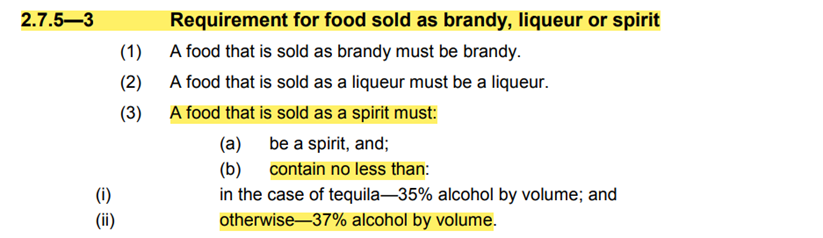
Figure 3: Minimum alcohol content for whisky from clause 2.7.5-3 of ref [3].
Tolerance limit for alcohol by volume:
The label statement for the alcohol content of whisky must be accurate within 0.5% and may be expressed as mL/100 g, mL/100 mL, or as a percentage of alcohol by volume [4]:
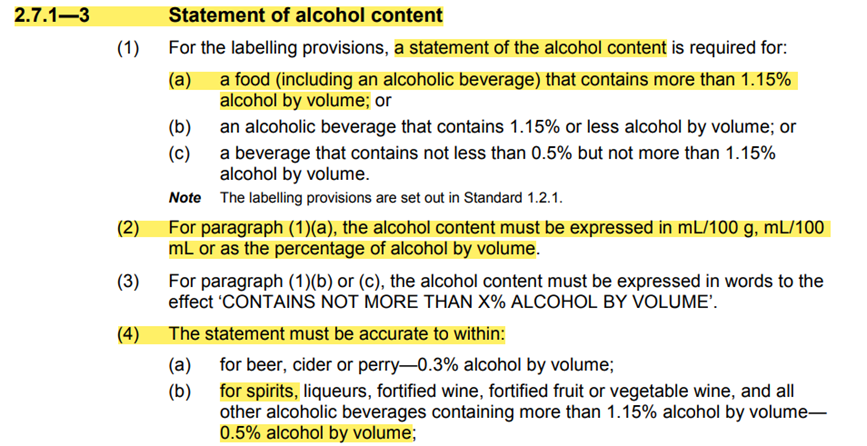
Figure 4: Expression of alcohol content form clause 2.7.1-3 of ref [4].
Specific gravity:
Whiskey 0.95 ref [5]
3.2 Raw Material Requirements
General Food
The FSC does not mandate particular specifications for most individual ingredients. Standard 1.1.1 [2] includes information for relevant specifications with regard to purity and identity for substances used as food additives, processing aids, nutritive substances, and Novel foods.
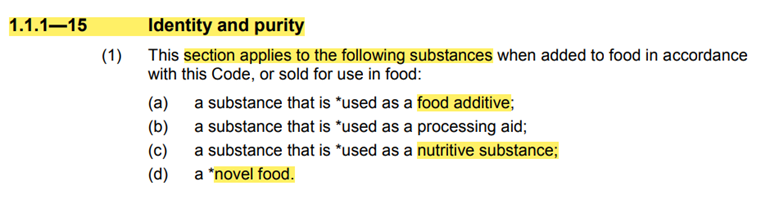

Figure 5: Identity and purity provisions from clause 1.1.1-15 of ref [2].
Schedule 3 [6] provides information on specifications on identity and purity from primary sources (Figure 4) and secondary sources (Figure 5). Schedule 3 also contains information for named substances. Since the list of named substances is lengthy, it will not be reproduced here. It is available in the table in clause S3-2 [6].
Category
Alcoholic beverages
Same as "General Food".
Product
Whisky
Same as "Category" (alcoholic beverages) above.
3.3 Fortification
General Food
While the FSC permits fortification with vitamins, minerals, and nutritional substances for some foods and beverages this does not extend to alcoholic beverages.
Category
Alcoholic beverages
Same as "General Food".
Product
Whisky
Same as "Category" (alcoholic beverages) above.
3.4 Other Permitted Ingredients
General Food
N/A
Category
Alcoholic beverages
N/A
Product
Whisky
N/A
3.5 Permitted Additives
General Food
Standard 1.3.1 [7] outlines the requirements for food additives. Unless expressly permitted by the FSC, a food additive cannot be used (refer to Figure 6). A substance used as a food additive is required to:
(1) to be permitted as such a substance (Figure 7) and
(2) perform a technological function (Figure 8) as described in Schedule 14 [8]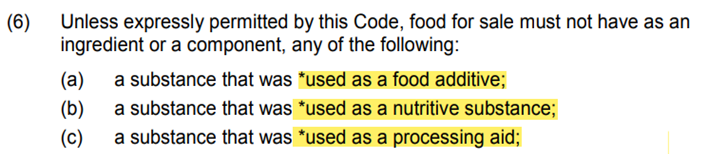
Figure 6: Permission for food additives from clause 1.1.1-10 (6) of ref [2].
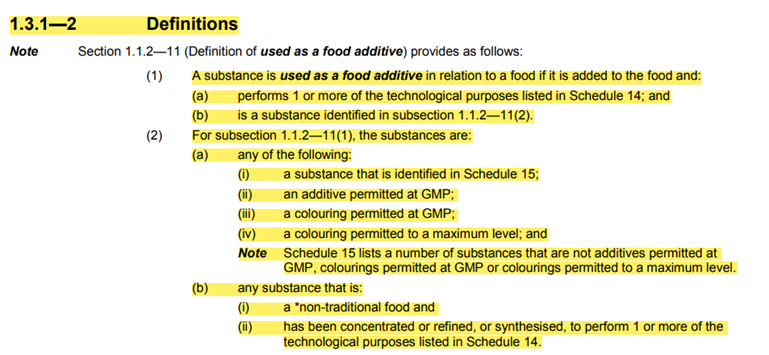
Figure 7. Definition of food additive from clause 1.3.1-2 of ref [7].
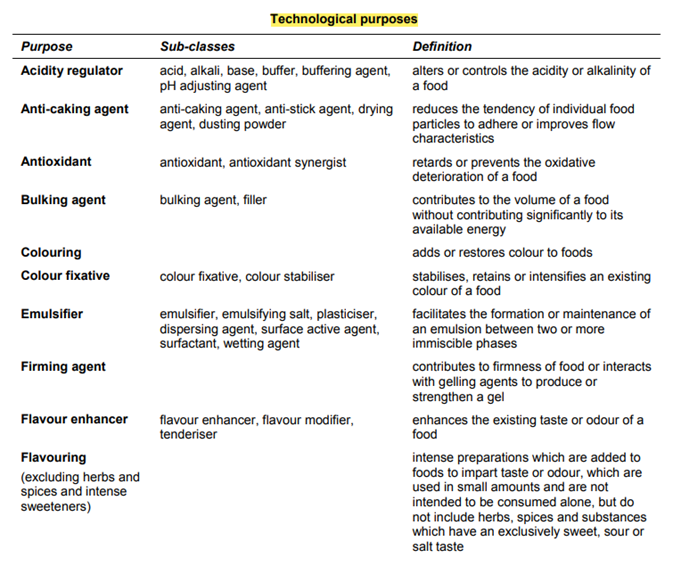
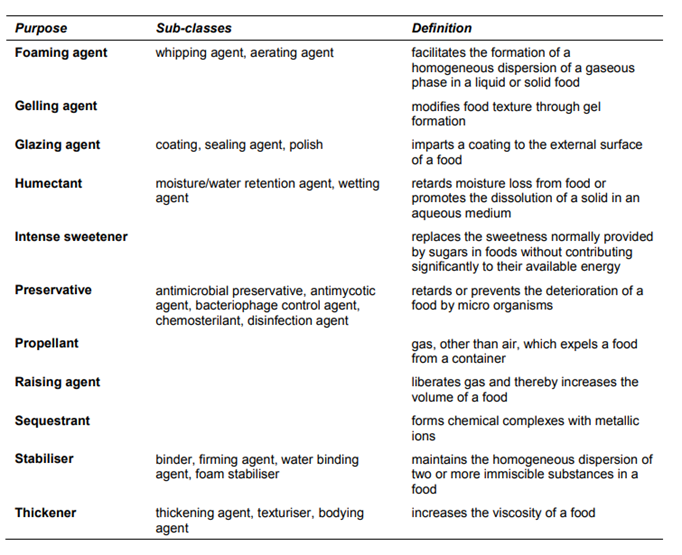
Figure 8: Technological functions for food additives from ref [8].
Lists of permitted food additives are provided in Schedule 15 [9], which describes permissions by food category, and Schedule 16 [10], which provides lists of additives that can be used at GMP.
Category
Alcoholic beverages
Same as "General Food" above.
Product
Whisky
Same as "Category" (alcoholic beverages) above.
The list of permitted additives for whisky and other spirits is shown in Figure 9. This does not include all those for use at GMP levels in Schedule 16 [10].
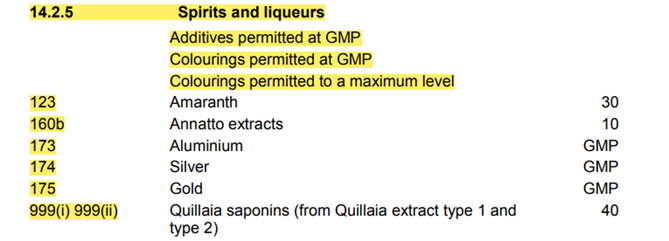
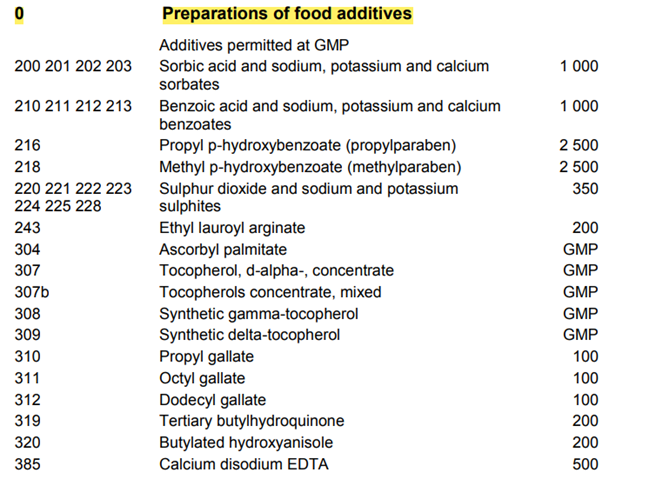
Figure 9: Permitted food additives for spirits, including whisky, from ref [10]. These include those in Category 0 (for mixtures of food additives) and Category 14.2.5 (for spirits). Limits are in mg/kg of the food or at GMP.
3.6 Permitted Flavors and Colors
General Food
Flavors and colors are considered to be food additives. Therefore, the general comments in Section 3.5 above regarding food additives apply. Additional information is provided below.
- Colorings
Permitted colorings at GMP are listed in Clause S16-3 [10]:
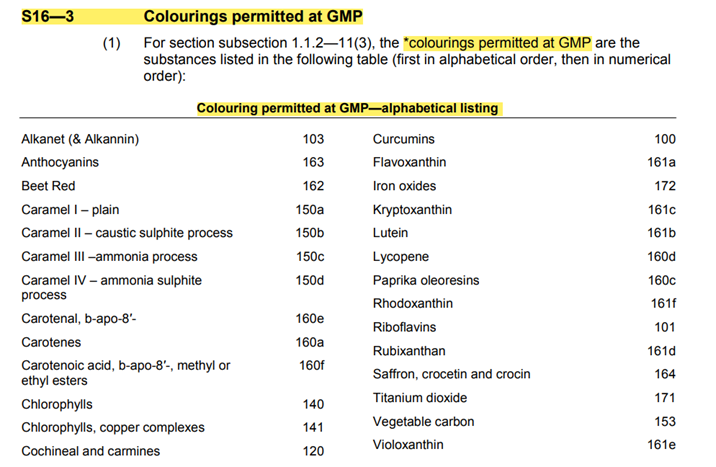
Figure 10. Colorings permitted at GMP from clause S16-3 of ref [10]. The numbers are corresponding food additive numbers.
In addition, some colorings are permitted when used up to a maximum level:
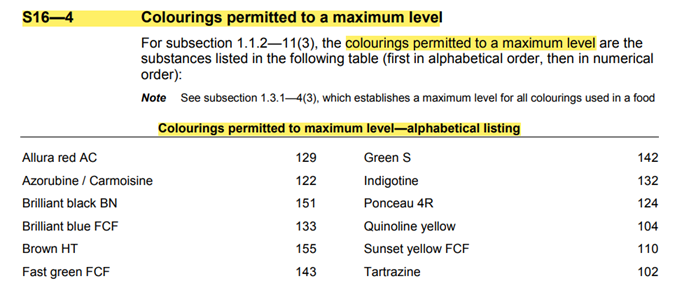
Figure 11. Colorings permitted with limits from clause S16-4 of ref [10]. The numbers are corresponding food additive numbers. Limits for use are as per Figure 12.
Clause 1.3.1-4 (3) [7] provided the maximum limits:

Figure 12. Levels for colorings permitted at a maximum level from clause 1.3.1-4 (3) of ref [7].
Where more than one coloring agent is used, the limit in Figure 12 is for total colors. Colorings may contain other food additives as permitted in Schedule 15 [9]:

Figure 13: Permission for foods additives for coloring substance from ref [9].
- Flavorings
Permitted flavoring substances are described in Standard 1.1.2 [11]:
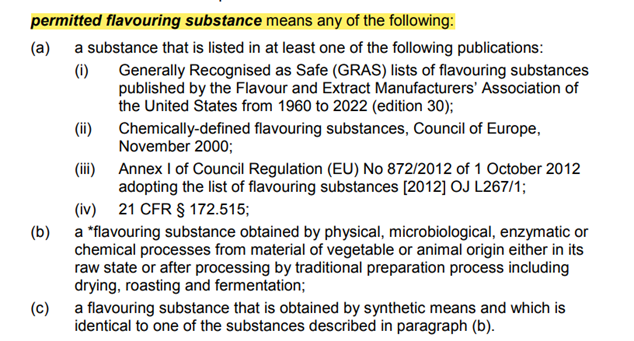
Figure 14. Permission for flavoring substances from clause 1.1.2 -2 (3) of ref [11].
In addition, flavorings may contain other food additives as permitted in Schedule 15 [9]:
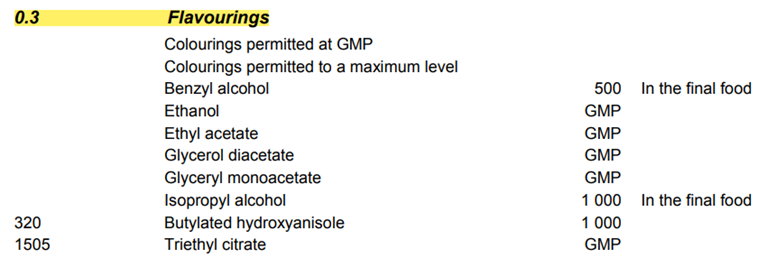
Figure 15. Permission for food additives for flavoring substance from ref [9]. Limits are in mg/kg or at GMP.
Category
Alcoholic beverages
Same as "General Food".
Product
Whisky
Same as "Category" (alcoholic beverages) above.
3.7 Permitted Processing Aids
General Food
The FSC permits the use of processing aids under Standard 1.3.3 [12].
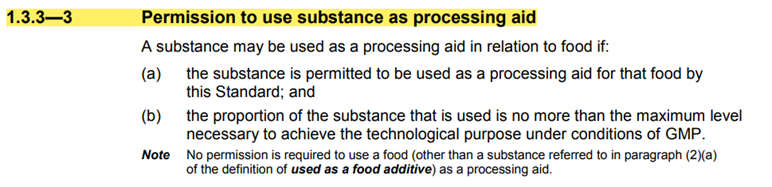
Figure 16. Permission for processing aids from clause 1.3.3 – 3 of ref [12].
Some processing aids are permitted for all foods (Figure 17). These are those substances that are:
(1) additives permitted at GMP (substances in Schedule 16 [10]), or
(2) substances listed in the table to Schedule 18-2 [13] (figure 18).
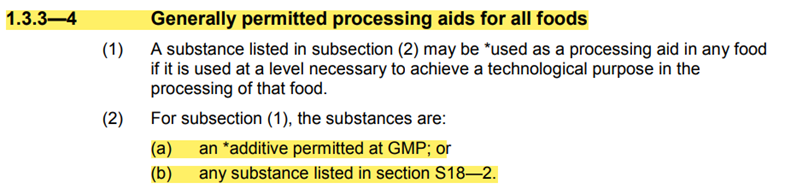
Figure 17. Generally permitted processing aids from clause 1.3.3 – 4 of ref [12].
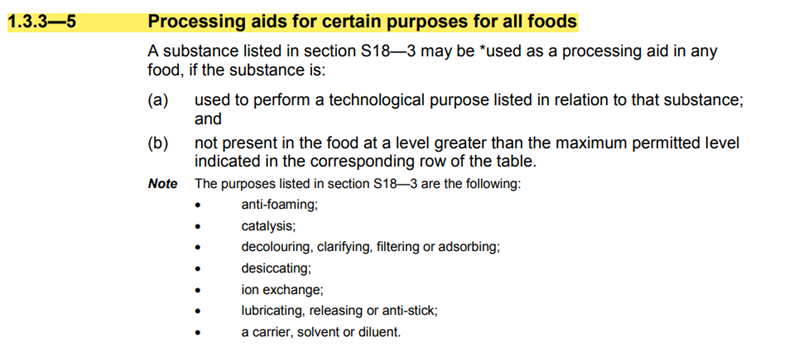
Figure 18: Permission for processing aids for certain purposes from clause 1.3.3 – 5 of ref [12].
Further sections in Schedule 18 [13] detail permissions for processing aids in particular foods or purposes. The lists are by technological function and, as they are lengthy, they will not be provided here. In relation to the production of ‘potable alcohol’, there are many permitted enzymes of genetically modified origin.
Since the previous version of the Guidebook (dated 17 July 2024), the following applications for processing aids have been accepted by FSANZ:
- Application A1311 (Prolyl oligopeptidase from GM Trichoderma reesei as a processing aid for use in the production of brewed beverages). Status: under review. Expected gazettal: mid-July 2025. More information here [14].
- A1291 - Glucoamylase from GM Aspergillus niger (gene donor: Gloeophyllum sepiarium) as a processing aid in the brewing process, baking processes, starch processing, and distilled alcohol processing). Status: gazetted in January 2025 [13].
- A1306 - Chitosan from Agaricus bisporus as a processing aid for wine, beer, cider, spirits, and other alcoholic beverage production. Status: under review. Expected gazettal: mid-July 2026 [14].
Note: Only gazetted applications are formally approved; from the 3 applications above, only A1291 has been gazetted.
Category
Alcoholic beverages
Same as "General Food".
Product
Whisky
Same as "Category" (alcoholic beverages) above.
3.8 Additional Notes
General Food
In addition to the compositional requirements described in the sections above, the FSC has requirements [2] relating to Novel food ingredients, use of components of genetically modified origin, and irradiation of foods or food ingredients.
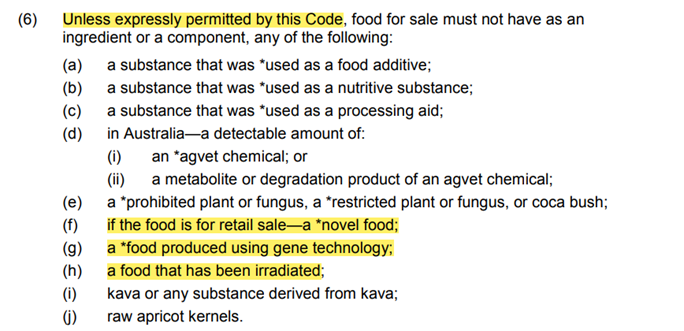
Figure 19. Use of Novel foods, GMOs, and irradiation from clause 1.1.1 – 10 (6) of ref [2].
Novel foods
While it is not expected that the whisky products would contain Novel foods, the following information is provided for reference purposes should this change due to product development requirements. FSANZ defines foods and food ingredients as 'traditional' or 'non-traditional'. Novel foods are a subcategory of non-traditional foods and require prior approval before use in foods.
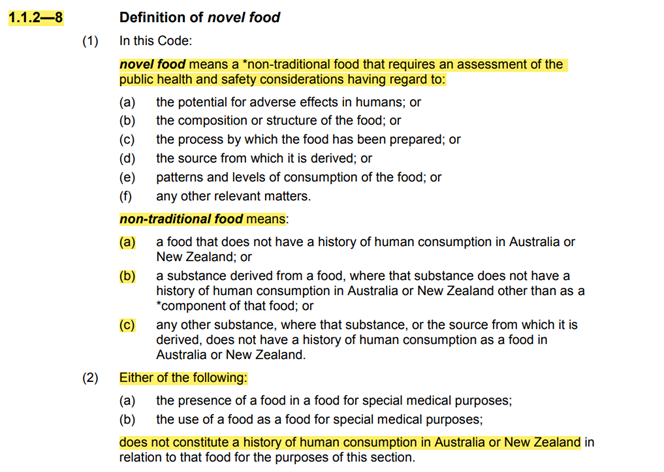
Figure 20. Definitions for non-traditional food and Novel food from clause 1.1.2-8 of ref [11].
Novel foods require an assessment due to possible safety issues. These are only allowed to be used in foods once approved and entered into Schedule 25 [16] per Standard 1.5.1 [17].
Genetically modified (GMO) ingredients
Standard 1.5.2 [18] describes the requirements for the use of ingredients that have been produced using gene technology.
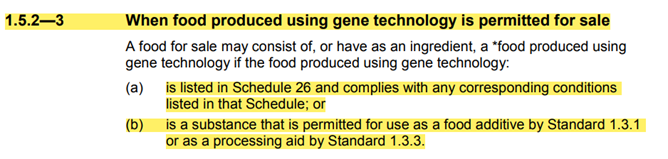
Figure 21: When GMO food/ingredients can be used from Clause 1.5.2-3 of ref [18].
The positive list of GMO permissions in Schedule 26 [19] is long and will not be provided here. To be clear, any ingredient permitted to be used as a processing aid or food additive is permitted even if it is derived from a GMO source. While food containing GMO components needs to be labeled as such, there are exemptions under Clause 1.5.2-4 [18]:
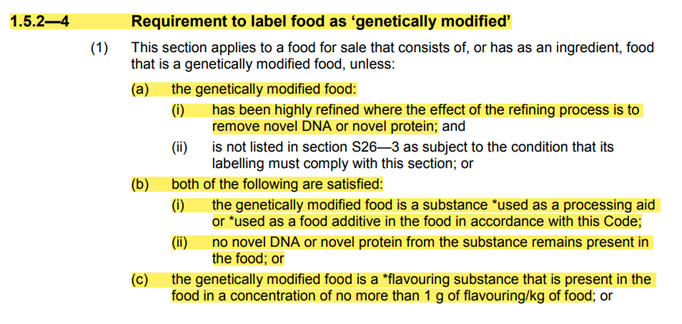
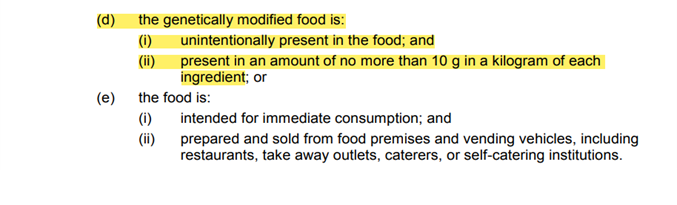
Figure 22. Labeling of food with GMO from Clause 1.5.2-4 of ref [18].
It is expected that the use of any GMO crop used as a substrate for whisky distillation would not result in any novel DNA or novel protein being in the final product, and therefore GMO labeling would not be required. This would need to be checked on a case-by-case basis for whisky products.
Irradiated foods
Standard 1.5.3 [20] describes the requirements for the use of irradiation. It is not expected that the bakery products would be irradiated or contain irradiated ingredients. However, if a food product has been irradiated or contains irradiated ingredients, there is a requirement for the product labeling of B2C products (both retail and catering).
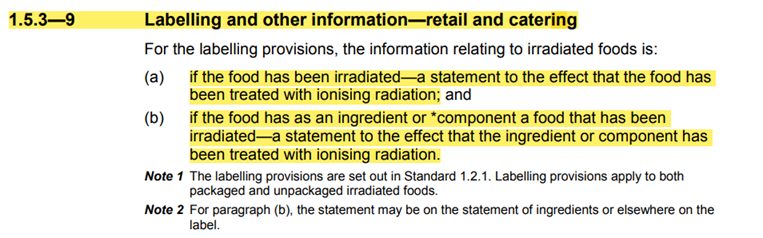
Figure 23. Labeling of food that has undergone irradiation or has irradiated components from Clause 1.5.3-9 of ref [20].
Category
Alcoholic beverages
Same as "General Food".
Product
Whisky
Same as "Category" (alcoholic beverages) above.
3.9 References
1. Australia New Zealand Food Standards Code (FSC). Individual standards available from the landing page
https://www.foodstandards.gov.au/food-standards-code/legislation
2. Standard 1.1.1 – Structure of the Code and general provisions
https://www.legislation.gov.au/F2015L00383/latest/downloads
https://www.legislation.gov.au/F2015L00399/latest/downloads
4. Standard 2.7.1 – Labeling of alcoholic beverages and food containing alcohol
https://www.legislation.gov.au/F2015L00469/latest/downloads
5. FSANZ guidance for Specific gravities of a selection of beverages and other liquid food
https://www.foodstandards.gov.au/sites/default/files/2023-12/npc-specific-gravities.pdf
6. Schedule 3 - Identity and purity
https://www.legislation.gov.au/F2015L00493/latest/downloads
7. Standard 1.3.1 – Food additives
https://www.legislation.gov.au/F2015L00396/latest/downloads
8. Schedule 14 – Technological purposes performed by substances used as food additives
https://www.legislation.gov.au/F2015L00436/latest/downloads
9. Schedule 15 – Substances that may be used as food additives
https://www.legislation.gov.au/F2015L00439/latest/downloads
10. Schedule 16 – Types of substances that may be used as food additives
https://www.legislation.gov.au/F2015L00442/latest/downloads
11. Standard 1.1.2 – Definitions used throughout the Code
https://www.legislation.gov.au/F2015L00385/latest/downloads
12. Standard 1.3.3 – Processing aids
https://www.legislation.gov.au/F2015L00402/latest/downloads
13. Schedule 18 – Processing aids
https://www.legislation.gov.au/F2015L00452/latest/downloads
14. A1311 - Prolyl oligopeptidase from GM Trichoderma reesei as a processing aid
https://www.foodstandards.gov.au/food-standards-code/changing-the-code/workplan
16. Schedule 25 – Permitted novel foods
https://www.legislation.gov.au/F2015L00440/latest/downloads
17. Standard 1.5.1 – Novel foods
https://www.legislation.gov.au/F2015L00403/latest/downloads
18. Standard 1.5.2 – Food produced using gene technology
https://www.legislation.gov.au/F2015L00404/latest/downloads
19. Schedule 26 – Food produced using gene technology
https://www.legislation.gov.au/F2015L00450/latest/downloads
20. Standard 1.5.3 – Irradiation of food
https://www.legislation.gov.au/F2015L00406/latest/downloads
Was this article helpful?