
3. Compositional Aspects
- 10 Mins to read
- DarkLight
3. Compositional Aspects
- 10 Mins to read
- DarkLight
Article summary
Did you find this summary helpful?
Thank you for your feedback
General Foods
Australia

This section provides the compositional requirements for the food category and/or food products in scope and information on permitted nutrients, ingredients, and additives.
3.1 Composition Requirements
There are mandatory macronutrient or micronutrient content requirements that apply to some foods with Standards in Chapter 2 of the FSC [1] but none for “Miscellaneous/General Foods”. While the specific standard, Standard 2.1.1 – Cereal and cereal products [2], has mandatory amounts for bread flour pertaining to folic acid and thiamine and mandatory use of iodized salt, products such as pastries, cakes, and biscuits are exempted from this requirement as shown in Figure 1 below. However, there are some permissions for the fortification of some bakery products (refer to Section 3.3 below).
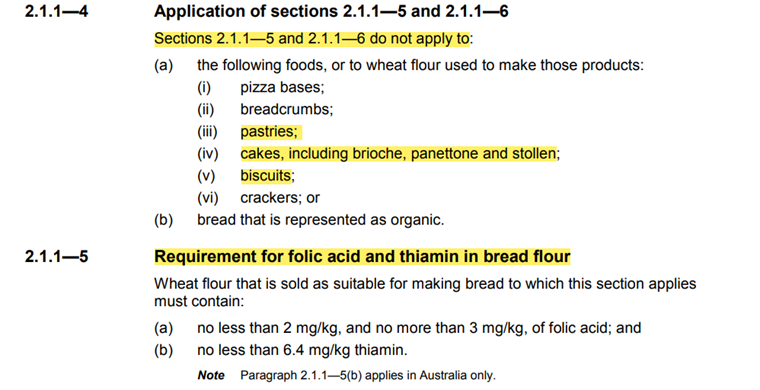
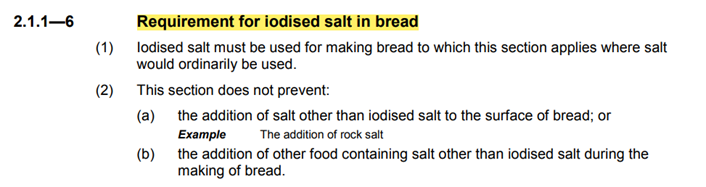
Figure 1: Screenshot from Standard 2.1.1 [2]: Mandatory requirements for wheat flour.
3.2 Raw Material Requirements
The FSC does not mandate particular specifications for most individual ingredients. Standard 1.1.1 [3] includes information for relevant specifications with regard to purity and identity for substances used as food additives, processing aids, nutritive substances, and Novel foods as seen in Figure 2 below.
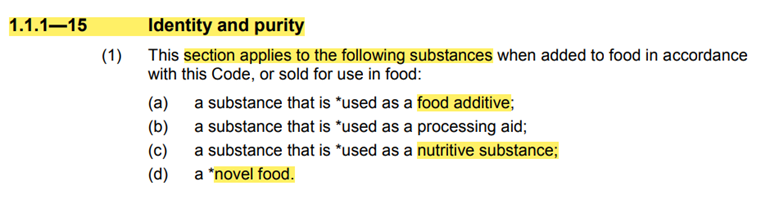

Figure 2: Screenshot from Standard 1.1.1 [3]: Identity and purity provisions.
Schedule 3 [4] provides information on specifications on identity and purity from primary sources (Figure 3) and secondary sources (Figure 4). In addition, where there is no relevant specific for arsenic and heavy metals in the primary or secondary source, the limits in Figure 5 apply.
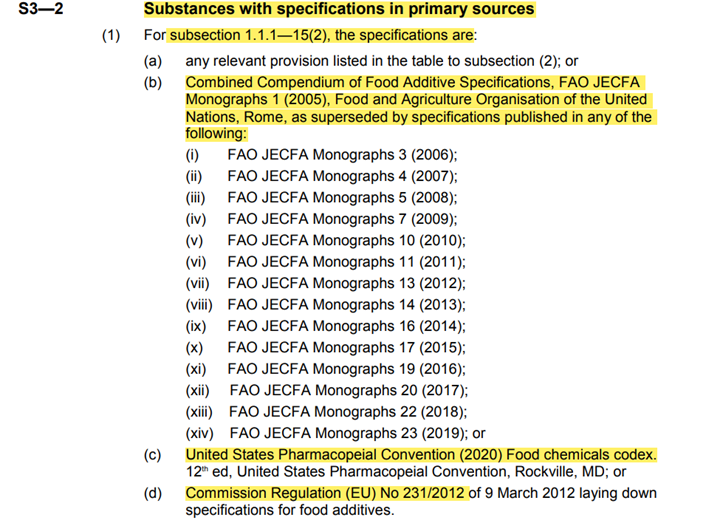 Figure 3. Screenshot from Schedule 3- 2 [4]: Substances from primary sources.
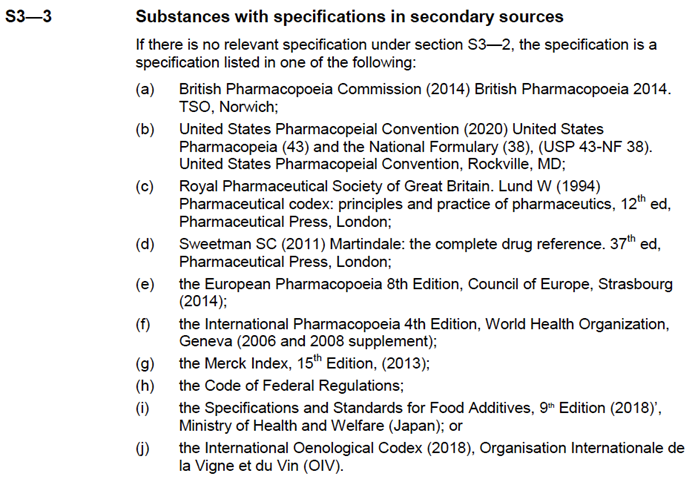 Figure 4. Screenshot from Schedule 3- 3 [4]: Substances from secondary sources.
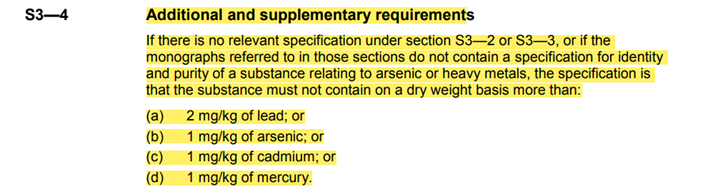
Figure 5. Screenshot from Schedule 3- 4 [4]: Arsenic and heavy metals.
Schedule 3 [4] also contains ingredient-specific specifications in Clause S3-5, for example, for advantame, isomaltulose, resistant maltodextrins, and steviol glycosides. The number of items in this section of Schedule 3 is lengthy and will not be reproduced here.
3.3 Fortification
Despite the exemption described in Section 3.1 (for folic acid and thiamine in wheat flour), products containing wheat flour may contain these nutritive components as part of the wheat flour ingredient. The FSC states that, unless permitted, a food can not contain an ingredient that is added as a nutritive substance:

Figure 6. Screenshot from Standard 1.1.1- (6) (b)[3]: Permission for use of nutritive substances.
A ‘Nutritive substance’ is defined in Standard 1.1.2 [5]:
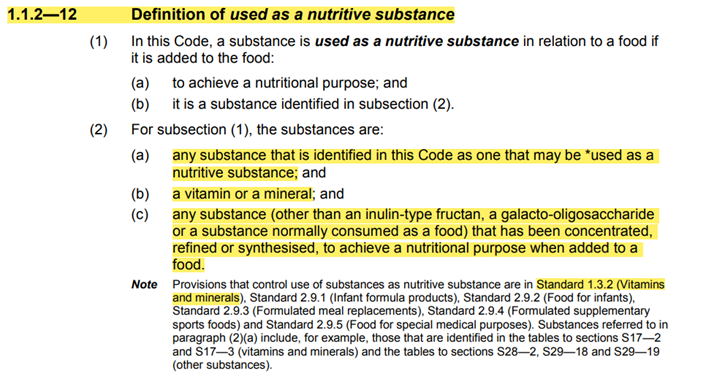
Figure 7. Screenshot from Standard 1.1.2- 12 [5]: Definition for ‘used as a nutritive substance’.
Standard 1.3.2 – Vitamins and minerals [6] describes permissions, with substance and limits for use provided in Schedule 17 [7]. There are permissions for use in biscuits (cookies) as below (Figure 8).
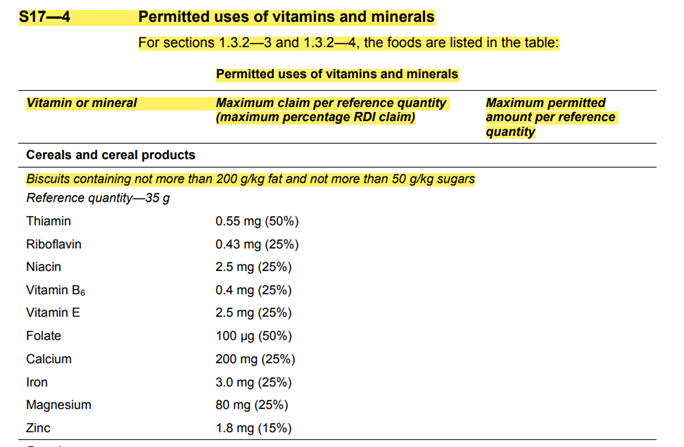
Figure 8. Screenshot from Schedule 17-4 [7]: Permitted vitamins and minerals for biscuits.
While Schedule 17 [7] also permits additions of nutrients to bread flour, there are no other permissions for cakes, cheesecakes, brownies, or squares beyond components added as part of the flour including wheat flour.
3.4 Other Permitted Ingredients
Under Standard 1.1.1 [3], there are provisions for foods for sale in relation to permitted ingredients, including:
- Permission to use another food as an ingredient in a food:

Figure 9. Screenshot from Standard 1.1.1-10(2) [3]: Permission to add a food to another food.
For example, a cake could contain frosting (icing sugar), dried fruit, cocoa powder, or nuts.
- Permission to use other ingredients as food additives or processing aids in a food:
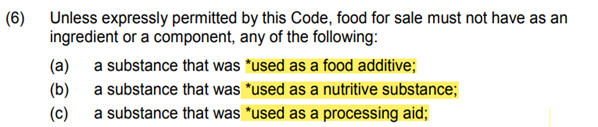
Figure 10. Excerpt from Standard 1.1.1-10(6) [3]: Food additives, nutritive substances, and processing aids.
These will be described in more detail in Sections 3.5 and 3.6 below (food additives including colors and flavors), and Section 3.7 (processing aids). Permitted nutritive substances were described in Section 3.3 above. Novel foods and foods produced using gene technology are not permitted unless expressly permitted in the FSC. These are covered in Section 3.8 below.
3.5 Permitted Additives
Standard 1.3.1 – Food additives [8] outlines the requirements for food additives. Unless expressly permitted by the FSC, a food additive can not be used (refer to Figure 10 above). A substance used as a food additive is required to (1) be permitted as such a substance (Figure 11) and (2) perform a technological function (Figure 12) as described in Schedule 14 [9].
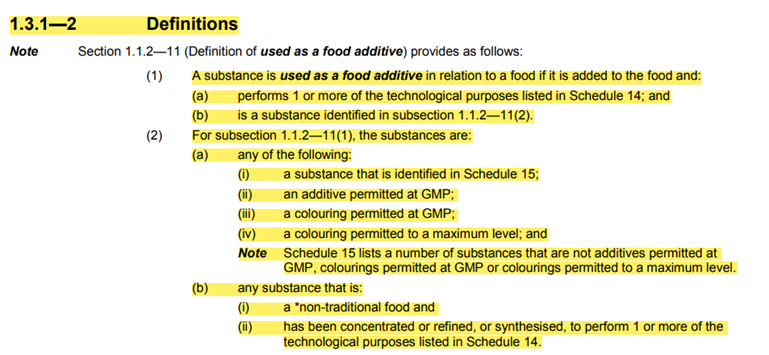
Figure 11. Excerpt from Standard 1.3.1-2 [8]: Definition of food additive use.
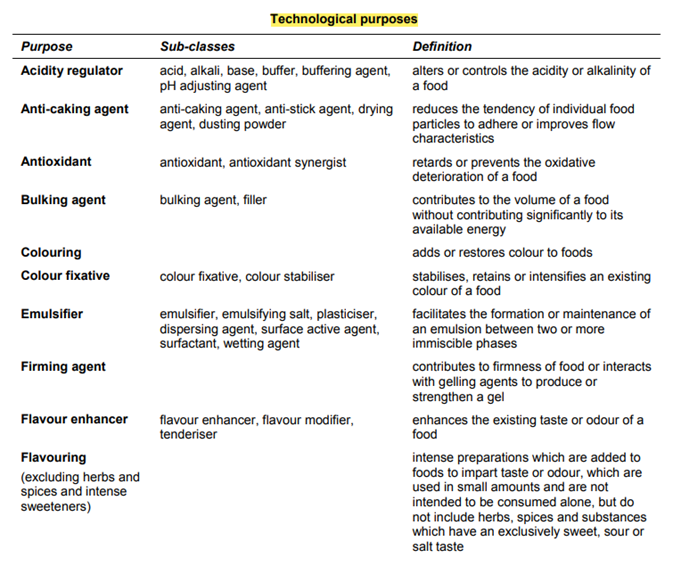
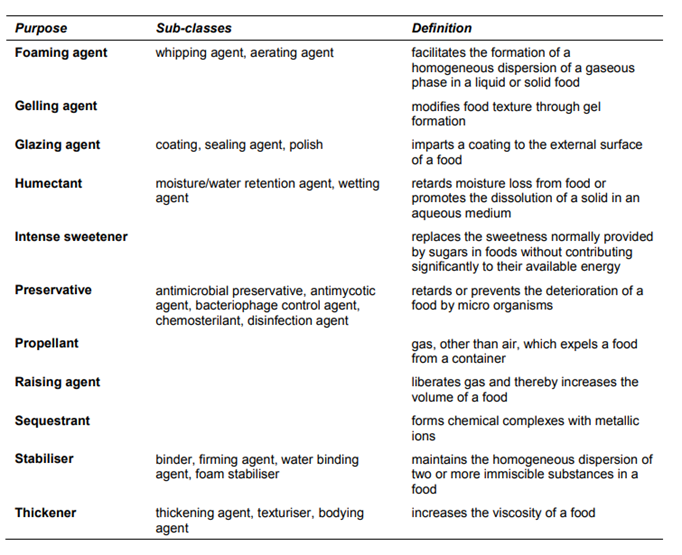
Figure 12. Excerpt from Schedule 14 [9]: Technological functions for food additives.
Permitted food additives can be those substances listed in Schedule 16 [10] as substances permitted for use at GMP levels or can be substances listed in Schedule 15 [11] as substances permitted in specified categories of foods. In addition, non-traditional foods that have been concentrated or refined to perform a technological function (refer to Figure 13) may also be used as food additives as can be other foods. For example, Agave nectar could be used as a flavoring agent and Bamboo fiber could be used as a thickening agent. The food additive permissions can be confusing. Therefore, examples of permitted food additives will be described below.
3.6 Permitted Flavors and Colors
Flavors and colors are considered to be food additives. Therefore, the general comments in Section 3.5 above regarding food additives apply. Additional information is provided below.
- Colorings
Permitted colorings at GMP are listed in Clause S16-3 [10]:
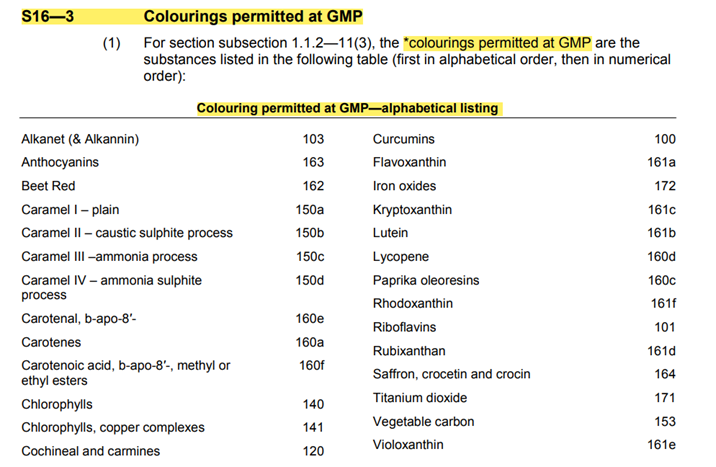
Figure 13. Excerpt from Schedule 16-3 [10]: Colorings permitted at GMP.
In addition, some colorings are permitted when used up to a maximum level:
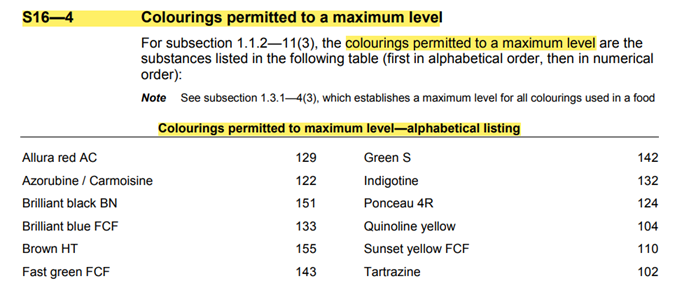
Figure 14. Excerpt from Schedule 16-4 [10]: Colorings permitted at a maximum level.
Clause 1.3.1-4 (3) provided the maximum limits:

Figure 15. Excerpt from Standard 1.3.1-4 (3) [8]: Levels for colorings permitted at a maximum level.
- Flavorings
Permitted flavoring substances are described in Standard 1.1.2 [5] per Figure 16.
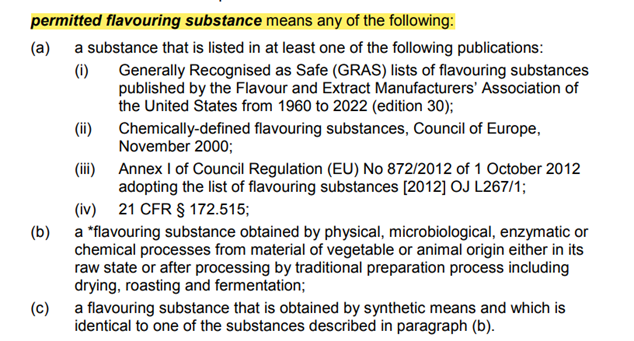
Figure 16. Excerpt from Standard 1.1.2 -2 (3) [5]: Permission for flavoring substances.
In addition, flavorings may contain other food additives as permitted in Schedule 15 [11] (Figure 17).
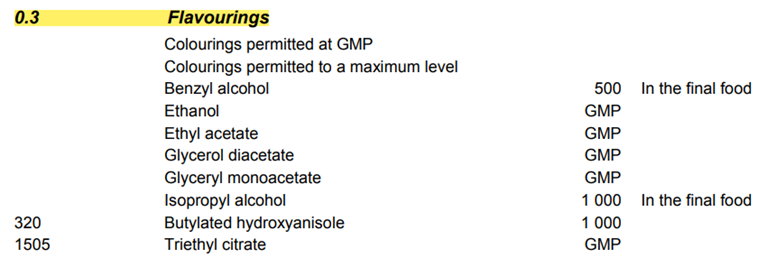
Figure 17. Excerpt from Schedule 15 [11]: Permission for food additives for flavoring substances.
3.7 Permitted Processing Aids
The FSC permits the use of processing aids under Standard 1.3.3 [12] per Figure 18.
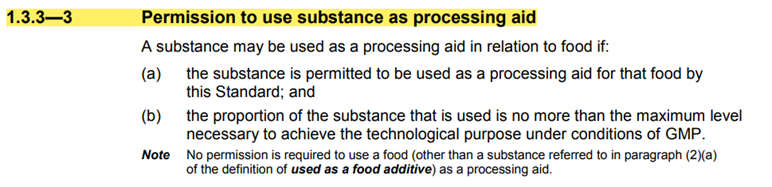
Figure 18. Excerpt from Standard 1.3.3 – 3 [12]: Permission for processing aids.
Some processing aids are permitted for all foods (Figure 19). These are those substances that are (1) additives permitted at GMP (substances in Schedule 16 [10]) or (2) substances listed in the table to Schedule 18-2 [13].
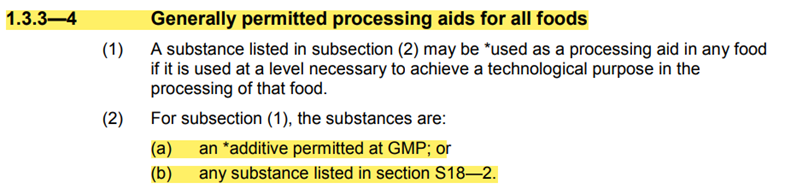
Figure 19. Excerpt from Standard 1.3.3-4 [12]: Permission for generally used processing aids.
Clause S18-3 [13] provides lists of permitted processing aids that can be used for particular purposes within specified limits. These are permitted under Clause 1.3.3-5 [12] of the FSC as shown in Figure 20:
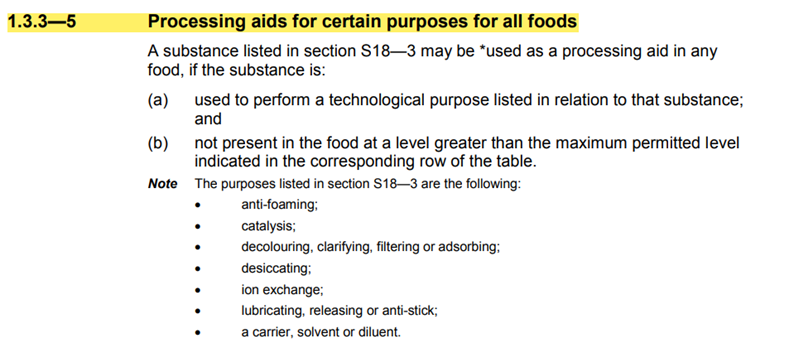
Figure 20. Excerpt from Standard 1.3.3-5 [12]: Permission for processing aids for certain purposes.
Schedule 18 [13] also contains a list of permitted enzymes (Clause S18-4). This is lengthy and will not be provided in this report. Further sections in Schedule 18 [13] detail permissions for processing aids in particular foods or purposes.
3.8 Additional Notes
In addition to the compositional requirements described in the sections above, the FSC has requirements [3] relating to Novel food ingredients, use of components of genetically modified origin, and irradiation of foods or food ingredients.
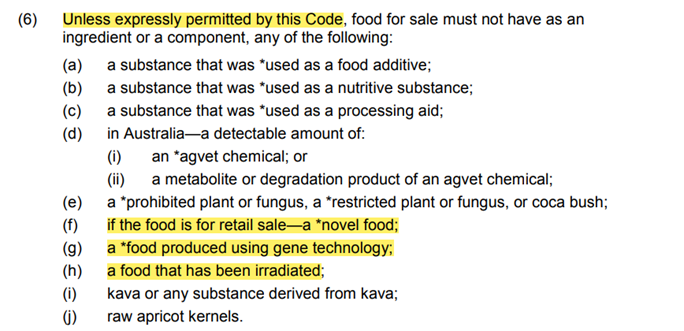
Figure 21. Excerpt from Standard 1.1.1-10(6) [3]: Use of Novel Foods, GMO, and irradiation.
Novel foods
FSANZ defines foods and food ingredients as 'traditional' or 'non-traditional'. Novel foods are a subcategory of non-traditional foods; however, this requires prior approval before use in foods.
Definitions are provided in Standard 1.1.2 [5] of the FSC (refer to Figure 22). The term 'traditional food' is not defined in the FSC, but these can be described as those that have a history of human consumption in Australia or New Zealand. Key areas influencing the interpretation of the term ‘history of human consumption’ are:
- Length of use
- Extent of use
- Quantity (level of intake) of use
- Purpose or context of use
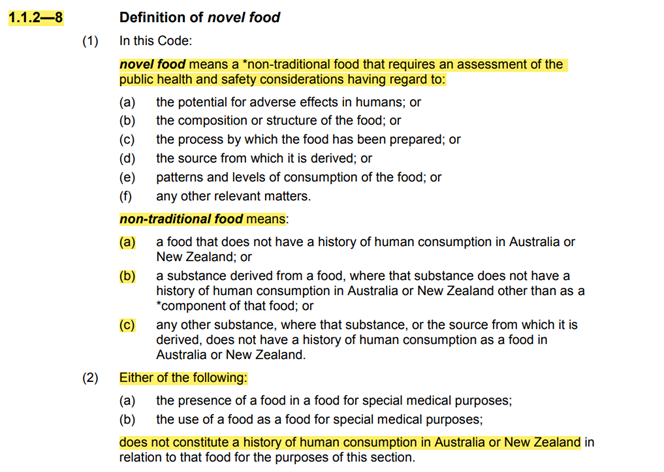
Figure 22. Excerpt from Standard 1.1.2-8 [5]: Definitions for non-traditional food and Novel food.
Some non-traditional foods and their components are allowed for use in foods without further permission. A subcategory of non-traditional foods, Novel foods, requires an assessment due to possible safety issues. These are only allowed to be used in foods once approved and entered into Schedule 25 [14] per Standard 1.5.1 [15].
To assist manufacturers in deciding whether their food/ingredient is non-traditional or Novel, FSANZ has issued information and tools to allow self-assessment [16]. In addition, manufacturers can request an opinion from the Advisory Committee on Novel Foods (ACNF). Opinions are published in a public register [17] and the ACNF decisions are not binding to it. However, seeking an opinion does confer a degree of clarity around Novel food status. A manufacturer can apply for a new Novel food and can be granted exclusivity for up to fifteen months (fee required for this option). Information on how to apply for a Novel food is provided on this webpage where there is a link to more information concerning novel food applications [18].
Genetically modified (GMO) ingredients
Standard 1.5.2 [19] describes the requirements for the use of ingredients that have been produced using gene technology.
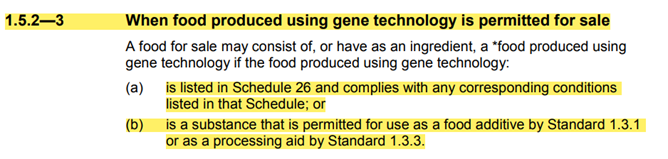
Figure 23: Excerpt from Standard 1.5.2 [19]: When GMO food/ingredients can be used.
The positive list of GMO permissions in Schedule 26 [20] is long and will not be provided here. To be clear, any ingredient permitted to be used as a processing aid or food additive is permitted even if it is derived from a GMO source. While food containing GMO components needs to be labeled as such, there are exemptions under Clause 1.5.2-4 [19] in Figure 24:
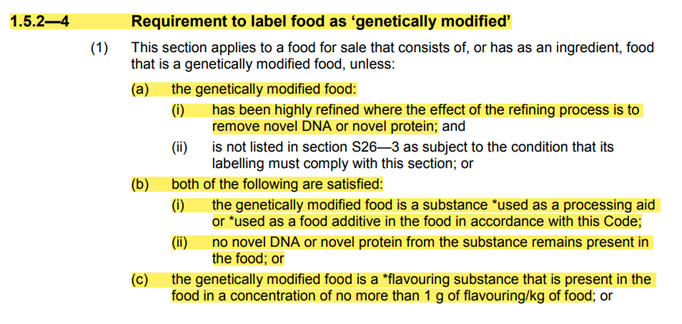
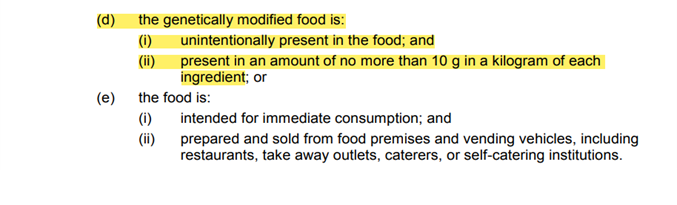
Figure 24. Excerpt from Standard 1.5.2-4 [19]: Labeling of food with GMO.
Irradiated foods
Standard 1.5.3 [21] describes the requirements for the use of irradiation. It is not expected that the bakery products would be irradiated or contain irradiated ingredients. Standard 1.5.3 [21] has details for the permitted types and levels of irradiation and these differ for the types of ingredients. Usually, irradiation is used for fresh fruits, vegetables, and herbal materials used to prepare teas. If a food product has been irradiated or contains irradiated ingredients, there is a requirement for the product labeling of B2C products (both retail and catering) per Figure 25.
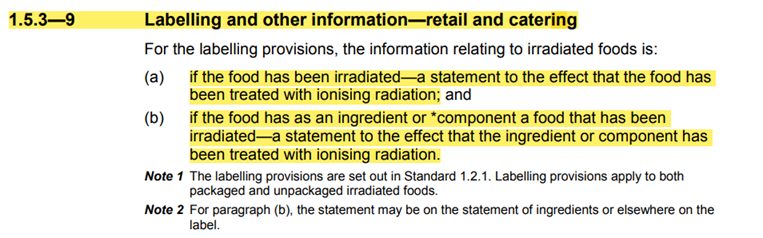
Figure 25. Excerpt from Standard 1.5.3-9 [21]: Labeling of irradiated food.
Trans-fats
Trans-fats are permitted in foods. However, FSANZ monitors the typical dietary intakes in both Australian and New Zealand populations with a view to informing public health messaging [22].
Currently, manufacturers are not required to declare trans-fats on product labels, although some provide this information voluntarily. However, trans-fats must be declared on a product label if there are nutrition content claims about cholesterol or saturated, trans, polyunsaturated, monounsaturated, omega-3, omega-6, or omega-9 fatty acids [23] per Figure 26.
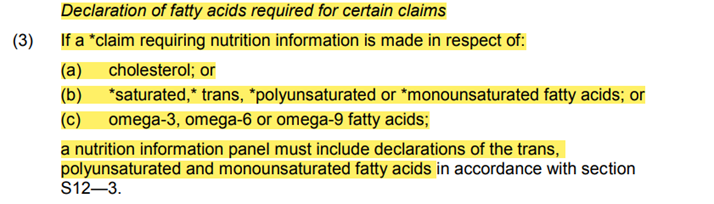
Figure 26. Excerpt from Standard 1.2.8- 6 (3) [23]: Labeling of trans-fats.
A sub-committee of the Food Ministers' Meeting [24] is currently undertaking an industry consultation with a view to improving the composition of foods in relation to trans-fats. The desired outcome is to ensure that industrially produced trans fats are eliminated or reduced as much as possible from the food supply. The proposed options are:
- Retain the status quo
- Voluntary reformulation
- Regulatory limits for industrial trans fats in processed foods
- Prohibiting the use of partially hydrogenated oils in processed foods
This review is ongoing. Information is available on the provided link [25].
3.9 References
1. Chapter 2 (individual food Standards) of the Food Standards Code (Available by selecting the pink ‘chapter 2’ tab on the provided link as per the screenshot below.)
https://www.foodstandards.gov.au/code/Pages/default.aspx

2. Standard 2.1.1 – Cereal and cereal products
https://www.legislation.gov.au/Details/F2023C00764/Download
3. Standard 1.1.1 – Structure of the Code and general provisions
https://www.legislation.gov.au/Details/F2023C00748/Download
4. Schedule 3 – Identity and purity
https://www.legislation.gov.au/Details/F2023C00756/Download
5. Standard 1.1.2 – Definitions used throughout the Code
https://www.legislation.gov.au/Details/F2023C00752/Download
6. Standard 1.3.2 – Vitamins and minerals
https://www.legislation.gov.au/Details/F2021C00320/Download
7. Schedule 17 – Vitamins and minerals
https://www.legislation.gov.au/Details/F2021C00328/Download
8. Standard 1.3.1 – Food additives
https://www.legislation.gov.au/Details/F2019C00125/Download
9. Schedule 14 – Technological purposes performed by substances used as food additives
https://www.legislation.gov.au/Details/F2023C00755/Download
10. Schedule 16 – Types of substances that may be used as food additives
https://www.legislation.gov.au/Details/F2019C00128/Download
11. Schedule 15 – Substances that may be used as food additives
https://www.legislation.gov.au/Details/F2021C00607/Download
12. Standard 1.3.3 – Processing aids
https://www.legislation.gov.au/Details/F2023C00757/Download
13. Schedule 18 – Processing aids
https://www.legislation.gov.au/Details/F2023C00754/Download
14. Schedule 25 – Permitted Novel foods
https://www.legislation.gov.au/Details/F2023C00770/Download
15. Standard 1.5.1 – Novel foods
https://www.legislation.gov.au/Details/F2017C00324/Download
16. FSANZ Guidance Tool for Determining Whether a Food is Novel or Not
PDF attached below.
17. FSANZ Novel foods record of views formed in response to inquiries, version July 2023
PDF attached below.
18. FSANZ Changing the Code Webpage, includes link to Applications Handbook for novel foods applications.
https://www.foodstandards.gov.au/code/changes/Pages/default.aspx
19. Standard 1.5.2 – Food produced using gene technology
https://www.legislation.gov.au/Details/F2018C00169/Download
20. Schedule 26 - Food produced using gene technology
https://www.legislation.gov.au/Details/F2023C00138/Download
21. Standard 1.5.3 – Irradiation of food
https://www.legislation.gov.au/Details/F2022C00975/Download
22. FSANZ webpage ‘Trans fatty acids’
https://www.foodstandards.gov.au/consumer/nutrition/transfat/Pages/default.aspx
23. Standard 1.2.8 – Nutrition information requirements
https://www.legislation.gov.au/Details/F2021C00668/Download
24. Food Ministers’ Meeting – Consultation on Trans-fats
25. FSANZ technical evaluation on trans-fats
Was this article helpful?